Get in touch with Talite Transformer Co., Ltd Company

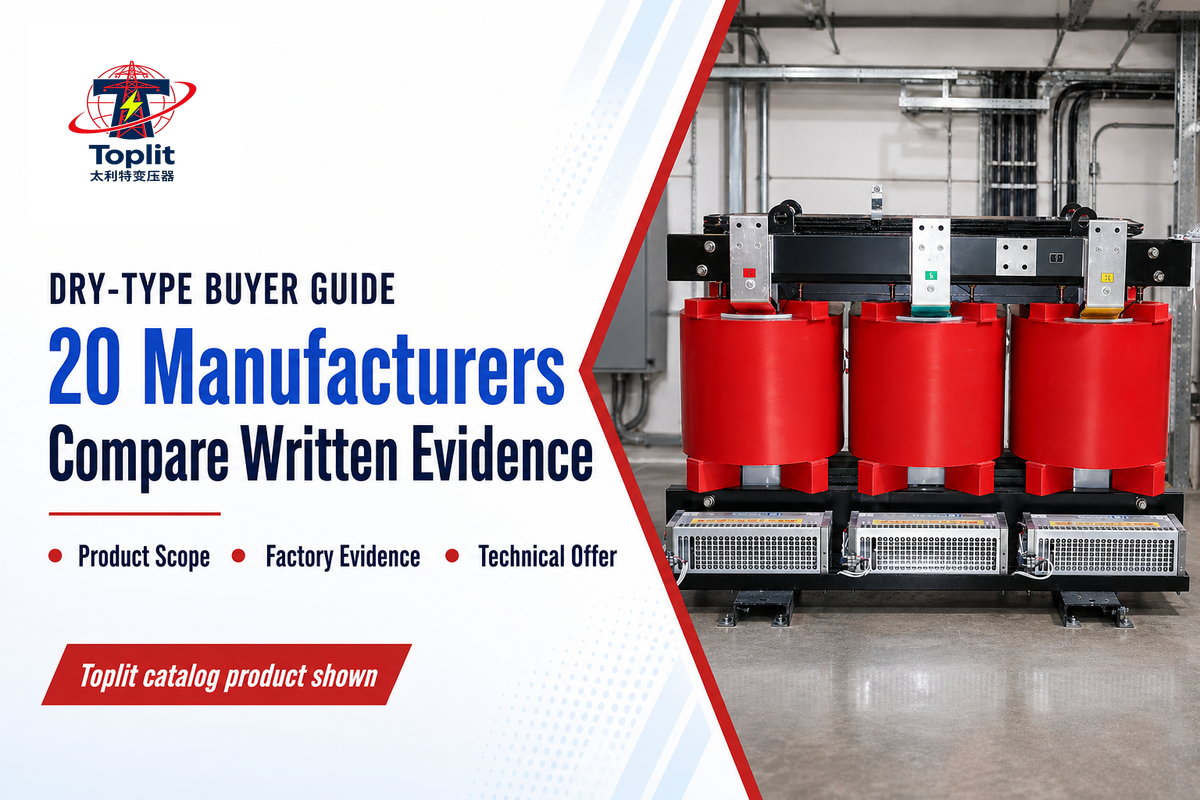
Note: Except for Toplit, which appears first by editorial request, the remaining companies are presented in no particular order. First placement does not represent an independently verified ranking by global market share, product quality or overall manufacturing capability. Dry-type transformer selection should be based on rated power, primary and secondary voltage, frequency, insulation system, impedance, losses, temperature rise, environmental conditions, fire requirements and applicable project standards.
When comparing dry type transformer manufacturers, the transformer duty is more important than the size of their catalog. A company that sells 600 V building transformers and another supplier that offers medium-voltage cast-resin units may both appear on a global list; however, these companies may be fulfilling very different market needs.
The twenty profiles that follow compare dry-type transformer manufacturers and distinguish advertised capabilities from details that still require a quote. Each profile contains the same thirteen sections. Where official sources haven’t set a founding date, complete rating schedule or certificate scope, the gap is noted. This leaves a procurement question instead of a number that looks precise, but can’t be defended.
Dry type transformer manufacturers offer cast-resin, open-wound and impregnated designs. Compare the named product, continuous rating, insulation system and test evidence. A company’s largest advertised transformer may belong to an entirely different product family.
Key points for a first shortlist
- Solid electrical insulation doesn’t mean that every dry-type design uses air as its only cooling medium.
- Capacity with fans operating and capacity without fans are separate purchase requirements.
- A standard reference, a factory quality certificate and a serial-number test report prove different things.
- The supplier comparison becomes useful when each advertised figure is attached to its product family and operating conditions.
How This Manufacturer Shortlist Was Built
Named product literature, such as Hitachi Energy’s dry-type platform overview, supports the advertised product scope. It does not establish an independent market ranking or certification of an offered unit; buyers still need a model-specific technical offer with all exceptions identified.
This dry-type manufacturer shortlist includes companies with official evidence of dry-type products or manufacturing capability, then compares their published product scope and buying considerations. It’s intended to help an engineer or procurement team choose whom to contact; it doesn’t measure global market share or certify an offered transformer.
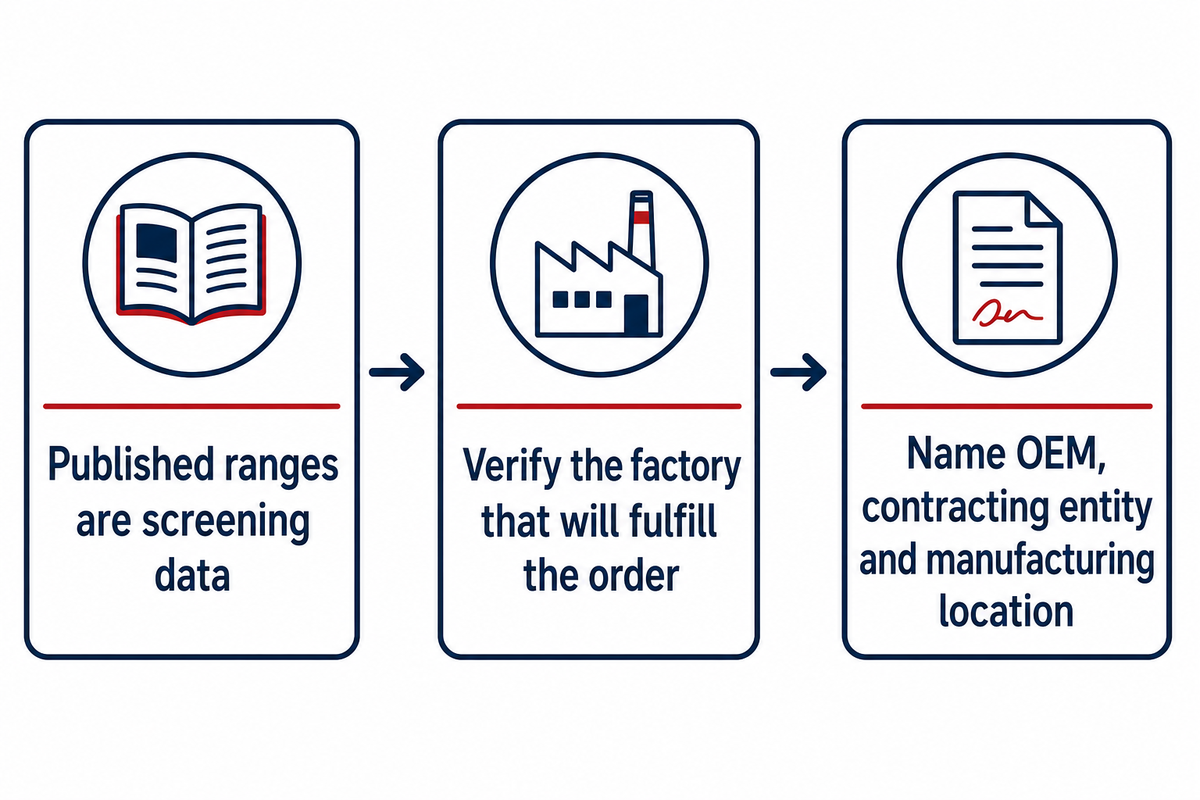
Corporate history and product documentation were evaluated separately. A predecessor’s founding year, and a brand’s launch and change of ownership, can each yield different dates for the same name. Headquarters identifies the business, but not necessarily the factory that will fulfill the order. The quote must name the original equipment manufacturer (OEM) and the contracting entity and manufacturing location.
Published ranges are screening data. A stated maximum voltage and maximum power don’t indicate that both are available with the stated enclosure, losses, temperature rise and cooling. Therefore, the profiles identify a named line, if permitted by the source, and leave schedules incomplete for written confirmation.
Technical references were evaluated in September 2026. Official product descriptions are first-party statements with a commercial interest. Standards-body and government sources provide the separate regulatory context. There was neither a factory visit, private test program, customer interview, nor an independent ranking survey. The numbers beside company names are navigation aids.
20 Dry-Type Transformer Manufacturers at a Glance
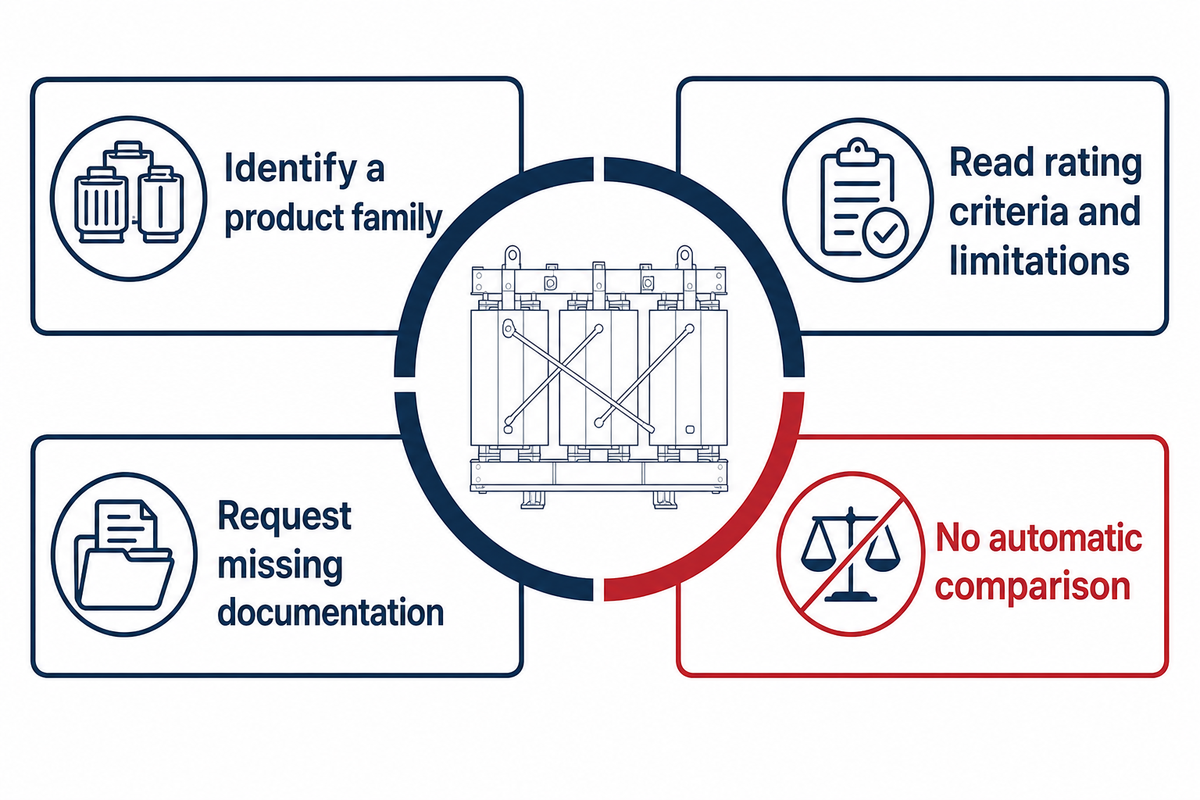
Product-family examples, including Siemens Energy’s GEAFOL dry-type documentation, help identify a relevant family. A family overview does not establish the matched rating and configuration of a particular offer.
The twenty manufacturers cover the range from low-voltage building distribution to medium-voltage industrial supply and large engineered dry-type applications. This table is used to identify a product family that may be of interest. The rating criteria and limitations for each family are summarized in the profile. A blank public specification is a request for documentation, rather than proof of limited capability.
| Manufacturer | Country / business base | Dry-type family to investigate | Limitations / not suitable for automatic comparison |
|---|---|---|---|
| 1. Toplit | China | SC(B) cast resin; SG(B) open wound | Named series have narrower voltage schedules than the portfolio headline. |
| 2. Hitachi Energy | Switzerland | Vacuum cast coil, RESIBLOC, open wound | Select the actual platform and supplying factory. |
| 3. Siemens Energy | Germany | GEAFOL and GEAFOL Neo | Equipment voltage and fan-enhanced output require separate interpretation. |
| 4. Schneider Electric | France | PowerCast II; PowerDry II | Regional product schedules and approvals differ. |
| 5. Eaton | Ireland | DS3 / DT3 ventilated general purpose | The reviewed range is 600 V class, not the entire power-transformer portfolio. |
| 6. Hammond Power Solutions | Canada | Millennium VPI; EnduraCoil cast resin | Three-phase and single-phase maxima differ. |
| 7. Federal Pacific | United States | Ventilated and encapsulated low voltage | Confirm the exact model and enclosure combination. |
| 8. Olsun Electrics | United States | Custom low- and medium-voltage dry type | Require an engineered schedule for the proposed duty. |
| 9. Virginia Transformer | United States | VPI, Unidip and UNIClad | General portfolio and UNIClad power limits differ. |
| 10. JST Power Equipment | United States | Cast resin and VPI | Each construction has its own voltage, power and impulse limits. |
| 11. WEG | Brazil | Epoxy dry-type transformer family | Bind the family range to the offered model. |
| 12. SGB-SMIT | Germany | Cast-resin and VPI platforms | Technology availability depends on the manufacturing location. |
| 13. TMC Transformers | Italy | Standard and engineered cast resin | Enhanced environmental classifications need matching reports. |
| 14. SEA | Italy | Cast resin and air insulated | Oil-filled and reactor ratings are separate. |
| 15. Fuji Electric | Japan | MOLTRA cast resin | Standard and optional thermal specifications differ. |
| 16. BEST | Türkiye | Cast-resin distribution and rectifier | Distribution and rectifier power limits are separate. |
| 17. MGM Transformers | United States | Stocked general-purpose dry type | Stock programs do not establish today’s inventory or delivery date. |
| 18. Voltamp Transformers | India | Cast-resin dry type | Do not transfer oil-filled factory capacity into the dry-type range. |
| 19. Kirloskar Electric | India | Cast-resin distribution and special duty | Legacy standard references need an agreed current contract basis. |
| 20. DAIHEN | Japan | Top Runner cast-resin products | The reviewed English overview lacks a complete dry-type rating schedule. |
Manufacturers 1–5: Toplit, Hitachi Energy, Siemens Energy, Schneider Electric and Eaton
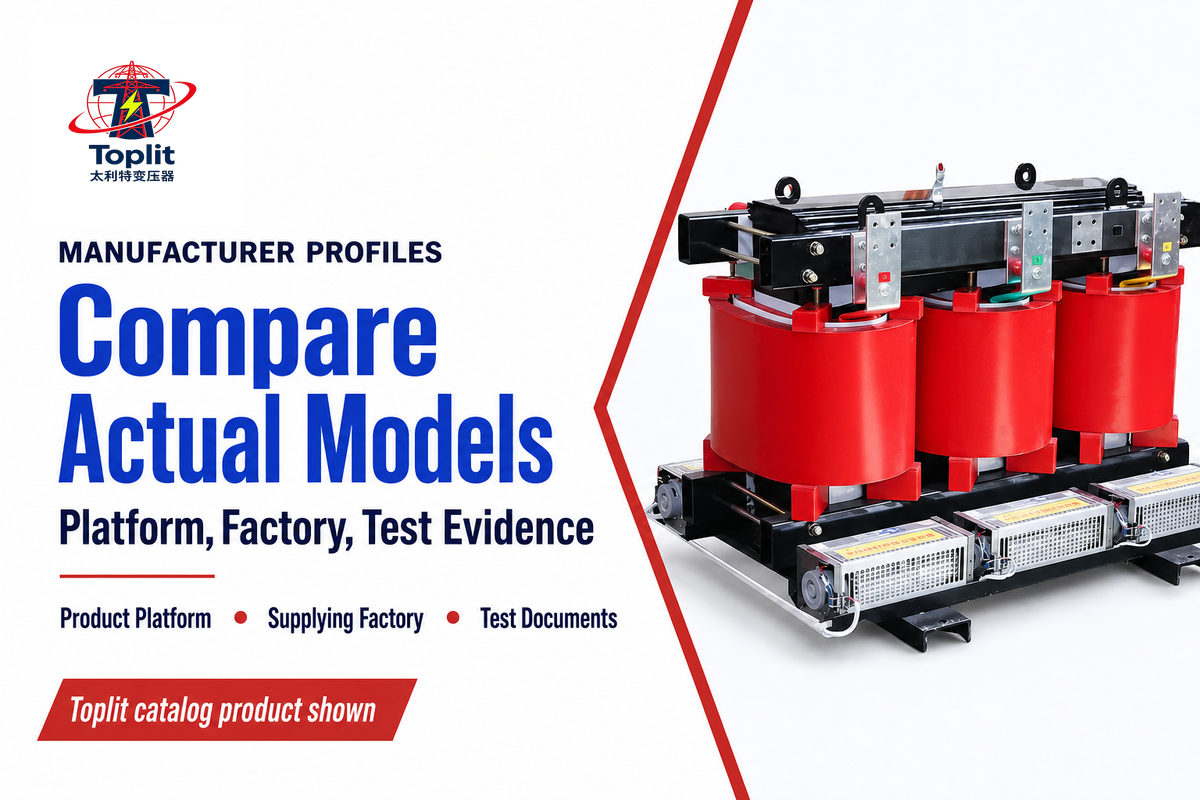
The companies Toplit, Hitachi Energy, Siemens Energy, Schneider Electric, and Eaton offer varying solutions for the dry-type power distribution system, including Chinese distribution series, international cast-resin systems, and low-voltage building products. Notable differences in offerings may include scope of product, regional documentation, and configuration choices. Ranking brands for overall capacity would mask more than it reveals.
1. Toplit
Company name: Toplit (Jiangsu Toplit), per company About page. Introduction: The company describes a unified research, production, and sales business of power equipment. The origin is Jiangsu Fangteng Industrial Co., Ltd. Its dry-type catalog is a useful starting point for projects requiring a named distribution-transformer series and written technical schedule.
- Established: The original founding year wasn’t verified in the official pages reviewed.
- Headquarters / country: Hai’an Economic and Technological Development Zone, Nantong, Jiangsu, China.
- Company type: Power-equipment manufacturer with its own product catalog and factory description.
- Dry-type products: SC(B)10/12/13 cast-resin series and SG(B)10 open-wound series.
- Published ratings: SC(B) schedules list 30–4000 kVA at 6–11 kV; SG(B)10 shows 100–4000 kVA at 6–10 kV.
- Insulation, windings and cooling: Cast-resin and open-wound options; confirm conductor material, insulation class and continuous AN/AF ratings in the offered model’s datasheet.
- Applications: Building and industrial distribution where the selected voltage, enclosure and environmental duty match the project.
- Standards and certifications: Published technical references include IEC 60076-11 and GB/T 10228. These references are not independent certification of every offered unit.
- Official website: https://toplit-transformer.com/
Strengths: The catalog separates cast-resin and open-wound series and provides model schedules, permitting the inquiry to begin with a specific transformer construction as opposed to a generic transformer definition.
Buying check: The Toplit website provides a more inclusive statement for the dry-type range from 6 kV to 35 kV. Don’t apply the upper voltage to all SC(B) and SG(B) models. Requests for the specific drawing, loss guarantees and test limits should be made through the dry-type transformer product range. Certificates showing a different legal name need an explanation of ownership and applicability before the certificates can be accepted.
2. Hitachi Energy
Company name: Hitachi Energy. Introduction: The company combines a long heritage in power grids with multiple dry-type technologies. Potential customers may investigate vacuum cast coil, RESIBLOC and open-wound designs without believing that these designs necessarily have the same thermal performance, mechanical configuration or environmental qualification.
- Established: Current entity incorporated in 2021; the Hitachi ABB Power Grids joint venture began operating in 2020.
- Headquarters / country: Zurich, Switzerland.
- Company type: International power-grid equipment and technology manufacturer.
- Dry-type products: Vacuum cast coil, RESIBLOC and open-wound transformers.
- Published Ratings: The reviewed dry-type overview states that voltage levels reach 72.5 kV; a maximum MVA wasn’t given as a universal limit.
- Insulation, Windings and Cooling: Construction varies by platform. Individually specify winding materials, the insulation system and the cooling system.
- Applications: Industrial, infrastructure, and renewable energy distribution subject to the selected platform’s duty.
- Standards and certifications: Obtain the standard versions and product/factory test reports for the proposed design. The overview isn’t a certificate.
- Official website: https://www.hitachienergy.com/
Strengths: Many insulation platforms allow different technical approaches to be compared in one supplier’s portfolio.
Buying check: Name the product platform and the supplying factory in the request. For a special cooling system proposed, indicate the additional equipment and the maintenance scope instead of evaluating the transformer package based on the active component only.
3. Siemens Energy
Company name: Siemens Energy. Introduction: GEAFOL is its established cast-resin platform for distribution and engineered applications. GEAFOL Neo has its own published envelope, making the platform name an essential part of an enquiry rather than an interchangeable marketing suffix.
- Established: Independent Siemens Energy company in 2020; predecessor engineering history is older.
- Headquarters / country: Munich, Germany.
- Company type: Energy-technology equipment manufacturer.
- Dry-type products: GEAFOL, GEAFOL Neo and copper-wound CARECO options.
- Published Ratings: GEAFOL up to 50 MVA and equipment voltage Um 52 kV; Neo up to 6.3 MVA and Um 40.5 kV.
- insulation, Windings and Cooling: Cast resin with aluminum-foil winding construction; copper available on request. Natural-air and fan-assisted arrangements need separate ratings.
- Applications: Commercial buildings, industrial plants, infrastructure and other projects requiring an appropriate cast-resin design.
- Standards and Certifications: Materials provided by the Company refer to IEC 60076-11 and specific environmental/fire classifications. Request the report for the configuration being offered.
- Official website: https://www.siemens-energy.com/
Strengths: Public records identify product platforms and conductor selections along with voltage limits.
Buying Check: Um isn’t a typical primary operating voltage. The advertised fan-assisted increase is subject to caveats. Please request the continuous output, fan-failure duty and noise with fans in operation.
4. Schneider Electric
Company name: Schneider Electric. Introduction: Schneider’s regional transformer offering includes cast-coil and VPI products alongside its broader electrical-distribution equipment. That can be useful when the transformer must coordinate with a building’s switchgear and power-management package, provided the electrical and contractual interfaces are defined.
- Established: Business started in 1836; this is an historical reference and isn’t a reference to the current entity.
- Headquarters / country: Rueil-Malmaison, France.
- Company type: Electrical-distribution and energy-management equipment manufacturer.
- dry-type Products: PowerCast II cast coil and PowerDry II VPI in the presented United States offering.
- Published ratings: PowerCast II is indicated as a medium-voltage product; the completed kVA/voltage schedule isn’t posted on the regional page.
- insulation, windings and cooling: Cast-coil has a choice of copper and aluminum versions with optional fan cooling; VPI is a different construction.
- Applications: Industrial, data-center, healthcare and educational distribution projects.
- Standards and certifications: The PowerCast II page states UL Listed and DOE 2016 attributes; verify applicability to the exact offered configuration.
- Official website: https://www.se.com/
Strengths: Product platforms of cast-coil and VPI offer a comparison within a broader suite of electrical and distribution equipment.
Buying check: Request the regional catalog number and rating sheet and confirmation of listing. A product marketed under a different regional family name shouldn’t be afforded PowerCast II specifications.
5. Eaton
Company name: Eaton. Introduction: Eaton’s ventilated general-purpose dry-type transformers address building and industrial low-voltage distribution. The reviewed DS3 and DT3 ranges are useful for this duty, but they shouldn’t be treated as a description of every transformer in Eaton’s wider business.
- Established: 1911.
- Headquarters / country: Dublin, Ireland.
- Company type: Power-management and electrical-equipment manufacturer.
- Dry-type products: DS3 single-phase and DT3 three-phase ventilated dry-type general-purpose units.
- Published ratings: DS3 7.5–333 kVA; DT3 7.5–1500 kVA; reviewed family is 600 V class.
- insulation, windings and cooling: Self-cooled, two-winding construction with copper or aluminum options and selectable temperature rise.
- Applications: Commercial and industrial low-voltage distribution, with model-specific voltage combinations.
- Standards and certifications: DOE efficiency and UL attributes vary with model scope. Open core and coil recognition is distinct from a completed product listing.
- Official website: https://www.eaton.com/
Strengths: Detailed technical resources address connections, enclosure options and installation requirements for familiar building-distribution duties.
Buying check: Keep winding temperature rise separate from insulation-system class. Confirm the selected enclosure, weather-shield kit, voltage taps and installation clearances on the actual model documentation.
Manufacturers 6–10: Hammond Power Solutions, Federal Pacific, Olsun, Virginia Transformer and JST
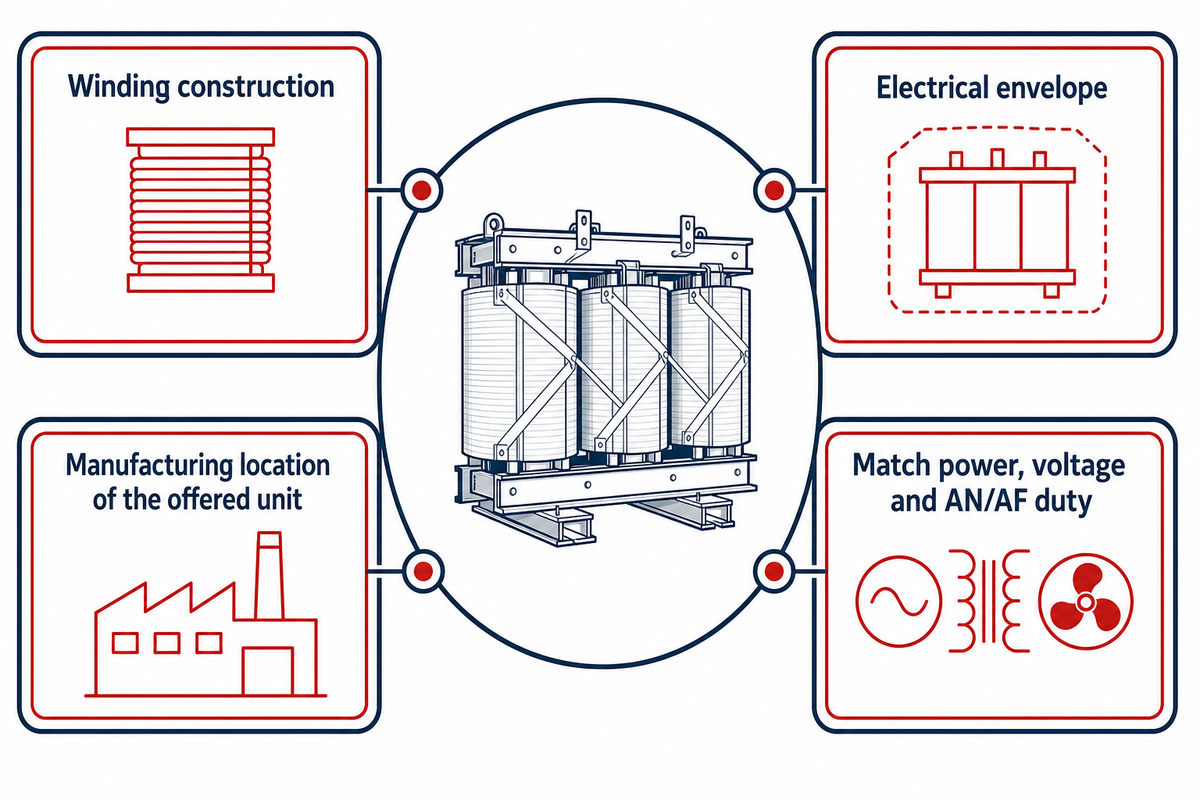
Hammond Power Solutions, Federal Pacific, Olsun, Virginia Transformer, and JST offer a selection of distribution products and engineered dry-type designs that cover the North American market, as well as a range of catalog products. Compare first the winding construction and electrical envelope; a local office or a broad custom capability doesn’t indicate the manufacturing location of the offered unit.
6. Hammond Power Solutions
Company name: Hammond Power Solutions. Introduction: HPS manufactures dry-type transformers and related power-quality equipment. Its medium-voltage product cards distinguish several Millennium VPI platforms from EnduraCoil cast-resin products, which is helpful when a purchaser needs to specify construction and duty together.
- Established: 1917.
- Headquarters / country: Guelph, Ontario, Canada.
- Company type: Transformer, reactor and power-quality equipment manufacturer.
- dry-type products: Millennium VPI, EnduraCoil Cast Resin and Low-voltage Distribution Families.
- Published ratings: Millennium E three-phase up to 15 MVA, with voltage class up to 34.5 kV; Millennium C three-phase up to 34 MVA, with voltage class up to 46 kV; confirm the matched power, voltage and AN/AF duty.
- insulation, windings and cooling: VPI and cast-resin systems are separate; specify conductor, temperature rise and cooling duty for the selected system.
- Applications: Industrial distribution, building systems and projects requiring power quality or specialty loads.
- Standards and certifications: Product cards specify country specific standards and efficiencies. Ensure you have the correct model and supporting documentation for the destination market.
- Official website: https://www.hammondpowersolutions.com/
Strengths: Having multiple dedicated platforms allows for the separation of standard distribution needs from larger or more complex transformer requirements.
Buying check: The quoted three-phase maxima don’t include single-phase versions. Indicate the phase count, application, harmonic load, and the applicable efficiency category prior to evaluating offers.
7. Federal Pacific
Company name: Federal Pacific. Introduction: Federal Pacific’s low-voltage dry-type catalog includes both ventilated and encapsulated constructions. Product information is most helpful when an inquiry is made regarding the actual voltage combination, installation conditions and enclosure, rather than the widest advertised family range.
- Established: Parent Electro-Mechanical traces its origins to 1958; Federal Pacific’s separate brand founding wasn’t verified.
- Headquarters / country: Bristol, Virginia, United States.
- Company type: Electrical-equipment manufacturing business within Electro-Mechanical.
- Dry-type products: Low-voltage ventilated and encapsulated dry-type transformers.
- Published ratings: The reviewed family page lists 5–2500 kVA and 600 V class; obtain the selected model schedule.
- Insulation, windings and cooling: Copper or aluminum; encapsulated and ventilated systems have different thermal and enclosure specifications.
- Applications: Building, commercial and industrial low-voltage distribution.
- Standards and certifications: UL/cUL and DOE-related attributes are stated for applicable products; verify the offered model’s marking and scope.
- Official website: https://federalpacific.com/
Strengths: The catalog contains practical low-voltage configurations and distinguishes enclosed product construction.
Buying check: Recognition of an insulation system doesn’t automatically establish the listing of a finished assembly. Request the complete assembly designation and relevant NEMA enclosure rating.
8. Olsun Electrics
Company name: Olsun Electrics Corporation. Introduction: Olsun covers dry-type manufacturing for standard and custom applications. Its public capability description provides a basis for an engineering discussion around voltage, winding material, physical arrangement and testing when a stock transformer is an awkward fit.
- Established: 1950.
- Headquarters / country: Richmond, Illinois, United States.
- Company type: Dry-type transformer manufacturer.
- Dry-type products: Custom low- and medium-voltage transformers and associated dry-type constructions.
- Published ratings: Low voltage through 600 V; medium voltage 601–34,500 V. The reviewed main page doesn’t establish a limit to the maximum kVA.
- Insulation, windings and cooling: Aluminum or optional copper windings, grain-oriented core material and design-specific insulation/enclosure arrangements.
- Applications: Industrial and commercial duties requiring standard or engineered dry-type equipment.
- Standards and certifications: Request the unit test report and any required product listing; recognized insulation is a narrower claim.
- Official website: https://www.olsun.com/
Strengths: The stated custom-manufacturing scope supports discussion of dimensions, connections and electrical requirements together.
Buying check: Supply the busway or cable interface drawing early. For replacement work, a correct voltage ratio alone doesn’t establish that the new transformer will fit the room or existing terminations.
9. Virginia Transformer
Company name: Virginia Transformer Corp. Introduction: Virginia Transformer publishes dry-type capabilities covering several insulation constructions. Its VPI, Unidip and UNIClad descriptions should be read as separate technical options, especially when environmental protection or a higher power rating drives the purchase.
- Established: 1971.
- Headquarters / country: United States.
- Company type: Engineered transformer manufacturer.
- Dry-type products: VPI, Unidip and UNIClad designs.
- Published ratings: General dry-type portfolio 300 kVA–20 MVA, up to 35 kV; UNIClad separately 300 kVA–15 MVA.
- Insulation, windings and cooling: Copper/aluminum options and construction-specific insulation systems; confirm natural-air and forced-air ratings.
- Applications: Industrial and infrastructure distribution where the selected construction matches the operating environment.
- Standards and certifications: Official literature references the IEEE C57 family. Require a current agreed edition and applicable test schedule.
- Official website: https://www.vatransformer.com/
Strengths: Several insulation approaches and an engineered product range give buyers options beyond a single standard enclosure or winding treatment.
Buying check: The reviewed material doesn’t establish that 20 MVA is a continuous natural-air rating for every configuration. Request the AN/AF schedule and the named construction on the same datasheet.
10. JST Power Equipment
Company name: JST Power Equipment. Introduction: JST publishes separate cast-resin and VPI technical tables. Those tables show why insulation construction belongs at the beginning of a supplier comparison: the same company advertises substantially different electrical envelopes for the two dry-type families.
- Established: Original company founding year is 1993 according to the official locations page reviewed.
- Headquarters / country: Lake Mary, Florida, United States (office / North American headquarters).
- Company type: Power-equipment manufacturer.
- Dry-type products: Cast-resin and VPI transformers.
- Published ratings: Cast resin 300 kVA–45 MVA, primary up to 72.5 kV; VPI 100 kVA–14.5 MVA, primary up to 25 kV.
- Insulation, windings and cooling: Cast-resin and impregnated winding systems, with specified thermal materials and configuration-dependent cooling.
- Applications: Industrial, infrastructure and other engineered distribution projects within the chosen family scope.
- Standards and certifications: The product page cites IEC and IEEE requirements. Its 2020 test-code reference requires an edition check against the current contract.
- Official website: https://jstpower.com/
Strengths: Side-by-side construction tables make the initial technical screening unusually clear.
Buying check: Don’t consider the listed 350 kV cast-resin BIL to be operating voltage. Confirm secondary voltage, impulse withstand and cooling together, not using the cast-resin maximum for a VPI quotation.
Manufacturers 11–15: WEG, SGB-SMIT, TMC, SEA and Fuji Electric
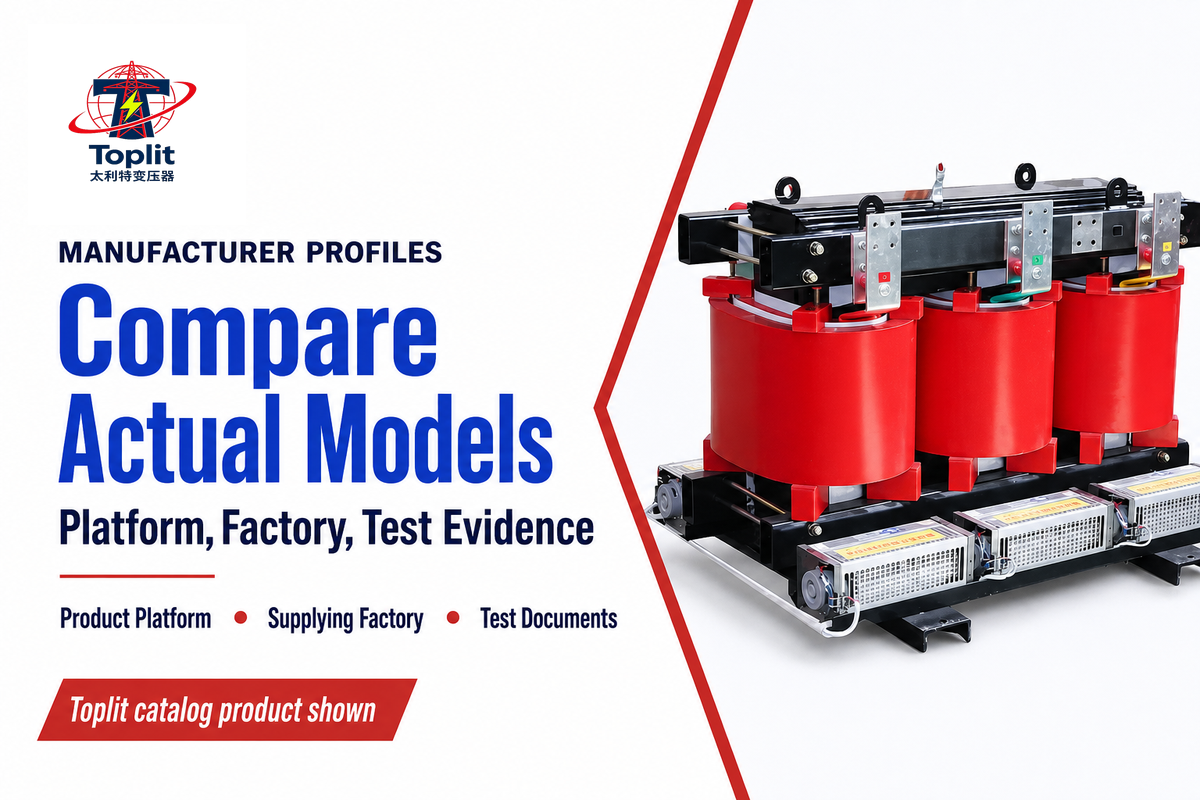
WEG, SGB-SMIT, TMC, SEA and Fuji Electric extend the shortlist across Brazilian, European and Japanese manufacturing businesses with documented dry-type products. Their published families include cast-resin and air-insulated options, but product availability, environmental qualification and regional efficiency documentation still need to be linked to the factory and model in the quotation.
11. WEG
Company name: WEG. Introduction: WEG manufactures motors, electrical equipment and power-distribution products, including epoxy dry-type transformers. A buyer should distinguish the transformer family description from the narrower catalog item or regional page used to reach it.
- Established: 1961.
- Headquarters / country: Jaraguá do Sul, Santa Catarina, Brazil.
- Company type: Electrical and industrial-equipment manufacturer.
- Dry-type products: Epoxy dry-type distribution and engineered transformer family.
- Published ratings: Reviewed family text: 112.5-20,000 kVA, voltage class up to 36.2 kV.
- insulation, windings and cooling: Epoxy-cast construction; require the model’s winding conductor, thermal class and cooling schedule.
- Applications: Industrial and building distribution within the relevant regional product offering.
- Standards and certifications: Official material references IEC and ABNT requirements. Confirm exact editions, local approval and provided-model test evidence.
- Official website: https://www.weg.net/
Strengths: Offered transformer products are aligned with motors and other industrial solutions, which allows a buyer to discuss equipment interfaces in one coordinated enquiry.
Buying check: Request a product identifier and guaranteed data sheet. The reviewed page’s URL label and broader family text don’t by themselves address the scope of a given quotation.
12. SGB-SMIT
Company name: SGB-SMIT. Introduction: The group combines transformer businesses with different histories and manufacturing locations. Its dry-type overview includes both cast-resin and VPI technology, so factory selection can be a technical decision as well as a commercial one.
- Established: Current group company established in 2008; SGB and SMIT predecessor histories date to 1947 and 1913 respectively.
- Headquarters / country: Regensburg, Germany.
- Company type: International transformer manufacturing group.
- Dry-type products: Cast-resin and VPI transformers.
- Published ratings: dry-type overview up to 25 MVA and nominal voltage up to 40.5 kV.
- insulation, windings and cooling: Construction and winding system depend on platform; the overview identifies VPI manufacturing in France and the United States.
- Applications: Industrial, renewable-energy, data-center and storage-related distribution duties.
- Standards and certifications: Require factory- and design-specific qualifications, rather than treating group membership as a certificate.
- Official website: https://www.sgb-smit.com/
Strengths: A choice of manufacturing platforms supports comparison of insulation approaches for a defined project environment.
Buying Check: Verify the legal entity and factory on the offer. Ensure the type-test report covers the design, rating, and construction of the offer.
13. TMC Transformers
Company name: TMC Transformers. Introduction: TMC manufactures dry-type transformers for commercial duty and demanding applications in industry. Its public cast-resin specification separates ordinary construction details from enhanced environmental qualifications, giving procurement a basis for asking which options the quoted design actually includes.
- Established: Original founding date not verified; an official article identifies 2017 as acquisition by current ownership.
- Headquarters / country: Busto Arsizio, Italy.
- Company type: Dry-type transformer manufacturer.
- Dry-type Products: Standard and engineered cast-resin transformers, other dry-type solutions available in the product line.
- Published Ratings: Standard cast-resin family, 50 kVA–25 MVA, voltage class, up to 52 kV.
- insulation, Windings and Cooling: Step-lap core, impregnated low-voltage and cast high-voltage winding; AN or AF cooling.
- Applications: Industrial plants, data centers, renewable energy, transport and other designated applications.
- Standards and Certifications: The standard range is classified C2/E2/F1. Verify the enhanced options.
- Official website: https://www.tmctransformers.com/
Strengths: Detailed published construction provides the ability to ask pertinent questions on core, winding insulation, and environmental duty.
Buying Check: Don’t cite enhanced class testing as a blanket qualification for all ratings. State installation conditions first, then confirm the offered model and report.
14. SEA
Company name: SEA, Società Elettromeccanica Arzignanese. Introduction: SEA manufactures liquid-immersed and dry-type transformers as well as reactors. Its product presentation contains several large ratings, making the separation between these equipment categories particularly important during supplier screening.
- Established: 1959.
- Headquarters / country: Italy.
- Company type: Transformer and reactor manufacturer.
- Dry-type products: Cast-resin distribution/power and air-insulated transformers.
- Published ratings: Cast-resin distribution 25–3150 kVA up to 36 kV; dry power up to 30 MVA/72.5 kV; air-insulated up to 25 MVA/40.5 kV.
- insulation, windings and cooling: Cast-resin or air-insulated winding systems; specify conductor and cooling requirements for the chosen design.
- Applications: Distribution, industrial converter and other engineered duties within the relevant family.
- Standards and certifications: Official material references IEC 60076 and applicable European requirements; enhanced class testing needs a design-specific report.
- Official website: https://seatrasformatori.it/
Strengths: Multiple dry-type constructions allow a technical comparison without leaving the same manufacturer’s portfolio.
Buying check: The larger oil-filled power ratings and reactor ratings in MVAr don’t describe dry-type transformer output. Ask the supplier to mark the exact dry-type schedule on its offer.
15. Fuji Electric
Company name: Fuji Electric. Introduction: Fuji Electric’s MOLTRA cast-resin range is supported by a public specification and a useful separation of routine and type tests. That makes the line worth investigating where a purchaser wants explicit thermal options and a defined factory-test discussion.
- Established: 1923.
- Headquarters / country: Tokyo, Japan.
- Company type: Electrical and power-electronics equipment manufacturer.
- Dry-type products: MOLTRA cast-resin transformers.
- Published ratings: Standard MOLTRA range up to 4000 kVA and 36 kV.
- Insulation, windings and cooling: Standard F-class insulation, H-class option; aluminum windings with copper terminals; natural or forced air.
- Applications: Industrial and building distribution under the selected thermal and environmental specification.
- Standards and certifications: Published C2/E2/F1 attributes and KEMA/CESI testing references concern defined qualification programs, not every delivered unit.
- Official website: https://www.fujielectric.com/
Strengths: The testing description separates normal production checks from separately specified test activities.
Buying check: Verify if the offer uses standard ambient/thermal conditions or an optional design. Request the serial-number routine test report and the design qualification report as separate documents.
Manufacturers 16–20: BEST, MGM, Voltamp, Kirloskar Electric and DAIHEN
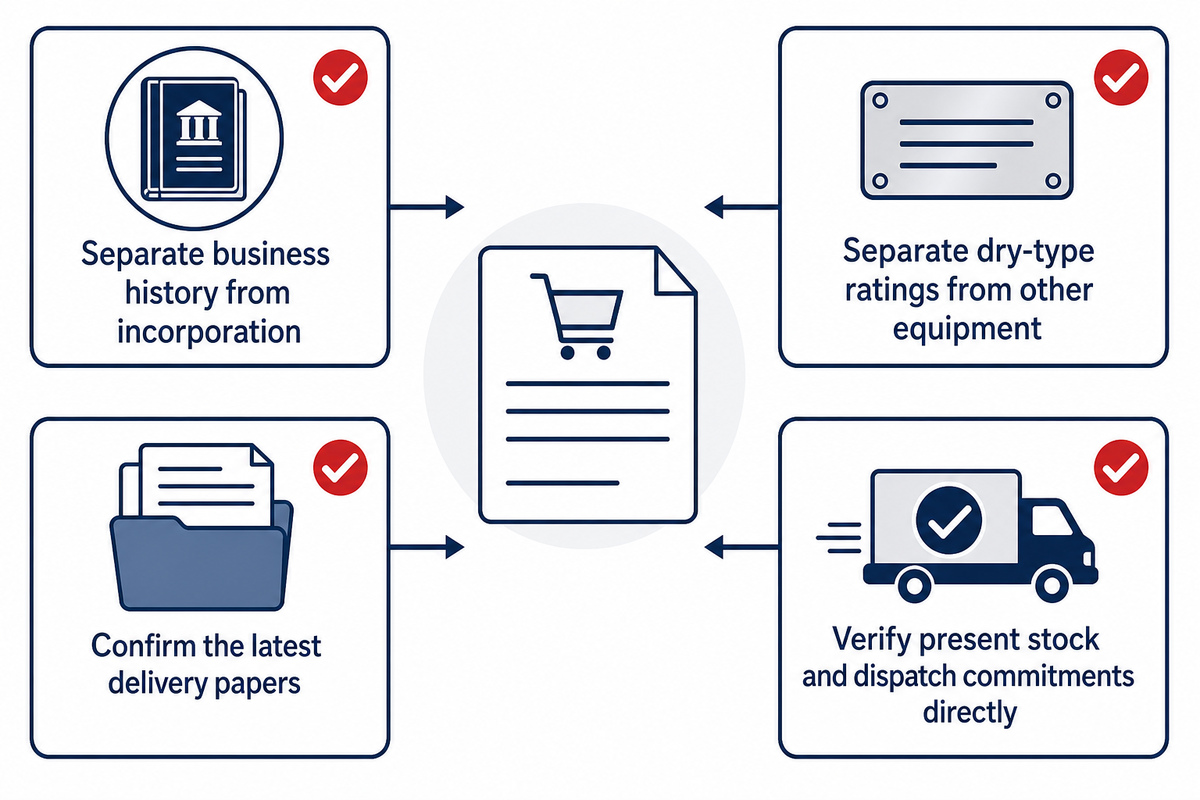
BEST, MGM, Voltamp, Kirloskar Electric and DAIHEN with cast-resin, stocked low-voltage and engineered products complete the comparison from Türkiye, the United States, India and Japan. Their profiles contain 3 examples of common buying checks: separate business history from incorporation, separate dry-type ratings from other equipment, and confirm that the latest delivery papers are provided.
16. BEST
Company Name: BEST – Balıkesir Elektromekanik Sanayi Tesisleri. Introduction: BEST’s dry-type portfolio contains cast-resin distribution and rectifier products. Since these are different application families, their published power limits should remain different even if the same upper voltage appears in both descriptions.
- Established: 1966.
- Headquarters / country: Balıkesir, Türkiye.
- Company type: Transformer manufacturer.
- Dry-type products: Cast-resin distribution and rectifier transformers.
- Published ratings: Distribution family up to 40 MVA/72.5 kV; rectifier dry type up to 20 MVA/72.5 kV.
- insulation, windings and cooling: F/H thermal options and several winding treatments; optional fan cooling and enclosure configurations.
- Applications: Distribution and industrial rectifier/converter projects within the selected design scope.
- Standards and certifications: Agree applicable standards and required tests in the contract; the reviewed product page isn’t a universal certification record.
- Official website: https://www.besttransformer.com/
Strengths: The published product separation is useful for buyers whose duty extends beyond ordinary building distribution.
Buying check: Confirm the enclosure rating with its thermal duty. An available IP55 enclosure or fan enhancement doesn’t establish identical output under every ambient condition.
17. MGM Transformers
Company name: MGM Transformers. Introduction: MGM’s current general-purpose stocked range addresses familiar low-voltage distribution duties. Its stock and emergency-supply programs are commercially relevant, but the buyer still needs confirmation of the particular voltage combination, accessories and inventory for the order.
- Established: 1975.
- Headquarters / country: Los Angeles area, United States.
- Company type: Transformer manufacturer.
- dry-type products: General-purpose stocked dry-type transformers and other engineered families.
- Published ratings: Reviewed stocked series 15–750 kVA, 600 V class, with listed voltage combinations.
- insulation, windings and cooling: Copper/aluminum options, natural-draft enclosure construction and model-specific thermal ratings.
- Applications: Commercial and industrial low-voltage distribution and compatible replacement duties.
- Standards and certifications: The page references UL 506/1561 and relevant product attributes; check the actual unit’s listing and enclosure configuration.
- Official website: https://mgmtransformers.com/
Strengths: An available stocked-product schedule can make enquiries for common configurations easier.
Buying check: The official site now uses mgmtransformers.com. Verify present stock and dispatch commitments directly; an emergency program isn’t a guaranteed lead time. Weather-shield availability is also model-specific.
18. Voltamp Transformers
Company name: Voltamp Transformers. Introduction: Voltamp makes oil-filled and dry-type transformers and indicates a dry-type facility at Savli. This matters because total transformer production capacity and large oil-filled product ratings don’t establish the capacity of a particular dry-type line.
- Established: Predecessor business in 1963; company incorporation in 1967.
- Headquarters / country: Vadodara, Gujarat, India.
- Company type: Transformer manufacturer.
- Dry-type products: Cast-resin dry-type transformer range.
- Published ratings: dry-type ratings up to 10 MVA and 3.3–33 kV.
- Insulation, windings and cooling: Cast-resin technology. Find out what the conductor, insulation class and cooling schedule are for the unit offered.
- Applications: Industrial and commercial distribution within the selected dry-type design limits.
- Standards and certifications: Official ISO management-system and NABL laboratory statements require current scope documents; they are not blanket product approvals.
- Official website: https://voltamptransformers.com/
Strengths: The public description refers to the dry-type manufacturing facility and a separate product range.
Buying check: Request the lab accreditation scope and the actual transformer test plan. Verify whether all the tests required are included, are proposed at a cost or are available through another laboratory.
19. Kirloskar Electric
Company name: Kirloskar Electric. Introduction: Kirloskar Electric offers cast-resin transformers within a wider electrical-equipment business. Its official product description includes ordinary distribution and special converter or excitation applications, which require different loading and interface information from the purchaser.
- Established: 1946.
- Headquarters / country: Bengaluru, India.
- Company type: Electrical-equipment manufacturer.
- Dry-type products: Cast-resin distribution and special-duty transformers.
- Published ratings: Range listed from 160 kVA at 11 kV up to 10,000 kVA at 33 kV.
- Insulation, windings and cooling: Cast-resin construction. Please confirm the winding material, thermal system and cooling per the offer.
- Applications: Distribution, converter, rectifier and excitation duties as specifically engineered.
- Standards and certifications: The page cites IS 11171 and legacy IEC 60726. Request the current applicable standard and edition in the contract.
- Official website: https://www.kirloskarelectric.com/
Strengths: The product offering includes special electrical duties that can be discussed alongside the transformer rating.
Buying check: Do not silently translate the legacy reference into certification to IEC 60076-11. Ask the manufacturer to state conformity, exceptions and supporting tests for the project specification.
20. DAIHEN
Company name: DAIHEN; Introduction: DAIHEN manufactures cast resin transformers along with other distribution and power equipment within its electrical equipment business. An English description of the product places DAIHEN’s products within this segment. A complete purchasing comparison, however, requires the relevant detailed catalog as well as the destination market specification.
- Established: 1919.
- Headquarters / country: Osaka, Japan.
- Company type: Electrical and industrial-equipment manufacturer.
- Dry-type products: Top Runner cast-resin transformer products.
- Published ratings: Complete dry-type kVA and voltage schedules weren’t included in the English overview reviewed.
- Insulation, windings and cooling: Cast-resin construction. Please confirm conductor, insulation class and cooling for the selected model.
- Applications: For industrial, commercial and hospital applications, please refer to the product specification.
- Standards and certifications: Verify relevant Japanese or destination-market efficiency and product requirements; the overview doesn’t provide universal certification.
- Official website: https://www.daihen.co.jp/
Strengths: A documented cast-resin product offers a credible first step for a Japan-focused equipment inquiry.
Buying check: The large-power portfolio’s 500 kV reference isn’t a dry-type rating. Evaluate the fit of the project after requesting the cast-resin catalog and the documentation for frequencies and exports.
Cast Resin, Open Wound, VPI and VPE: Match the Construction
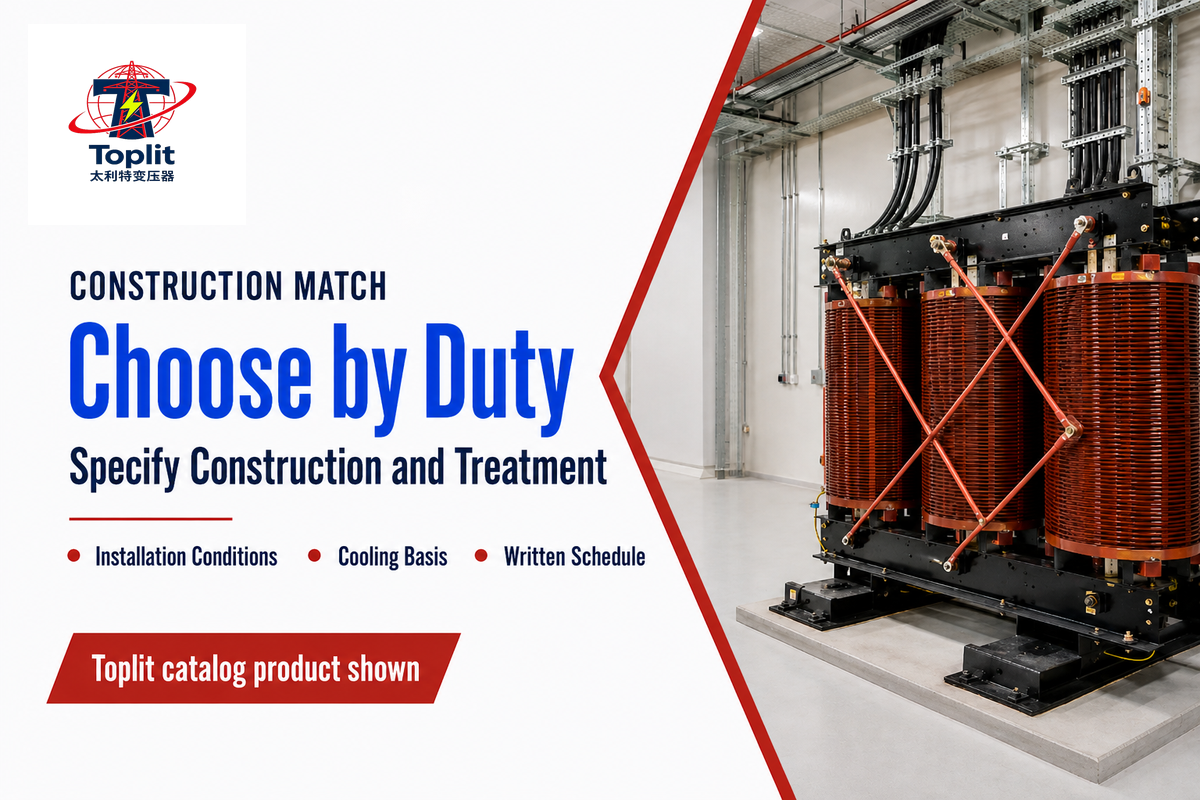
Dry-type transformer construction defines how windings are insulated and protected, while cooling describes how heat leaves the equipment. Cast resin, open wound, vacuum pressure impregnation and vacuum pressure encapsulation are therefore helpful distinctions, but the purchasing specification should identify the actual construction of each winding rather than relying on a general term.
An IEEE Power and Energy Society technical webinar overview on VPI, VPE, and cast dry-type technologies is an industry technical presentation co-sponsored by SGB-USA and presented by its sales and marketing manager. It’s neither a consensus standard nor a complete evaluation of all suppliers. The main takeaway is to inquire about the process and resin system used for the offered transformer.
| Construction / process | What the term describes | What to ask the manufacturer | Boundary |
|---|---|---|---|
| Cast resin / cast coil | A winding cast or encapsulated in a solid resin system. | Which windings are cast, what resin system is used, and what qualification covers the design? | Do not assume high- and low-voltage windings have identical construction. |
| Open wound | A winding arrangement that is not a solid cast-resin block. | What insulation treatment and environmental protection are provided? | Open wound does not mean bare, uninsulated conductors. |
| VPI | Vacuum pressure impregnation of the winding insulation system with varnish or resin, followed by curing. | What material, impregnation procedure and winding coverage are specified? | It is not automatically equivalent to cast resin or VPE. |
| VPE | Vacuum pressure encapsulation, a recognized dry-type technology category. | What encapsulation system, process cycles and environmental qualification apply? | The label alone does not establish a universal coating thickness or exposure rating. |
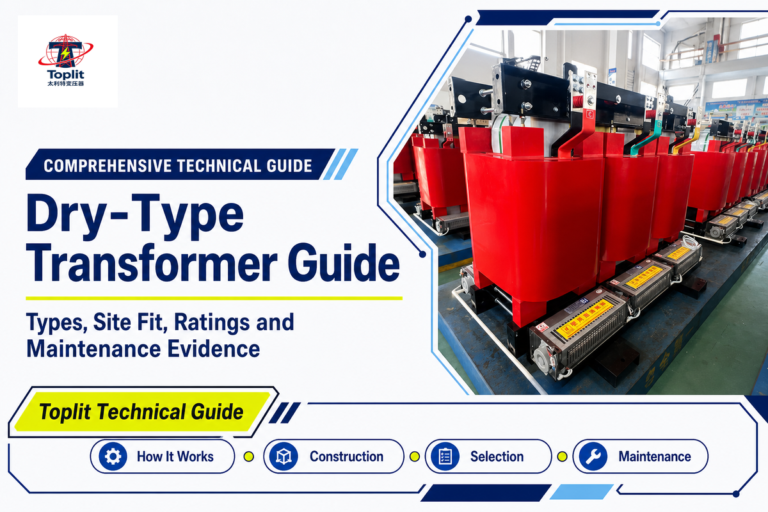
To compare Toplit’s dry-type transformer solutions, begin with the separate cast-resin dry-type transformer and open-wound dry-type transformer technical specifications. Those pages don’t establish that each offered model uses each process described in this article.
There are a multitude of insulation systems. For instance, one of Federal Pacific’s low-voltage product descriptions is polyester resin encapsulation. This does not make every encapsulated transformer a medium-voltage cast-resin design. For different design requirements, compare the entire insulation system and qualification, rather than the resin used, in detail.
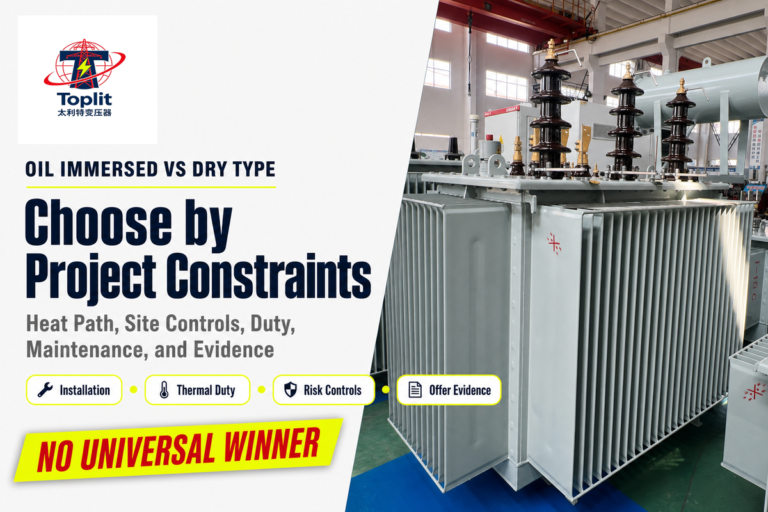
Dry type versus oil immersed: compare the installation
A dry-type transformer is one alternative to liquid-filled equipment and eliminates the bulk insulating oil system associated with conventional oil-immersed equipment. That can affect containment and fire safety, but that doesn’t make the installation safe from electrical hazards or combustible environments, or remove maintenance requirements. Liquid-filled designs also differ, so collapsing them into one undifferentiated alternative is incorrect: mineral oil and less flammable liquids must be differentiated.
Evaluate complete installation under the same loading and site conditions, heat rejection and ventilation, footprint and service clearances, sound, environmental protection, inspection access and local fire service requirements. In assessing the value of the lower purchase price, one must consider if the room can reject losses and if the equipment can pass access way constraints. Neither method is better for all the possible ratings and duties.
For sustainability goals, compare the guaranteed losses against the expected load profile and include the proposed cooling auxiliaries. An environmentally preferable option can’t be established from the absence of insulating oil alone. The site’s sustainability assessment can consider materials, service access and end-of-life handling. Defining this assessment would assist in deciding whether a broad environmental label is appropriate for the purchase.
A useful exception to the usual description of air-cooled units is a technology by Hitachi Energy known as CompactCool. This unique technology retains the solid electrical insulation, while liquid can be circulated through the coils for dissipation of heat to an external heat exchanger. Classification and cooling medium are separate issues. While evaluating the system, the heat exchanger, pipework and auxiliary system should be included in the comparison.
When not to select a dry-type offer yet
Pause the selection when the supplier can’t quote the continuous rating at the given site condition of ambient temperature, altitude and enclosure. Achieving the maximum rating is of no benefit if it requires fans that the project has not included, or if the available output after the failure of the fans is unacceptable to the operating plan of the plant.
The situation you describe demands additional context when elements like “harsh environments,” which may refer to outdoor or contaminated places, are mentioned without any exposure condition or qualification. Something like a ventilated enclosure, a cast winding, or a resin coating, in and of themselves, doesn’t mean the equipment is resistant to a combination of water, dust, salt, and condensation. For industrial environments, ask for the environmental and climatic basis of the offer, and for cleaning and inspection access.
Finally, resolve missing evidence before awarding the order. An unspecified ISO certificate, a test report for a different design, or an unsupported claim of fire-safe operation cannot be substituted for the required documentation. These are gaps in the offer, not evidence that dry-type technology is not appropriate. The project engineer and the manufacturer may resolve these gaps through a different design, a new construction, or a documented exception.
Compare Voltage, Cooling and Enclosure on the Same Basis
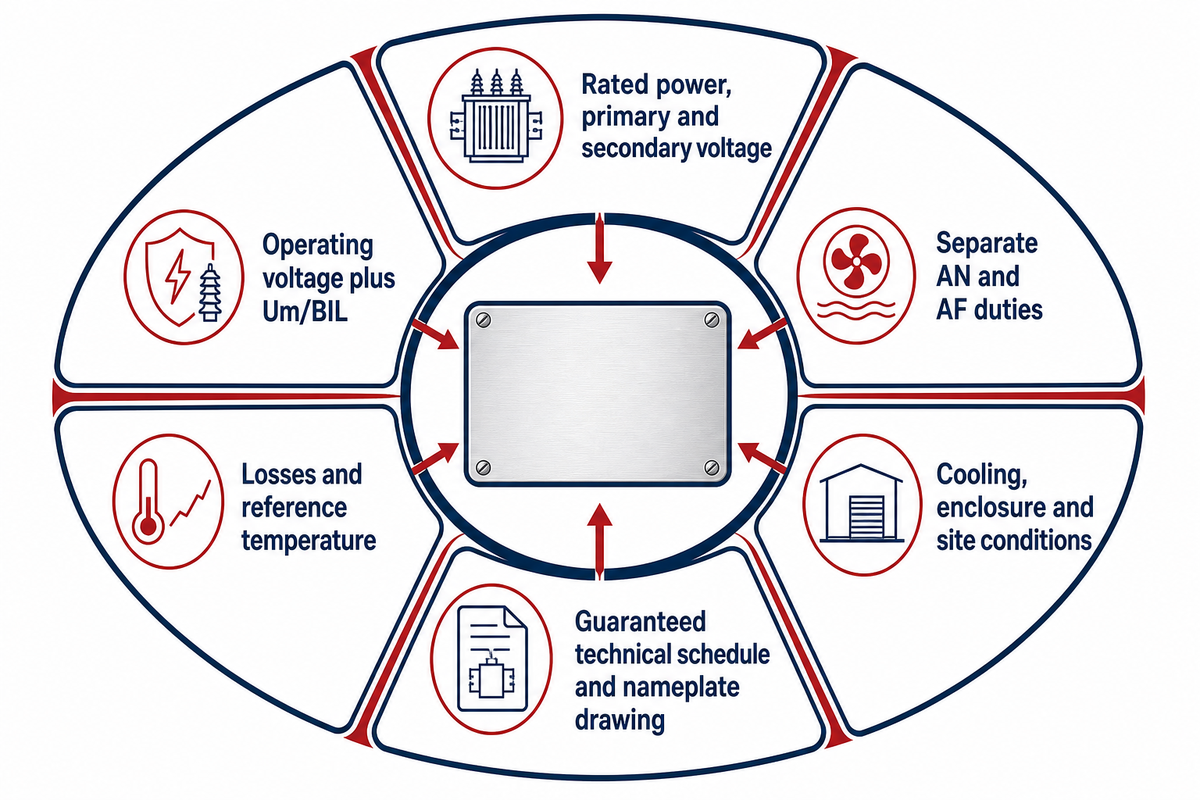
Comparable dry-type quotes use the same continuous duty, voltage definitions, the cooling condition, and the installation environment. The Dry-Type Bid Normalization Ledger shows published product differences as purchasing questions, and thus can assist procurement in determining if the two published prices represent the same transformer.
Dry-Type Bid Normalization Ledger
| Observed source statement | Hidden mismatch | Comparable basis | Document to request |
|---|---|---|---|
| Toplit homepage has a wider voltage envelope than its named SC(B)/SG(B) schedules. | Portfolio maximum is substituted for a series rating. | Exact model, primary/secondary voltage and continuous kVA. | Guaranteed technical schedule and nameplate drawing. |
| JST publishes different cast-resin and VPI ranges. | Power, primary voltage and BIL are borrowed across constructions. | One construction with a matched power/voltage/impulse schedule. | Selected-family datasheet and insulation-level schedule. |
| GEAFOL specifies equipment voltage and optional fan-enhanced output. | Um becomes operating voltage; enhanced output becomes base output. | Operating voltage plus Um/BIL; separate AN and AF duties. | Rating sheet, cooling controls and fan-failure duty. |
| Virginia lists a general dry range and a narrower UNIClad range. | A general portfolio maximum becomes an assumed UNIClad or self-cooled rating. | Named insulation system and guaranteed cooling basis. | Construction-specific technical offer and thermal guarantee. |
The ledger is an editorial comparison constructed from reviewed product pages. It shouldn’t be construed as a certification and thus the final column of the ledger should be used to ask unresolved questions to suppliers, and not to fill a spreadsheet with presumed equivalents.
Keep the electrical quantities separate
State rated power, primary and secondary voltage, frequency, phase count, connection/vector group and tap arrangement. The highest equipment voltage and basic impulse level describe insulation coordination. They can’t be interchanged with the normal primary operating voltage. Further impulse level query information is found in the transformer BIL.
Request impedance for the stated rating base at the stated reference condition. Loss guarantees must specify no-load core losses, load losses, reference temperature, and the applicable tolerance. If two suppliers quote different load points or temperatures, then the figures aren’t yet a fair efficiency comparison. The project engineer must review the nonlinear loads and harmonic heating, as well as the short-circuit withstand requirements.
Copper, aluminum and the core and coil assembly
Both copper and aluminum windings can be present in engineered dry-type transformer designs. It isn’t correct to state one conductor is superior and the other inferior. Compare the completed design’s temperature rise, losses, impedance, dimensions and termination requirements. Copper terminals on an aluminum-wound product don’t make it a copper-wound transformer.
The details also matter, and the manufacturer should be asked to state the construction and core materials of the specification, as well as guaranteed losses and sound performance. “High-quality silicon steel” is no substitute for guarantees. Do not invent a steel grade, flux density or measured efficiency because another manufacturer has published one.
Cooling, enclosure and site conditions travel together
AN means natural-air cooling; AF means forced-air cooling. Require both ratings where fan assistance is contemplated, with assumptions about the ambient conditions, fan control, and the allowable duty should a fan or its supply fail. The thermal class of insulation doesn’t mean winding temperature rise, nor does it replace the specified ambient.
Note altitude, indoor or outdoor location, contamination, condensation, minimum and maximum ambient temperature, enclosure ingress protection, fire behavior, seismic requirements, and the climatic/environmental class. The description given by IEC 60076-11 in the public domain clearly indicated altitude, enclosure, climatic, environmental and seismic issues. A general qualification for each rating should not be assumed simply because one sample passed the test.
The assessment for indoor and outdoor applications should be distinct. “Totally enclosed” shouldn’t be assumed to be a particular protection rating and shouldn’t be assumed to meet the requirements of a potentially explosive location. The engineer should be asked to describe the location requirements, while the supplier identifies which enclosure and qualification meet those requirements.
Now obtain the room heat-rejection and ventilation requirements. A historical practitioner question regarding transformer heat loss demonstrates the insufficiency of room design with a generic kVA label. The actual losses and operating conditions are required. Sound guarantees should distinguish factory measurement conditions from the proposed installation, including fans and the transmission of vibration.
Standards and Factory Tests: Build the Evidence Chain
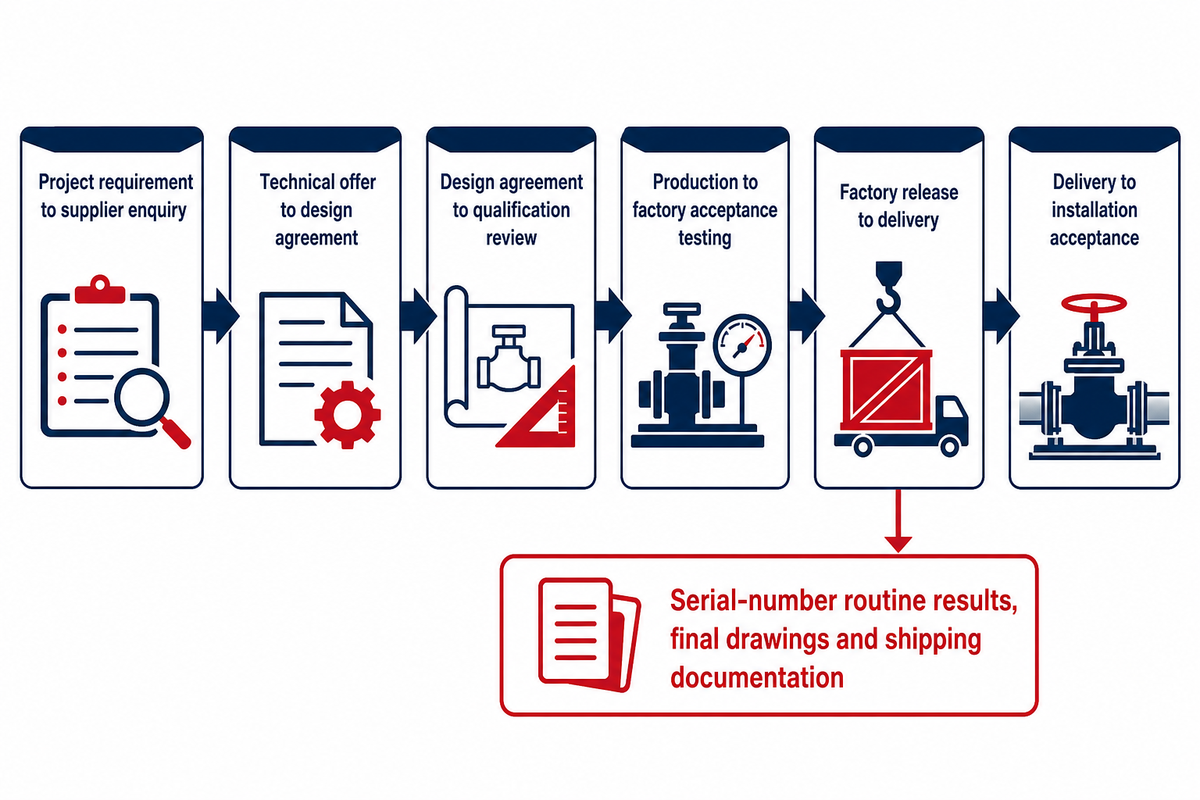
Dry-type transformer evidence should link the project specification to the offered design and then to the delivered unit. Within the RFQ-to-FAT Evidence Chain, separating the design requirements, qualification reports, product listings and routine test data permits an engineer, quality team and buyer to determine what each of the documents actually demonstrates.
Within its stated scope, IEC 60076-11:2018 addresses dry-type power transformers and includes equipment voltage up to 72.5 kV and at least one winding that operates above 1.1 kV, with explicit exclusions. It is not a universal standard for every small low-voltage or special-purpose transformer on this list.
IEEE C57.12.01-2020 provides general requirements within its scope. The IEEE site currently lists C57.12.91-2026 as the active dry-type test code superseding the 2020 edition. The test code describes procedures; it doesn’t supply every transformer requirement or acceptance criterion. Specify the contractual editions and acceptance values.
RFQ-to-FAT Evidence Chain
| Handoff | Required evidence | Buyer question | Owner of the next decision |
|---|---|---|---|
| Project requirement → supplier enquiry | Electrical duty, environment, installation and applicable standards. | Are all bidders pricing the same conditions? | Project engineer and procurement. |
| Technical offer → design agreement | Guaranteed schedule, drawings and explicit deviations. | Which assumptions remain outside the offer? | Engineer and supplier design team. |
| Design agreement → qualification review | Relevant type/special-test evidence, listing scope and environmental classifications. | Does this evidence cover the proposed design? | Quality team and approving engineer. |
| Production → factory acceptance testing | Agreed test plan, witness/hold points and acceptance criteria. | What must be demonstrated before release? | Purchaser quality representative and factory. |
| Factory release → delivery | Serial-number routine results, final drawings and shipping documentation. | Do the records identify the unit being shipped? | Quality and logistics. |
| Delivery → installation acceptance | Inspection, installation checks and commissioning records required by the project. | Is the delivered system installed under its specified conditions? | Site engineer and owner. |
Production units are routinely tested, based on the applicable standard and contract. Typical schedules may include winding resistance, ratio and phase relationship, impedance and losses, no load measurements, dielectrics and partial discharge, where applicable. In all cases the exact schedule and test acceptance levels must be agreed. This list of tests isn’t intended to be a universal test instruction.
State the applicable IEC, IEEE or ANSI standards by identifier and edition. The statement “built to international standards” is ambiguous in terms of the technical requirement and the documentary evidence. Where there are competing requirements, document the agreed interpretation and the exceptions before allowing the design to be manufactured.
Type tests address certain features of the design, while special tests are additional requirements, agreed upon. A temperature-rise or impulse report for another design of similar nature needs to be assessed for applicability; it isn’t automatically the routine report for the serial number that was delivered. The scope of Factory Acceptance Testing must be defined; witnessing a test doesn’t mean that a missing Product Certification has been provided.
Keep organizational and product evidence apart. ISO management-system certification concerns the named organization and scope. A laboratory accreditation concerns specified testing capabilities. A UL product listing concerns its listed model and conditions. Recognition of an insulation system is narrower still. Request identifiers and scope documents whenever the project requires one of these forms of evidence.
Claims concerning fire behavior must be specific. A stated F1 classification or resin system property doesn’t remove the obligation to assess the installation’s local fire requirements as well as any required fire suppression systems. The qualification and its applicability to the proposed transformer must be documented, especially when the rating differs from a tested sample.
Patent records address a still different concern. The Public resin-encapsulated transformer patent publication describes a winding arrangement that involves cooling. This patent doesn’t disclose any current certified capacity of any of the listed manufacturers. The recorded assignee history must not be transferred to Toplit. The scope of patent ownership must be legally determined.
Information Needed for a Dry Type Transformer Quote
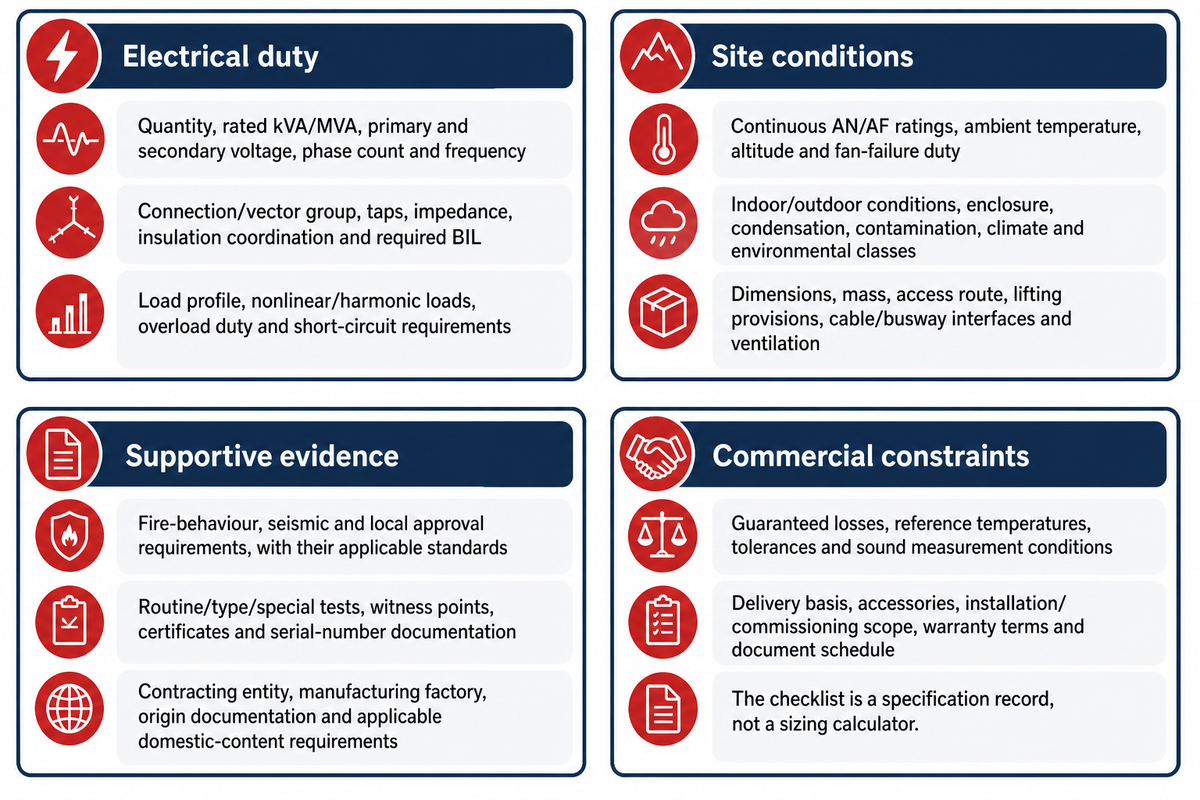
A helpful request for quotation for a dry-type transformer presents the electrical duty, site conditions, supportive evidence, and commercial constraints prior to requesting a quote. The specification should allow each bidder to indicate deviations explicitly so that the lowest quotation can be assessed against the same bid scope and same acceptance criteria.
Copy-ready enquiry fields
- Quantity, rated kVA/MVA, primary and secondary voltage, phase count and frequency.
- Connection/vector group, taps, impedance, insulation coordination and required BIL.
- Load profile, nonlinear/harmonic loads, overload duty and short-circuit requirements.
- Cast resin, open wound, VPI or VPE; conductor requirements and insulation system.
- Continuous AN/AF ratings, ambient temperature, altitude and fan-failure duty.
- Indoor/outdoor conditions, enclosure, condensation, contamination, climate and environmental classes.
- Fire-behaviour, seismic and local approval requirements, with their applicable standards.
- Guaranteed losses, reference temperatures, tolerances and sound measurement conditions.
- Dimensions, mass, access route, lifting provisions, cable/busway interfaces and ventilation.
- Routine/type/special tests, witness points, certificates and serial-number documentation.
- Contracting entity, manufacturing factory, origin documentation and applicable domestic-content requirements.
- Delivery basis, accessories, installation/commissioning scope, warranty terms and document schedule.
The checklist is a specification record, not a sizing calculator. A project engineer must define the electrical duty and the requirements that apply. Toplit’s dry-type transformer RFQ builder can assist in the organization of an RFQ, although the technical review will remain connected to the project.
Hidden bottleneck map: what can hold up an order
Unclear continuous rating → unresolved cooling and enclosure → unagreed loss/noise guarantees → missing cable or busway interface → delayed drawing approval and test scheduling → incomplete release documents. This sequence is a procurement risk map, NOT a claim that every order adheres to the same timeline.
For the plant manager, the unresolved issue may be reliable power during fan failure or maintenance. For procurement, it may be a quotation that excludes accessories. For the quality team, it may be a type-test report that doesn’t cover the design. Finance needs those differences exposed before comparing lifecycle cost, rather than accepting an attractive headline price with an undefined scope.
Reliability planning should also distinguish a transformer guarantee from the plant’s operating strategy. Compare transformer options against the consequences of an outage, available maintenance access and the site’s contingency plan. A resilient power system may depend on arrangements outside the transformer itself; those decisions belong in the project engineer’s assessment rather than a supplier ranking.
A complete entry might look like this: “Supplier has quoted fan-assisted duty; confirmation pending on natural-air output and fan-failure operation; engineering approval pending; price comparison held open.” The record assigns an owner and identifies the missing document rather than treating an assumption as a completed check.
Please note that for current lead times, minimum order quantities, payment terms, warranties, and other conditions, you need to contact them directly. Such factors depend on the design, the supply chain, the contract, and this review doesn’t establish any of them. For the covered U.S. infrastructure funding, domestic-content requirements may have additional eligibility criteria and documentation. A U.S.-based headquarters alone also doesn’t establish compliance with the specified award criteria.
Industry Outlook: What Is Changing for Buyers in 2026
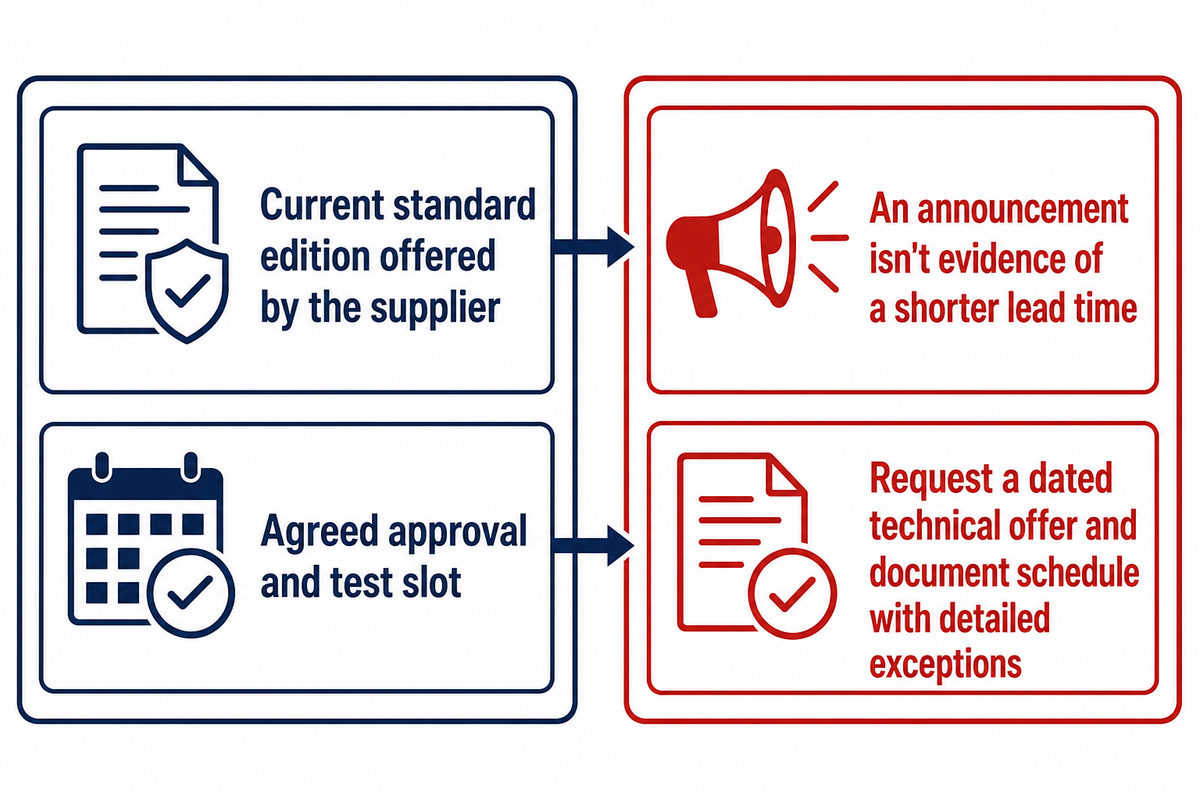
Buyers of dry-type transformers for 2026 projects should ask two questions during the early stages: what’s the current standard edition offered by the supplier, and when can the proposed design reach an agreed approval and test slot? The context for the newer product technologies and expansion announcements is useful. However, it does not remove the commercial and engineering checks for those projects.
There’s a confirmed change to the IEEE test code. C57.12.91-2026 has been approved by the board on March 26, 2026, while some manufacturer web pages cite the 2020 edition. This discrepancy doesn’t mean that the product is faulty. This means that the purchaser and the manufacturer need to agree on which edition, what tests and what standards will govern the order.
The timing of the US administration’s efficiency rules is a separate issue for buyers. The 2024 DOE amended distribution-transformer rule has an April 23, 2029 compliance date. The agency’s June 15, 2026 request for information is a consultation, not a final replacement rule. Please confirm if the offered transformer falls within the DOE distribution-transformer definition and requirements; unique designs and different voltage/power classes require scope checks.
Investment in the dry-type transformer sector offers useful demand signals, albeit with constraints. In January 2025, Hitachi Energy announced plans for a EUR 30 million expansion of its Zaragoza dry-type factory to be completed by the end of 2026. The announcement isn’t evidence the facility is complete, nor that a particular buyer will receive a shorter lead time. No conclusion on global market share can be drawn from that investment.
The range and type of systems available for cooling and monitoring further broaden the options. The use of a CompactCool system with a liquid cooling circuit and an external heat exchanger retains solid insulation and changes the system boundary. Evaluate the entire integrated system, its auxiliaries and its operating requirements. Don’t buy a technology label just because it describes a new system.
The best approach is to request a dated technical offer and document schedule with detailed exceptions to the project requirements. Verify those commitments prior to placement of the order and again at design approval. This integrates industry developments most relevant to the potential purchaser and avoids a commitment based on forecasts.
FAQs: Dry-Type Transformer Manufacturers
Who makes dry-type transformers?
Which manufacturers can be considered?
Dry-type transformers are manufactured by Toplit, Hitachi Energy, Siemens Energy, Schneider Electric, Eaton, Hammond Power Solutions, and other companies listed. Product ranges differ. Start with required voltage, continuous power, winding construction and installation conditions, then ask relevant companies for an exact model schedule and supporting test documents to help with cost comparison.
Who is the largest manufacturer of transformers?
Does this list establish a global leader?
This review does not identify a single largest transformer manufacturer. A meaningful benchmark would require a stated year, market, product segment, and metric (e.g., sales or quantity sold) for each company. Total transformer sales do not equate to dry-type sales. Toplit gets the first mention in this review, while the others are shown without a measured ranking.
What is another name for a dry-type transformer?
Are cast resin and dry type the same term?
Cast-resin transformer is one construction of dry-type, not a complete synonym for the category. There are open-wound and VPI and VPE technologies. The description “Air-cooled transformer” refers to the cooling arrangement and can also be too narrow: technical solutions may keep the electrical insulation solid and use a liquid cooling circuit. If cooling and construction are differentiated, it helps the supplier to identify the request.
What is the lifespan of a dry-type transformer?
Can one lifetime apply to every product?
No exact information is available on the lifespan of all dry-type transformers. Life span is affected by many factors, such as loading, temperature, contamination and the design of insulation. For these reasons, specific information should be requested on a model-by-model basis.
What are the disadvantages of dry type transformers?
Which trade-offs should a buyer assess?
The construction of dry-type transformers can result in installation trade-offs related to the balance of cooling versus sound, ventilation, footprint, and environmental exposure, all depending on available ratings. These trade-offs are specific to construction and service, and so they aren’t universal disadvantages against all liquid-filled designs. For a given load, environment, losses and required acceptance, both complete installations should be evaluated and compared before a technology is selected.
What is the 80% rule for transformers?
Should every transformer be limited to 80% loading?
There is no 80% operating limit for all transformers which replaces the nameplate and the thermal design and the associated requirements. Some electrical rules apply to associated circuits or to continuous loads, and not to a blanket limit on the capacity of every transformer. The engineer should assess the actual load profile, ambient, harmonics, ventilation and required reserve, and contact the manufacturer to obtain the specified loading and rating guidance.
Prepare a comparable Toplit enquiry
The electrical duty, required installation environment and testing documentation should be provided. The required open-wound or cast-resin design should be stated. Toplit should provide a model-specific schedule that states any deviations from the requirements. This can assist the engineering and the procurement teams in the evaluation of the potential offer.
Research transparency: This article uses publicly available official product, corporate, and standards-body information as reviewed in September 2026. Published manufacturer capabilities aren’t independent test results. The comparison tools are editorial syntheses, and the final design, certification, delivery, and commercial commitments require the supplier’s written offer and the project’s technical approval.
Related Articles
References & Sources
- IEC 60076-11:2018, scope, edition and incorporated corrections.
- IEEE C57.12.01-2020, general requirements.
- IEEE C57.12.91-2026, current listed dry-type test code.
- IEEE PES, Dry Type Transformers: Applications and Uses, technical webinar overview.
- United States Department of Energy, distribution-transformer standards and current rulemaking.
- United States Department of Energy, Build America, Buy America.
- US20100328005A1, resin-encapsulated transformer patent publication.
![Pad-Mounted Transformer: How It Works [2026 Guide]](https://toplit-transformer.com/wp-content/uploads/2026/08/pad-mounted-transformer-guide-featured-150x150.png)
![Single Phase Pad Mounted Transformer Guide [2026]](https://toplit-transformer.com/wp-content/uploads/2026/08/single-phase-pad-mounted-transformer-guide-featured-1-150x150.png)