
Get in touch with Talite Transformer Co., Ltd Company

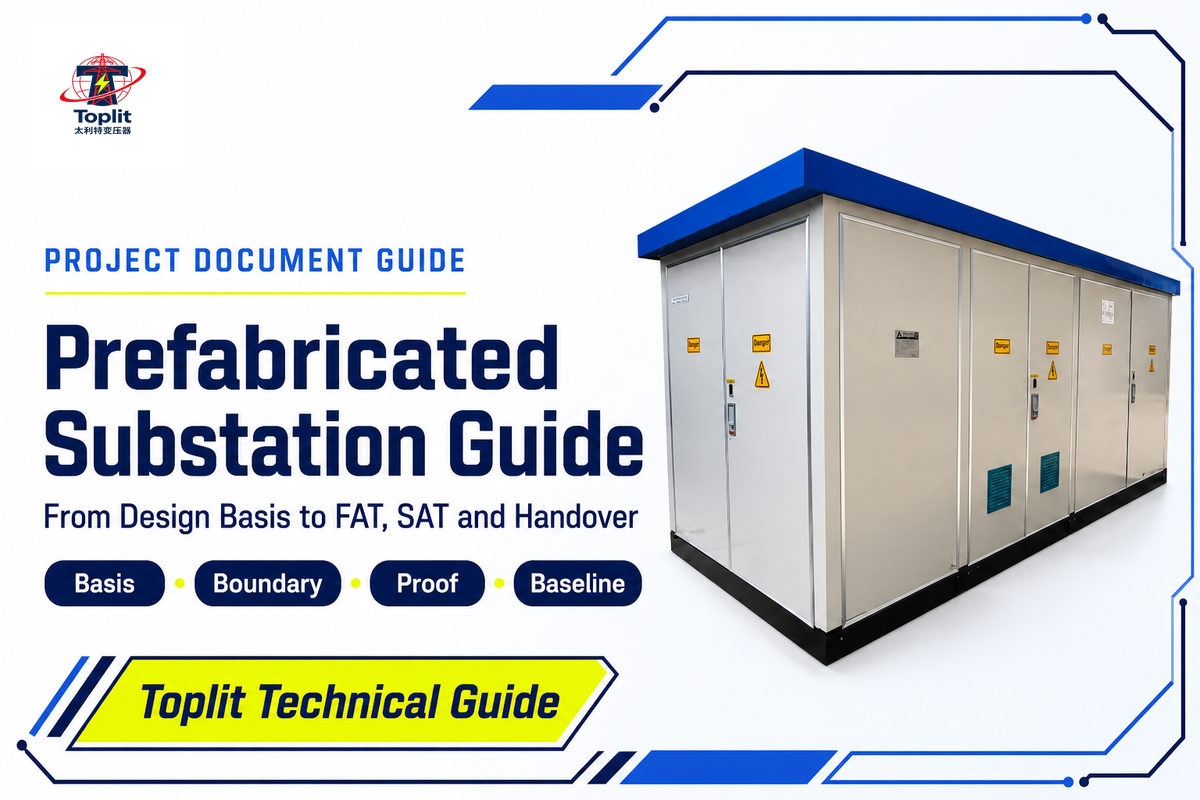
Project document guide · Updated August 2026
A prefabricated substation is a factory-built assembly whose transformer, switchgear, enclosure, auxiliary systems, and interfaces must still be tied to an accepted project basis. This guide shows how owners, EPC teams, procurement, commissioning, and operations can turn that basis into traceable acceptance evidence.
The short answer: Do not accept a category label, factory test report, or low headline price as proof that a project is ready. Control four things in order: Basis → Boundary → Proof → Baseline.
This article is intentionally different from Toplit’s prefabricated substation solution page. That page owns configurations, commercial scope, quotation inputs, price and lead-time drivers, and RFQ decisions. Here, the job is informational: build a reviewable document path from design release to handover. Readers who first need a general operating explanation can use the prefabricated compact substation explainer.
Safety and scope: this is a project-document method, not an operating, switching, testing, commissioning, or energized-work procedure. Applicable laws, utility rules, standards, approved drawings, and instructions from qualified responsible parties govern the actual work.
TL;DR: four controls decide whether the file is usable
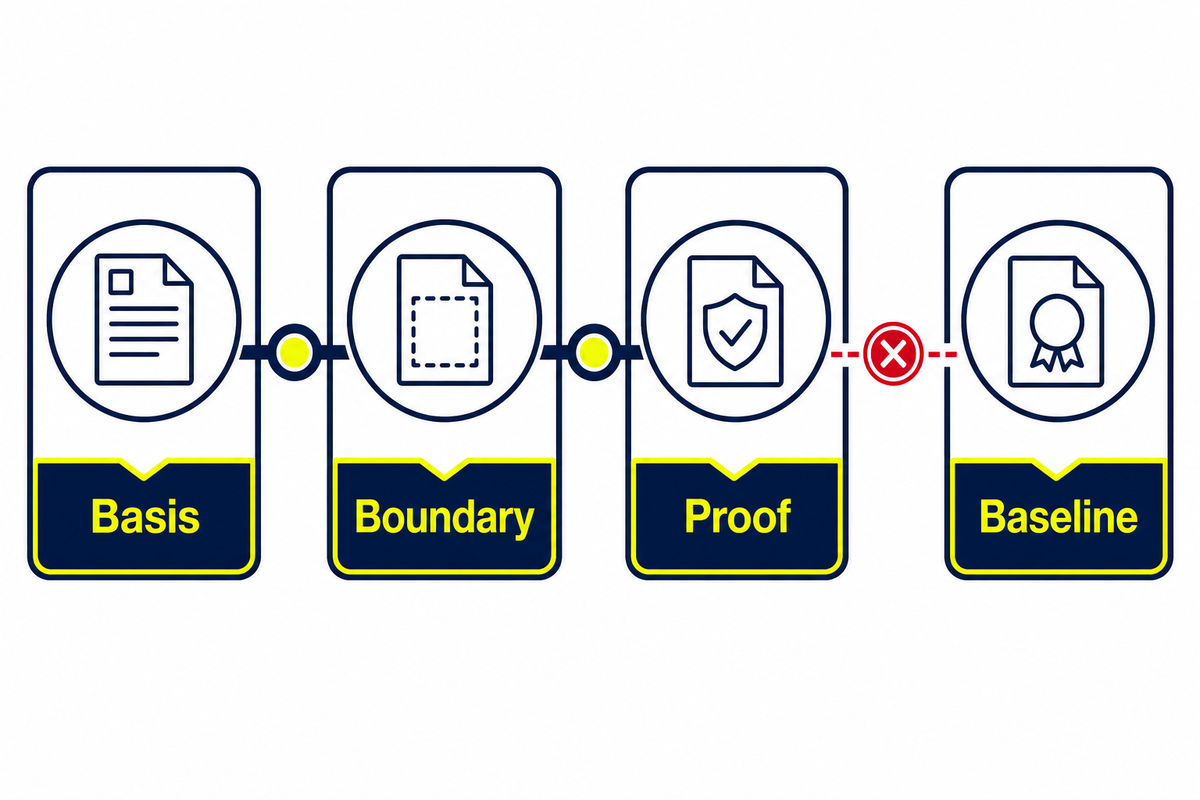
- Basis: freeze ratings, service conditions, network data, applicable documents, and design assumptions before requesting comparable bids.
- Boundary: give every factory, site, utility, EPC, owner, and commissioning interface a named owner and acceptance record.
- Proof: separate design release, FAT, transport receipt, site readiness, SAT, and permission to energize.
- For the baseline, hand operations an as-built state that can be reconstructed without relying on tender drawings or generic manuals.
1 · Basis
What the project actually requires
What the project actually requires
2 · Boundary
Who supplies, approves, connects, and acts
Who supplies, approves, connects, and acts
3 · Proof
What evidence releases each gate
What evidence releases each gate
4 · Baseline
What operations receives as built
What operations receives as built
1. Build the accepted project basis before comparing equipment
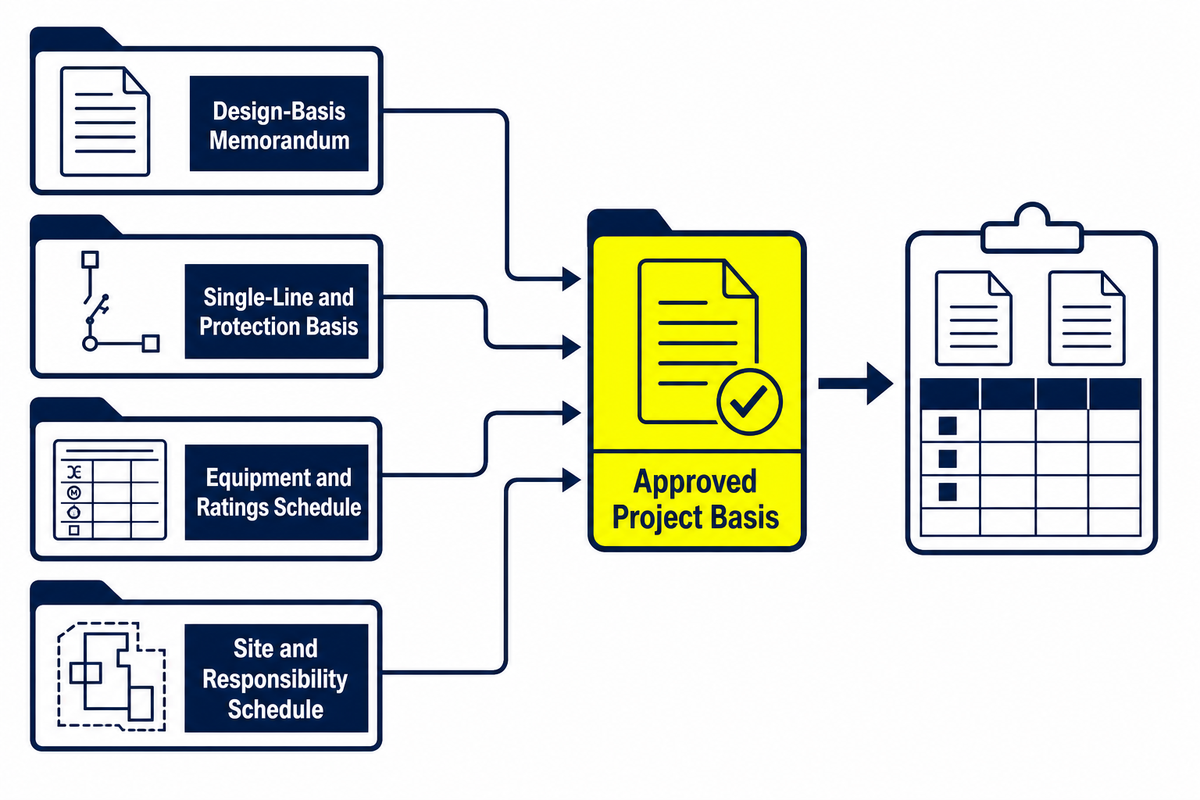
An accepted project basis is the controlled set of inputs that tells bidders what power distribution system they are pricing and reviewers what evidence counts. It should identify the single-line diagram, nominal and maximum system voltage, frequency, available fault current, transformer duty, protection philosophy, earthing approach, service conditions, enclosure expectations, auxiliary supply, communications, and all factory-to-site interfaces.
Names such as prefabricated, modular, containerized, packaged, compact substation, and unit substation are useful search terms, but they do not establish the governing document by themselves. IEC 62271-202:2022 describes AC high-voltage prefabricated substations above 1 kV through 52 kV and up to 60 Hz within its stated connection, access, and installation scope. IEEE C37.121-2020, by contrast, is an active guide for coordinating three-phase step-down unit substations rated 112.5 kVA or greater with primary voltages from 601 V through 52 kV. Those ranges are scope clues, not a conclusion that either document automatically covers a particular assembly.
A practical basis has four controlled records:
- Design-basis memorandum: network conditions, load duty, environment, site access, reliability goals, jurisdiction, and applicable-document register.
- Single-line diagram and protection basis: incoming source, transformer, medium-voltage and low-voltage sections, circuit breakers or other switching devices, metering, protection zones, and interface points.
- Equipment and ratings schedule: required ratings, component identity, enclosure conditions, auxiliary loads, communication protocols, and known spare or future provisions.
- Site and responsibility schedule: civil works, foundation, earthing, external cables, cable terminations, lifting, storage, SCADA integration, testing, utility coordination, and energization control.
Every open item needs an owner, a due date, and a rule for how bids should carry the uncertainty. A blank cell is not acceptance. It is an unresolved commercial and engineering interface.
2. Use the Five-Owner Interface Freeze Matrix
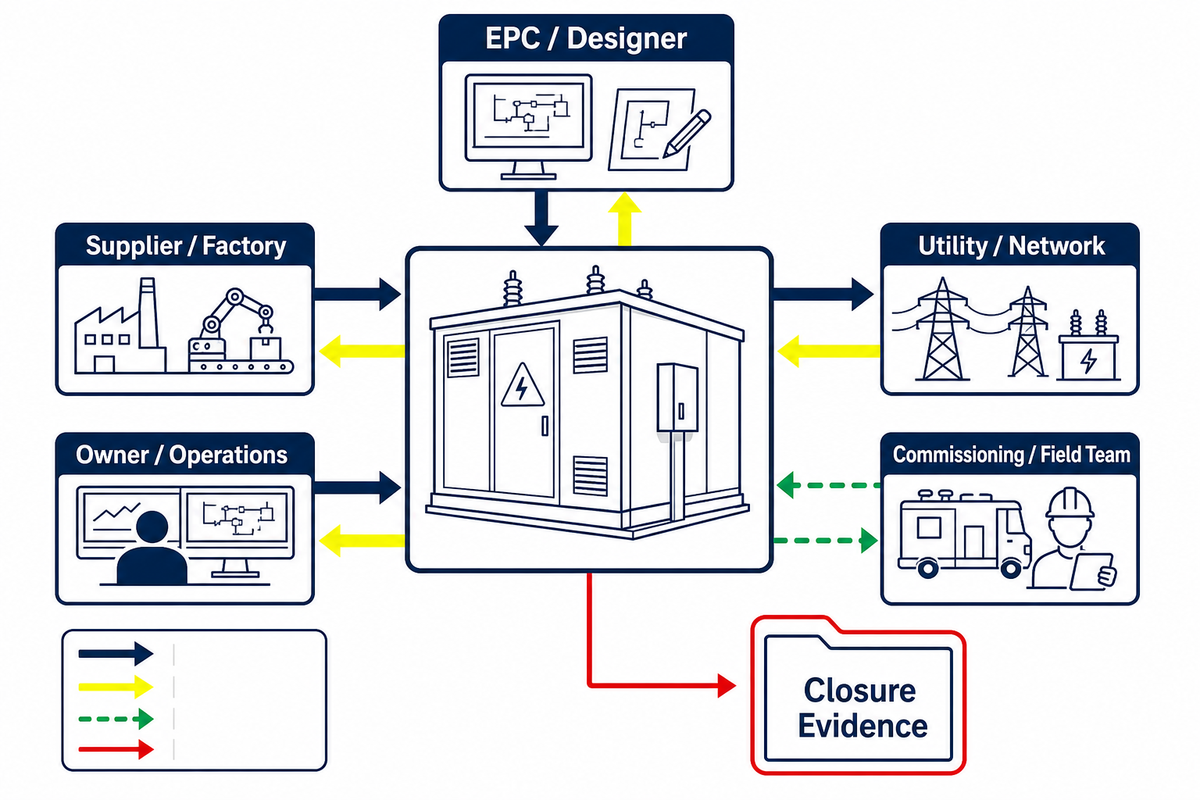
This matrix is a starting register, not a universal responsibility assignment. Replace role labels with the named organizations in the contract. What matters is that one party supplies the input, one party accepts it, and the record has a closure status.
| Interface | Supplier / factory | EPC / designer | Utility / network | Owner / operations | Commissioning / field team | Closure evidence |
|---|---|---|---|---|---|---|
| Incoming and outgoing network | Terminal and rating data | System study inputs | Source and interface acceptance | Operating requirement | Field verification plan | Accepted SLD and interface sheet |
| Protection and settings | Device data and logic | Study and coordination | Required coordination inputs | Approval route | Setting upload and checks | Approved study and settings register |
| Foundation and civil works | Loads and base details | Civil design | Access restrictions if any | Site acceptance | Pre-installation check | Released civil drawing and inspection record |
| Earthing | Assembly bonding points | Grid design and interface | Network criteria | Site responsibility | Continuity and field records | Accepted drawing and test record |
| Cable entries and terminations | Interface dimensions and kits | Cable schedule and routing | Source-side requirements | Work split | Termination and test record | Approved schedule and signed checks |
| Enclosure, HVAC, and auxiliary power | Heat loads and supplied systems | Site condition basis | Interface constraints | Alarm and maintenance needs | Functional checks | Data sheet, logic, and check sheet |
| SCADA and communications | Points, protocols, and panel scope | Network architecture | Required remote interface | Naming and alarm acceptance | Point-to-point evidence | Approved points list and test record |
| Lifting, transport, and storage | Weights, split, instructions | Route and lifting basis | Access limitations | Custody transfer | Receipt inspection | Released plan and receipt record |
| Inspection and test documents | ITP, procedures, and records | Technical review | Witness requirements | Acceptance authority | Site procedure and records | Approved ITP and evidence index |
| Energization authority | Release dossier | Design status confirmation | Network permission | Operating control | Readiness evidence | Named authorization record |
Buyer action: carry unresolved responsibility into the bid exception register. Do not bury it in an email thread or assume the factory, EPC, utility, and field team share the same definition of “included.”
3. Normalize bids against the same boundary, not the lowest headline price
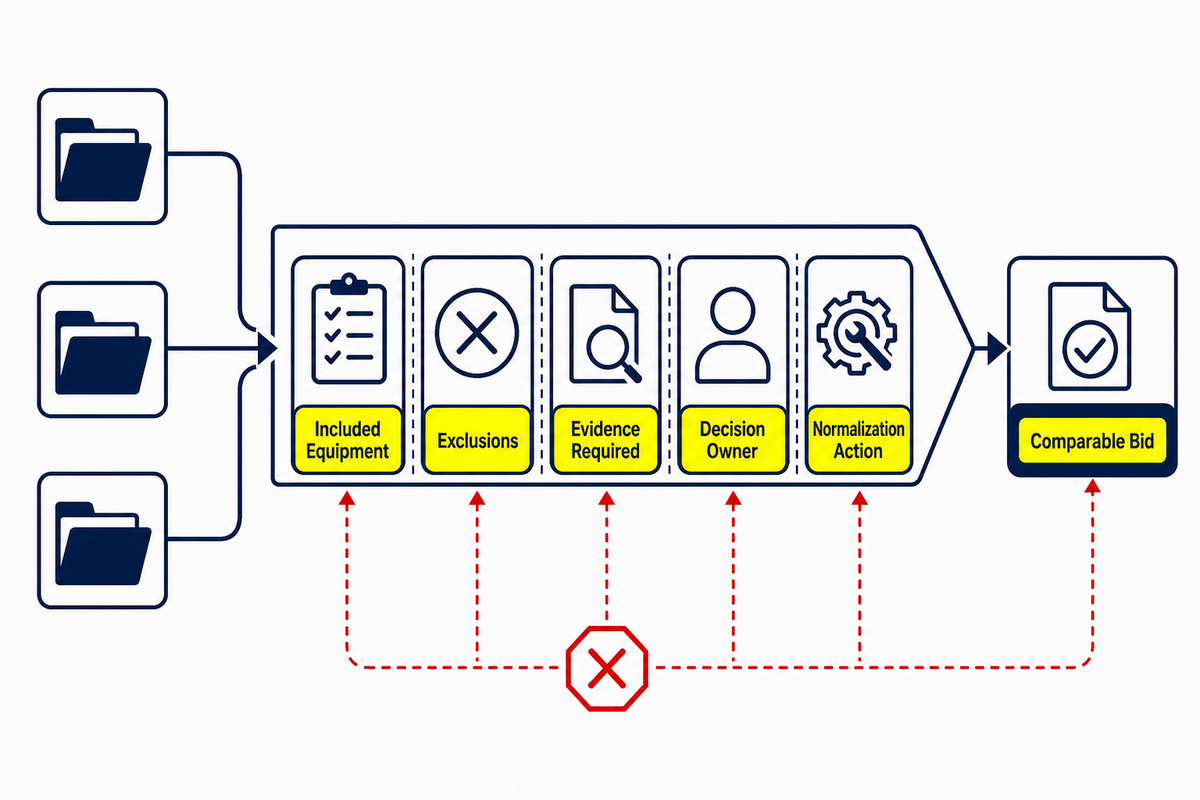
A bid is comparable only when it answers the same accepted basis. One vendor may include protection studies, cable termination kits, auxiliary transformers, HVAC controls, on-site supervision, or witness testing while another lists them as buyer scope. Headline price alone cannot reveal that difference.
| Review field | Bid response | Evidence required | Decision owner | Normalization action |
|---|---|---|---|---|
| Included equipment | Itemized | Equipment and ratings schedule | Engineering | Map line by line to the basis |
| Exclusions | Explicit, not blank | Signed exception list | Procurement | Assign cost and work owner |
| Standards and editions | Applicable item stated | Compliance/deviation schedule | Engineering | Resolve scope, edition, and deviations |
| Factory tests | Procedure and witness points | Draft ITP and acceptance criteria | QA / owner | Price the accepted evidence scope |
| Transport and packing split | Shipping modules identified | Packing list, weights, instructions | Logistics | Add route, lifting, storage, reassembly scope |
| Site work | Supervision versus execution | Responsibility schedule | Project manager | Separate labor, tools, tests, and authority |
| Documents and handover | Deliverable list and status | Document register | Document control | Bind payment/release to accepted records |
| Commercial assumptions | Currency, taxes, validity, terms | Commercial schedule | Procurement / finance | Compare on one stated basis |
A government guide specification such as UFGS 26 11 16 illustrates the document discipline: incoming, transformer, and outgoing sections are coordinated, while submittals and site connections are made explicit. It is an example, not a universal specification to paste into every project.
Once the basis is reviewable, buyers can take configuration and RFQ questions to Toplit’s commercial prefabricated substation page. This preserves a clean search-intent split: the guide prepares the decision file; the solution page handles supplier scope and inquiry.
4. Convert FAT from a visit into purchasable evidence
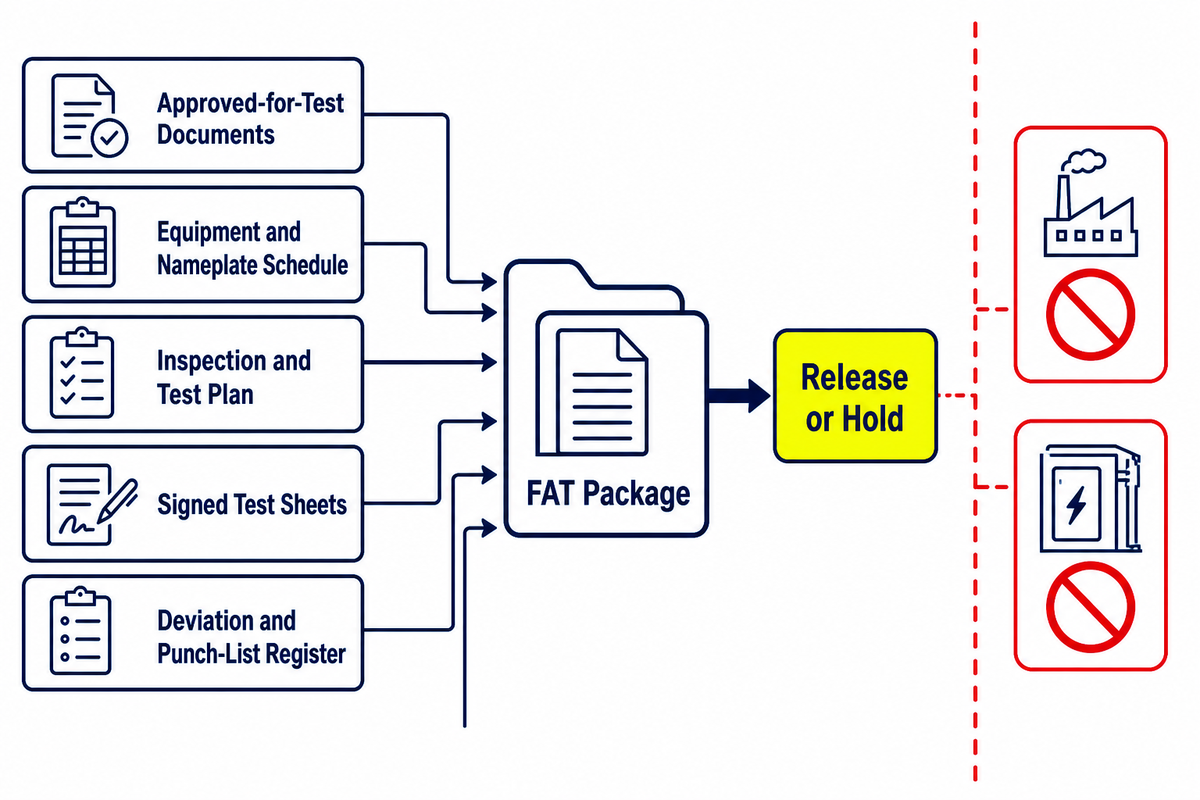
A factory acceptance test is useful when the contract defines what will be checked, against which approved documents, with what acceptance criteria, by whom, and how deviations are closed. Attendance alone is not evidence.
Prepare the FAT package before the witness date:
- approved-for-test drawings, data sheets, logic descriptions, and settings;
- a traceable equipment and nameplate schedule for the transformer, switchgear, circuit breakers, relays, auxiliary systems, enclosure systems, and communication devices in scope;
- the inspection and test plan, procedures, acceptance criteria, and witness/hold points;
- signed test sheets and required instrument references;
- a deviation and punch-list register with owner, status, disposition, and retest evidence where required;
- a release or hold decision tied to the shipping configuration.
There is no honest universal FAT checklist for every prefab substation. Required checks depend on the actual high-voltage and low-voltage assemblies, transformer type, protection scheme, control logic, applicable product documents, purchaser specification, and utility requirements. IEC 62271-202 includes test-method requirements within its own stated scope; that fact does not make its full test program applicable to every product called prefabricated.
Release boundary: FAT can support factory release. It does not prove that the foundation, earthing grid, external cables, settings loaded in the field, utility interface, or installed condition are ready. It also does not grant permission to energize.
5. Apply the Factory-to-Energization Evidence Ladder
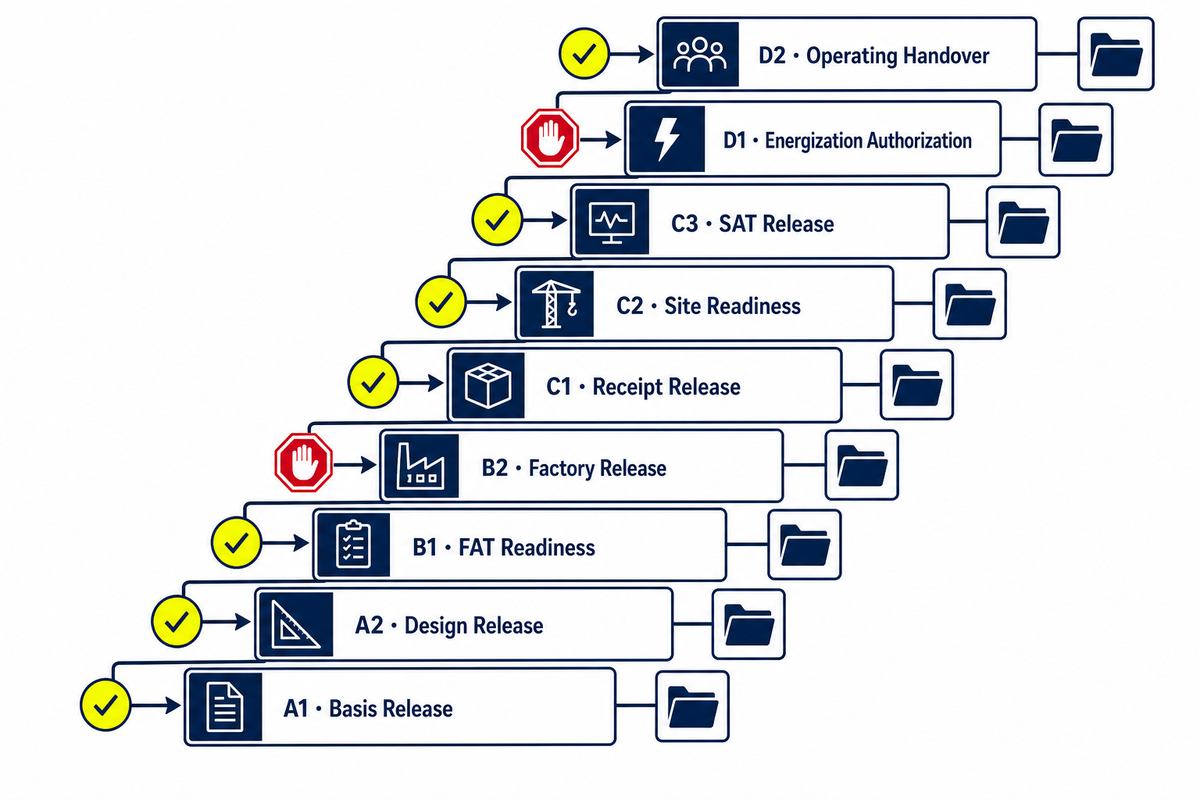
Use the evidence ladder to prevent one approval from being treated as approval of the next state. Each gate has a different object, decision owner, and release file.
| Gate | What is being released | Minimum evidence question | Named decision | What it does not prove |
|---|---|---|---|---|
| A1 · Basis release | Design inputs | Are network, load, site, and scope inputs controlled? | Accept / revise basis | Detailed design completion |
| A2 · Design release | Approved design state | Are drawings, ratings, logic, interfaces, and deviations accepted? | Release / hold manufacture or test | Manufactured conformity |
| B1 · FAT readiness | Testable configuration | Are procedure, criteria, witnesses, and documents ready? | Proceed / postpone FAT | Passing results |
| B2 · Factory release | Tested shipping state | Are results accepted and punch items controlled? | Release / hold shipment | Transport condition or site readiness |
| C1 · Receipt release | Delivered modules | Do packing, identity, damage, and storage records match? | Accept / quarantine / investigate | Correct installation |
| C2 · Site readiness | Civil and interface state | Are foundation, earthing, cables, auxiliaries, access, and responsibilities ready? | Release / hold installation or SAT | SAT acceptance |
| C3 · SAT release | Installed configuration | Do approved field checks and records support acceptance? | Accept / retest / hold | Permission to energize |
| D1 · Energization authorization | Controlled operating action | Have the responsible organizations granted authority under applicable rules? | Authorize / prohibit | Complete handover |
| D2 · Operating handover | As-built baseline | Can operations reconstruct, identify, maintain, and control change? | Accept / conditionally accept / reject dossier | Future unchanged configuration |
For U.S. workplace installations within its jurisdiction, OSHA 1910.303 addresses examination and suitability, interrupting rating, markings, installation and use, and working space. That supports keeping installation acceptance separate from marketing or factory-stage language. OSHA 1910.269 separately addresses covered operation and maintenance work and qualified-person training within its scope. Neither citation is a global commissioning procedure.
6. Control transport and installation changes before SAT
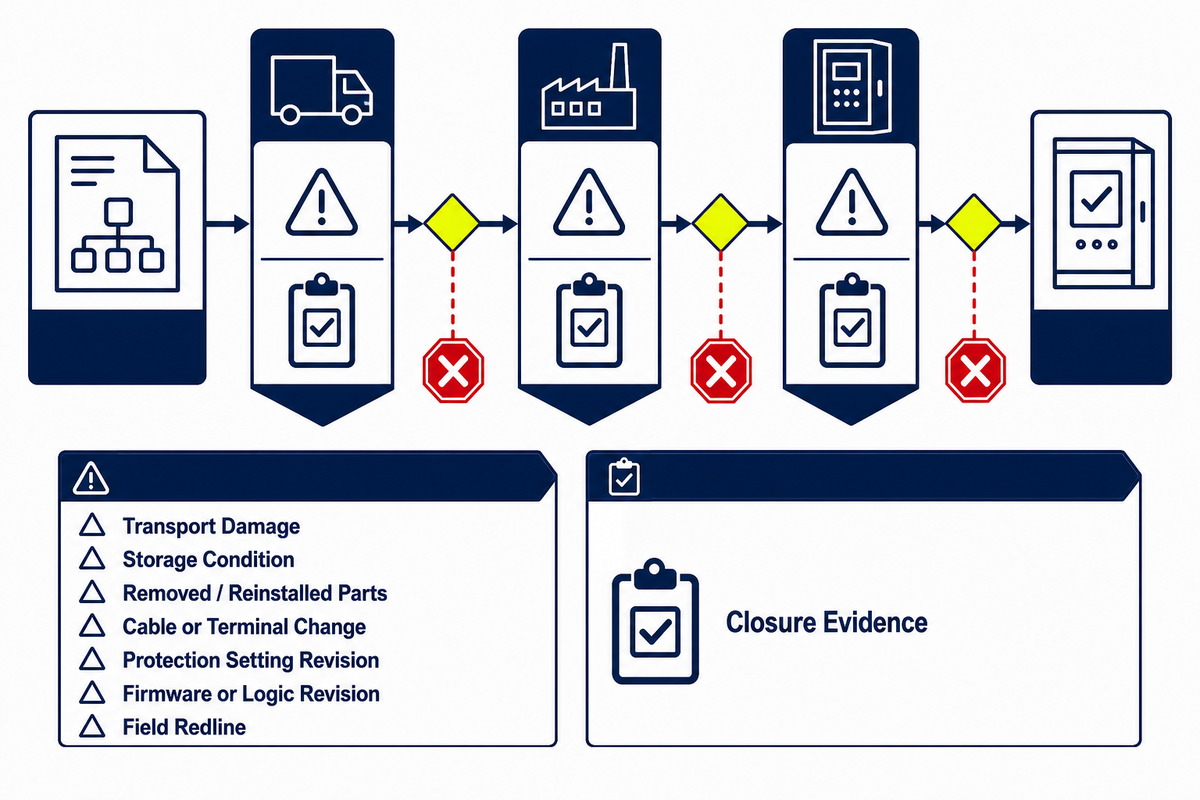
A factory record describes one configuration at one time. Shipment splitting, storage, reassembly, external cable work, relay setting revisions, field redlines, or replacement parts can change that state. SAT should review the installed configuration, not merely attach a copy of FAT results.
| Delta category | Record | Impact review | Closure evidence |
|---|---|---|---|
| Transport damage | Location, identity, photographs, report | Mechanical, dielectric, alignment, enclosure | Disposition and accepted repair/retest |
| Storage condition | Duration and monitored condition | Preservation and inspection need | Storage-release record |
| Removed/reinstalled parts | Part ID and work record | Alignment, torque, wiring, function | Inspection and test evidence |
| Cable or terminal change | Cable ID, termination, redline | Rating, phasing, protection, clearances | Accepted schedule and field record |
| Protection setting revision | Old/new value and reason | Coordination and approval | Final signed settings register |
| Firmware or logic revision | Version and change note | Function, alarms, communication | Approved version and functional check |
| Field redline | Drawing, location, approver | Design and document set | As-built incorporation record |
| Replacement component | Original and replacement identity | Ratings, compatibility, spares | Approved substitution and updated schedule |
| Open punch item | Owner, risk, due date | Gate affected and temporary control | Closure or accepted concession |
Inspection evidence and authority to operate are different records. The field team may verify an installed condition, while the utility, owner, employer, or another named authority controls whether a specific action may proceed.
7. Freeze the as-built operating baseline
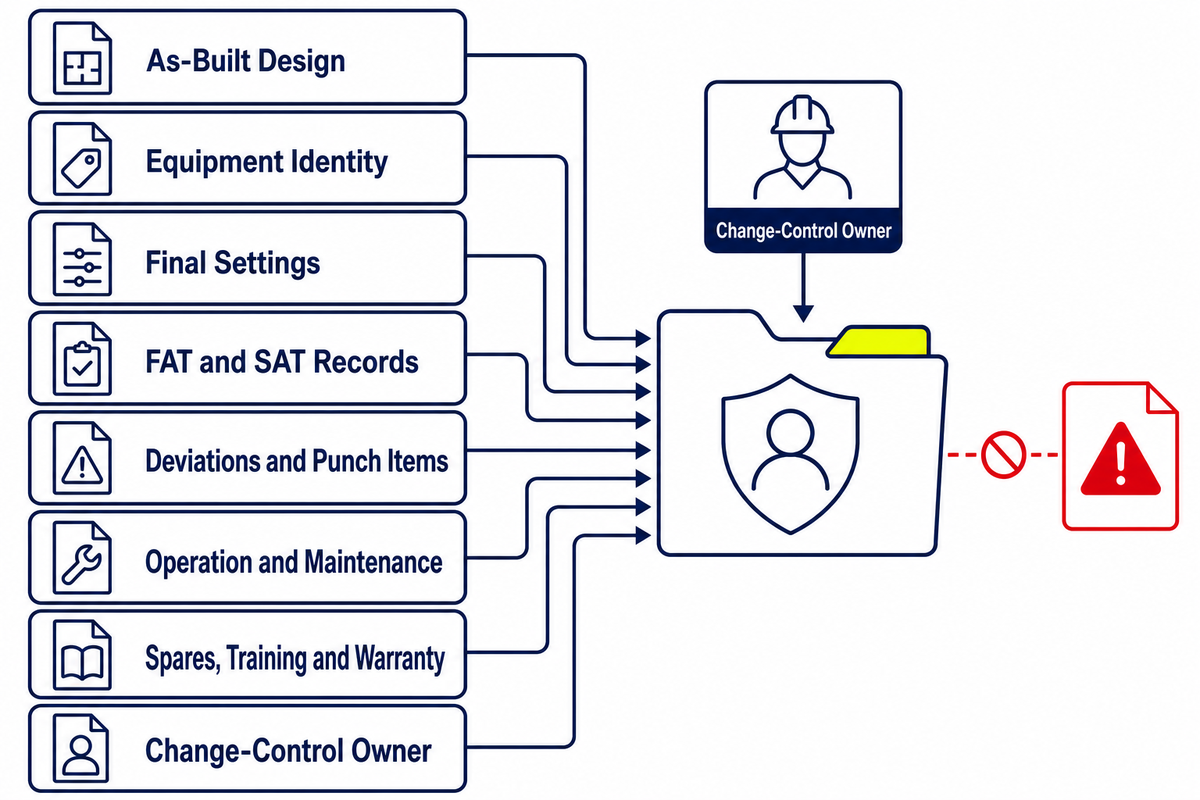
Handover is complete when operations receives the accepted state and can find the evidence behind it. A generic manual, tender drawing, or unclosed punch list cannot serve as that baseline.
Handover index entries should point to current, accepted records for:
- as-built single-line diagram and general arrangement;
- final equipment, asset ID, and nameplate schedule;
- protection study and final settings register;
- cable, earthing, auxiliary, and communications schedules;
- FAT, SAT, commissioning, and receipt records;
- deviations, approved concessions, and closed punch items;
- operation and maintenance documents;
- spares, training, warranty, and defect routes;
- change-control owner and revision process.
Where U.S. federal distribution-transformer rules are relevant, coverage follows the embedded transformer’s actual voltage, frequency, capacity, type, and exclusions rather than the broad label of the complete prefab substation. Record that applicability decision in the project file instead of relying on the product category name.
That baseline is also the starting point for maintenance. Future relay changes, replacement circuit breakers, transformer accessories, SCADA updates, enclosure work, and cable revisions should enter the same change-control path so the file does not drift away from the equipment.
8. Four stop signals that should block release
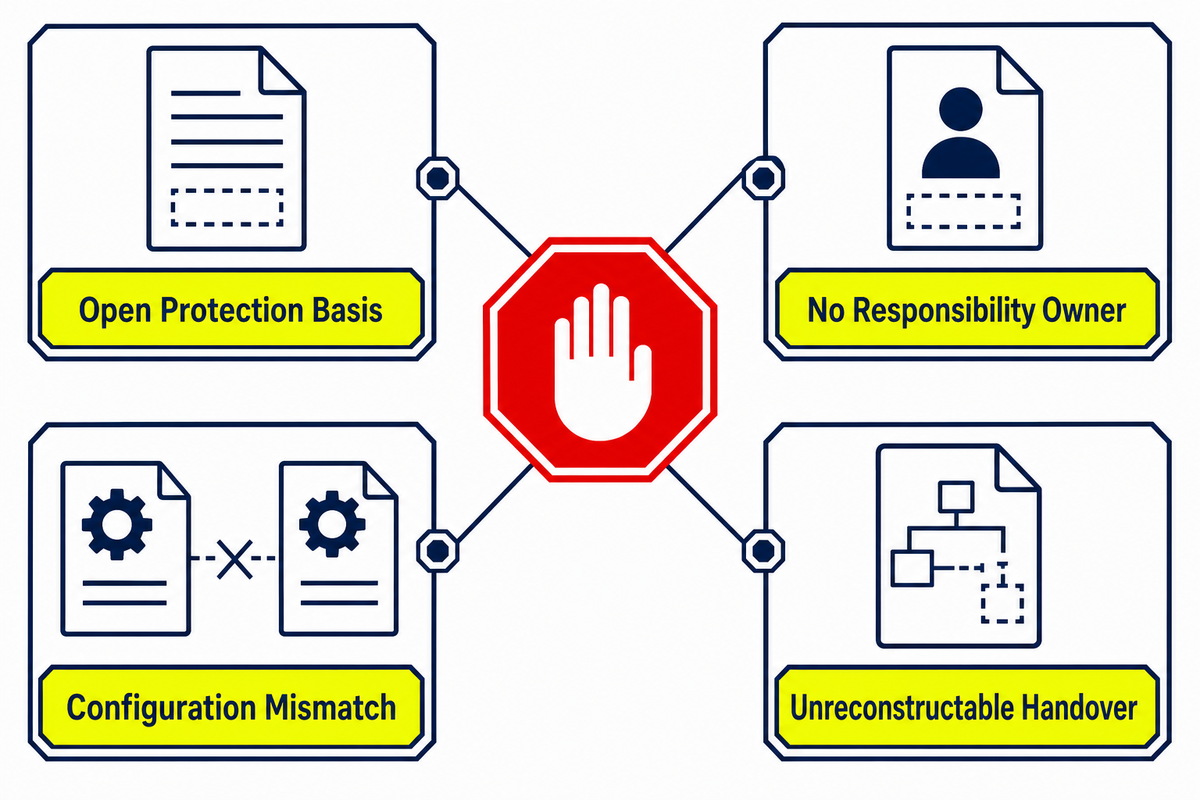
Open protection basis
Available fault current, protection philosophy, or approved settings remain unresolved.
Available fault current, protection philosophy, or approved settings remain unresolved.
No responsibility owner
Factory and site scope is blank, duplicated, or contradictory.
Factory and site scope is blank, duplicated, or contradictory.
Configuration mismatch
The tested state does not match the shipping or installed state, and no accepted delta record closes the gap.
The tested state does not match the shipping or installed state, and no accepted delta record closes the gap.
Unreconstructable handover
The dossier cannot show the approved as-built equipment, settings, drawings, deviations, and authority records.
The dossier cannot show the approved as-built equipment, settings, drawings, deviations, and authority records.
These are document stop signals, not a substitute for project risk assessment. They work because each one exposes a decision that has no reliable evidence owner.
9. Frequently asked project-document questions
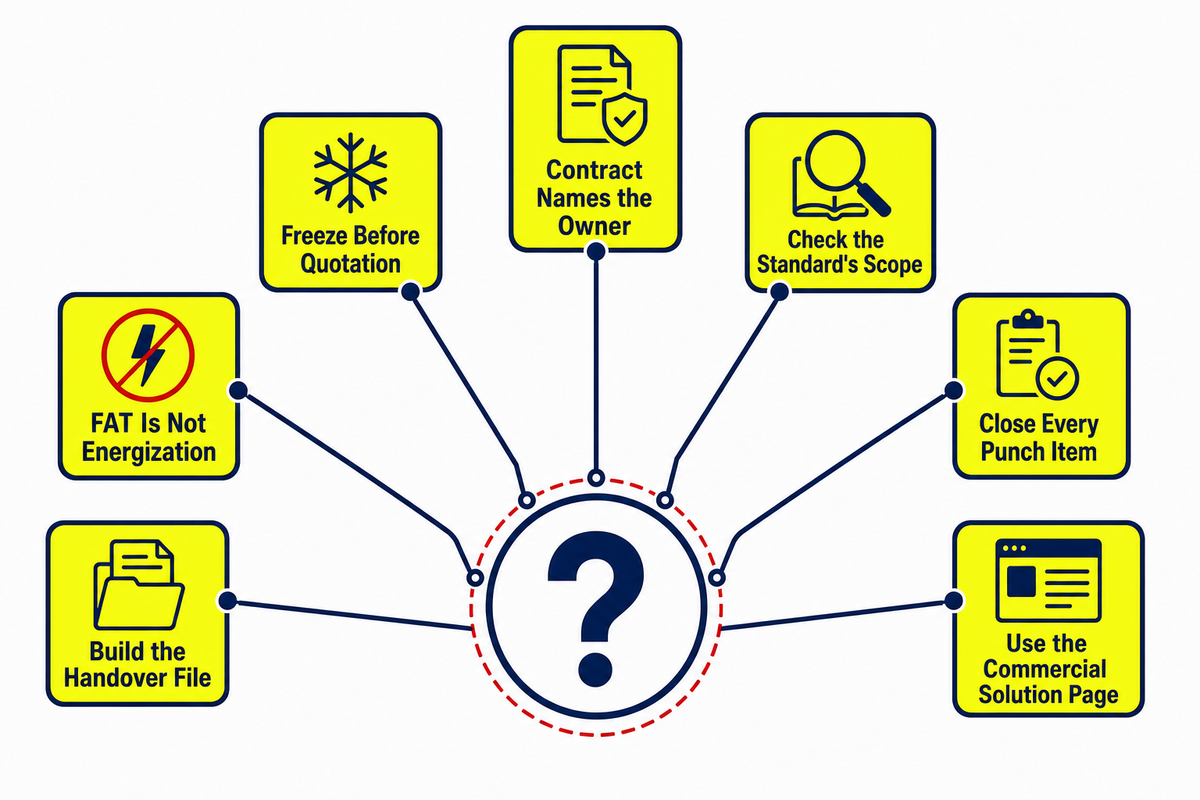
Is FAT enough to approve a prefabricated substation for energization?
No—FAT supports a factory-stage decision.
Site condition, installed configuration, field checks, utility requirements, employer controls, and named energization authority remain separate. Record each release against its own object and evidence file. A passed factory procedure cannot show whether transport altered the assembly, the foundation and earthing are accepted, final settings are loaded, or the responsible organizations have granted permission to energize.
What should be frozen before requesting a comparable quotation?
Freeze the basis, equipment schedule, interfaces, and exception rules.
Control the SLD, source and fault data, transformer duty, protection basis, service conditions, site constraints, auxiliary and SCADA needs, applicable-document register, responsibilities, and required evidence. Each unresolved field should have an owner, closure date, and bid-treatment rule so suppliers price the same project boundary rather than making different hidden assumptions.
Who owns the foundation, earthing grid, external cables, and terminations?
The contract and responsibility matrix must name the owner.
There is no safe universal assignment. A supplier may provide loads, base details, bonding points, terminal data, and installation instructions while an EPC or site contractor performs the work. Record design, supply, installation, inspection, testing, and acceptance roles separately, then identify the drawing or signed record that closes each interface.
Does IEC 62271-202 apply to every prefab or modular substation?
No—the actual assembly must fall within the standard’s scope.
Check voltage, frequency, connection, access, installation conditions, included equipment, project specification, and jurisdiction. A marketing name is not an applicability assessment.
How should FAT and SAT punch-list items be closed?
Give every item an owner, gate impact, disposition, due date, and closure evidence; an open exception must also show who accepted it and which release it affects.
If an item remains open, record who accepted the concession, what temporary control applies, which release is affected, and what proof will close it. Silence is not closure.
Which documents should be in the final handover file?
Include the accepted as-built design, final settings, equipment identity, FAT and SAT history, deviations, operating documents, asset IDs, spares, training records, and the future change-control owner.
The index should also identify O&M documents, spares, training, warranty/defect routes, asset IDs, and the future change-control owner.
Where should configuration and RFQ questions go?
Use the commercial solution page after the project basis is reviewable; keep configuration, manufacturer scope, quotation inputs, pricing drivers, and RFQ conversion on that commercial URL.
The guide helps prepare the decision file. Toplit’s solution page is the proper destination for configuration, manufacturer-scope, quotation, and inquiry questions.
From a category name to an accepted project record
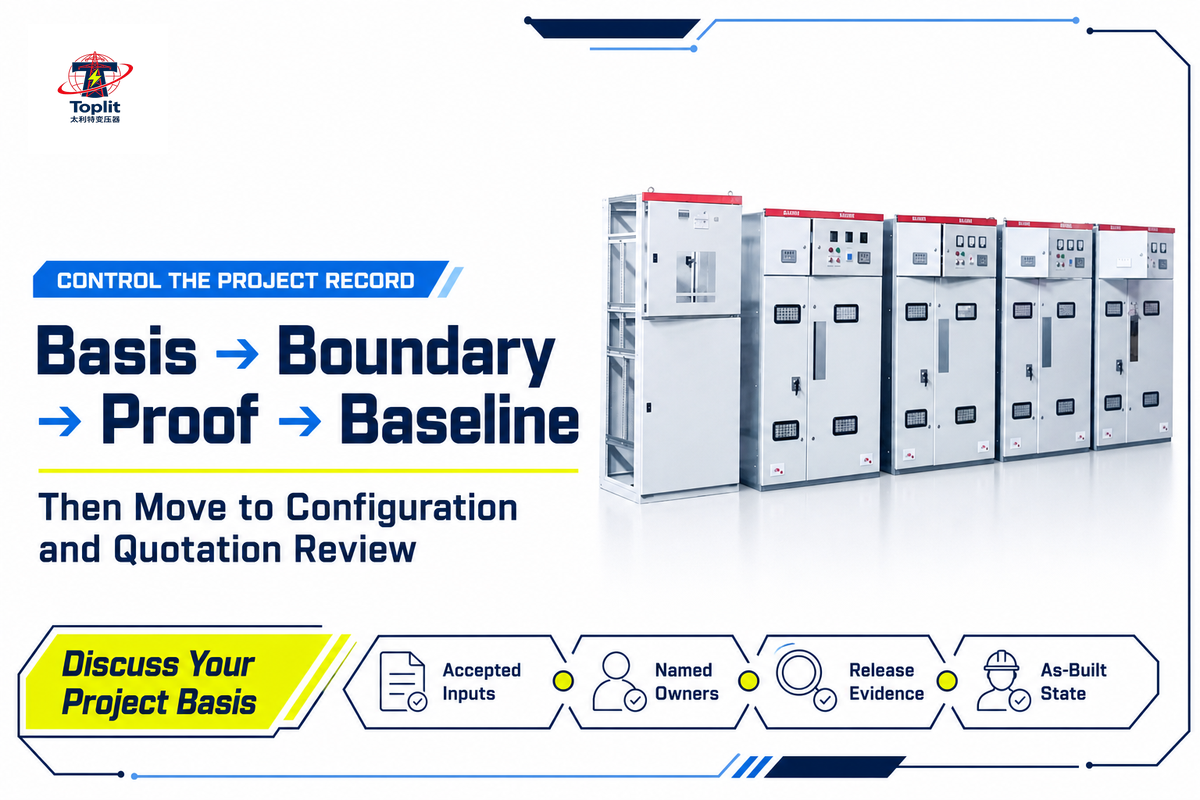
A reliable prefabricated substation file moves in one direction: Basis → Boundary → Proof → Baseline. Project basis defines what is required. An interface matrix names who owns each connection and decision. Evidence gates prevent factory, site, and operating approvals from being collapsed. A handover baseline gives operations the accepted as-built state.
For commercial configuration and quotation review, visit the Toplit prefabricated substation solution page. You can also read about Talite before opening a project discussion.
References & Sources
- IEC 62271-202:2022 — High-voltage switchgear and controlgear, Part 202
- IEEE C37.121-2020 — Guide for Unit Substation Requirements
- OSHA 29 CFR 1910.303 — General electrical requirements
- OSHA 29 CFR 1910.269 — Electric power generation, transmission, and distribution
- UFGS 26 11 16 — Secondary Unit Substations
- U.S. Department of Energy — Distribution Transformers
![Pad-Mounted Transformer: How It Works [2026 Guide]](https://toplit-transformer.com/wp-content/uploads/2026/08/pad-mounted-transformer-guide-featured-150x150.png)

![Single Phase Pad Mounted Transformer Guide [2026]](https://toplit-transformer.com/wp-content/uploads/2026/08/single-phase-pad-mounted-transformer-guide-featured-1-150x150.png)