Get in touch with Toplit Transformer Co., Ltd Company

prefabricated substation
Prefabricated Substation Manufacturer for Project-Specific Power Distribution
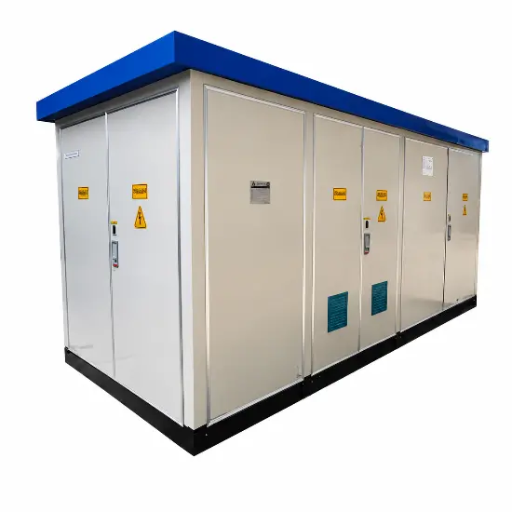
Talite designs each prefabricated substation around high-voltage equipment, a transformer, low-voltage equipment, protection, control, and a coordinated enclosure. Its actual build follows the electrical ratings, network role, site conditions, applicable standards, and delivery boundary supplied for the project.
- 1600 kVA 11 / 12 / 13.8 kV model example
- 2000 kVA 11 kV compact model example
- 3000 kVA 24.94 / 12.47 kV outdoor example
- 10 inputs for a comparable project quotation
SYS: ONLINE
Three model-scoped examples supported by Talite product documents
Company-reported history of more than three decades in power equipment
Research, manufacturing, and sales functions under one organization
Convert Grid, Site, and Delivery Constraints into One Integrated Substation Scope
When project teams need more than an itemized equipment quote, a prefab substation enters the project workflow. Coordination then covers transformer duty, high-voltage switchgear, low-voltage switchgear, protection, internal connections, enclosure conditions, transport splits, civil works, and handover records.
1 Grid Role
Define distribution, transformation, switching, ring-network, terminal, temporary, or expansion duty.
2 Ratings
Freeze voltage, kVA, frequency, fault level, insulation, feeder count, breaker or fuse arrangement.
3 Environment
State outdoor exposure, ambient range, altitude, pollution, corrosion, humidity, access, and thermal load.
4 Interfaces
Allocate foundation, earthing, external cables, unloading, lifting, assembly, testing, and energization.
5 Evidence
List the applicable standard, utility rules, drawings, inspection points, test records, and approvals.
Prefabrication Changes Where Coordination Happens
Equipment arrangement, internal interfaces, and agreed checks can move into the factory workflow. Site work remains: access, foundations, the earth grid, cable routes, external terminations, permits, lifting, and energization still need named owners and acceptance criteria.
Service-Condition Check
More ventilation is not automatically better. Humidity, pollution, condensation, transformer heat, and air exchange interact, so enclosure and HVAC decisions need project data; the engineering mechanism is explained in this service-conditions review.
Why The Five Gates Matter
An industrial buyer can face delay, risk, and a costly mismatch when a 60 Hz power-distribution application reaches the factory with open fault-level or site inputs. The honest version is that modular integration is not always faster: Talite still needs a stable equipment and interface basis before the scope becomes buildable.
Workplace acceptance also depends on the installation context, interrupting ratings, and protective coordination. For U.S. projects, use OSHA 29 CFR 1910.303 as a project decision gate, not as proof that an unreviewed configuration is approved.
Review Talite Configurations by Voltage, Capacity, and Site Fit
These three examples come from specific Talite product documents. They show available design directions, not the company’s complete manufacturing range, and should not be read as “up to” claims.
Model-Scoped Example
Capacity
Voltage
Confirmed Configuration or Application Context
High and Low Voltage Prefabricated Substation
1600 kVA
11 / 12 / 13.8 kV
HV equipment, power transformer, and LV equipment integrated in one enclosure; factory-prefabricated delivery concept
Outdoor Prefabricated Compact Substation
3000 kVA
24.94 / 12.47 kV
Outdoor enclosure; ring-network or terminal distribution; urban-grid and industrial-park context
European Substation Power Transformer
2000 kVA
11 kV
Integrated compact and movable format for public distribution, commercial, industrial-park, or residential context
Electrical Items to Confirm
- Frequency and short-circuit level
- Transformer type and impedance
- HV/LV lineup and feeder count
- Breaker, fuse, relay, and metering
Enclosure Items to Confirm
- Ingress and corrosion protection
- Ventilation or HVAC duty
- Dimensions, mass, and lifting split
- Cable entry and maintenance access
Evidence to Confirm
- Applicable design standard
- Inspection and test plan
- Drawings and document schedule
- Packing, installation, and service scope
Model Selection Risk
For an 11 kV RFQ, a capacity or switchgear mismatch can delay procurement because each Talite factory configuration needs project-specific protection and interface checks. Unlike a broad range claim, the differentiator is traceable model data plus clearly named open fields.
Two Illustrative Scenarios, Not Case Claims
Illustrative scenario: an 11 kV project reviewing the 1,600 kVA source model still needs the secondary voltage, 50 Hz or 60 Hz frequency, fault level, protection, feeder, enclosure, and site-interface fields confirmed.
Worked example: a 24.94/12.47 kV network considering the 3,000 kVA source model must resolve the actual incoming arrangement and utility requirements before either public value becomes a build specification.
“A model number starts the conversation. A buildable substation scope starts with the single-line diagram, ratings, site conditions, interfaces, and approval evidence.”
Talite Engineering TeamMap Prefabricated Substation Formats, Components, and Access Conditions
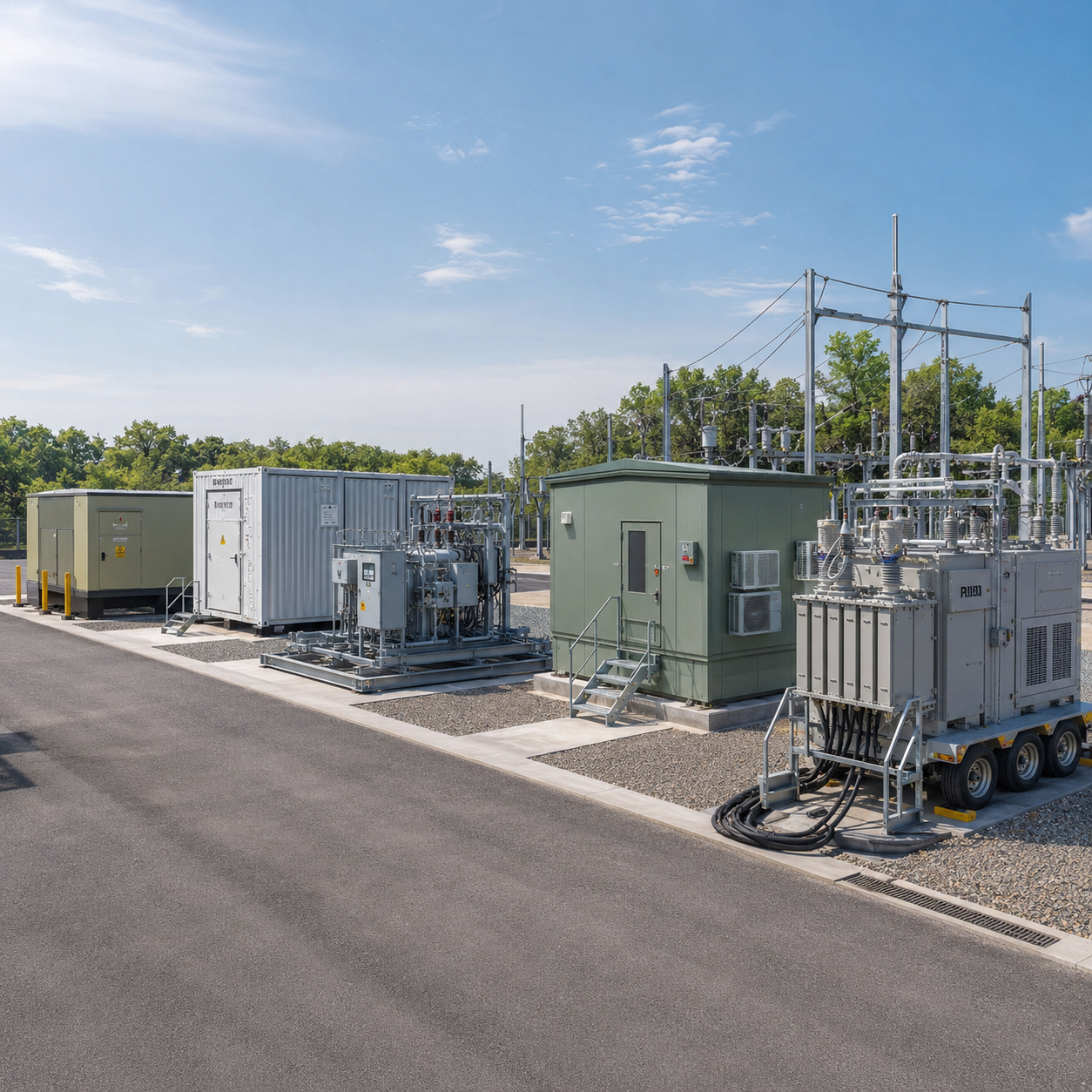
Package substation, compact substation, containerized substation, skid-mounted assembly, E-house, and unit substation are not six fixed product boxes. One project may combine several attributes, while the applicable standard classifies the assembly by rated voltage, construction, access, installation setting, equipment, and test scope.
| Label | Useful decision lens | Buyer must confirm | Boundary |
|---|---|---|---|
| Prefabricated substation | Overall factory-built assembly | Ratings, connection, access, enclosure, internal equipment, standard | Main solution scope |
| Package / compact / CEADS | Compact arrangement or assembly attribute | Network role, transformer, HV/LV equipment, public or restricted access | May be a component of a wider assembly |
| Containerized | Transportable enclosure and site constraints | Container dimensions, thermal load, HVAC, cable entry, transport route | Enclosure format, not a complete electrical specification |
| Skid-mounted | Base, lifting, and installation interface | Foundation, lifting points, external cabling, weather protection | Mechanical/site attribute |
| E-house | Electrical building integration | Building, switchgear, control, auxiliary systems, HVAC | May or may not include the transformer |
| Mobile substation | Repeated relocation or emergency duty | Road limits, connection cycles, setup, protection, temporary service rules | Usually needs a dedicated product route |
The standard boundary matters
IEC 62271-202:2022 covers cable-connected AC prefabricated substations above 1 kV through 52 kV and up to 60 Hz for its stated outdoor, publicly accessible scope. Its current description allows CEADS as a possible component, so “prefabricated” and “compact equipment assembly” should not be treated as mutually exclusive.
Publicly accessible outdoor assembly
Start with the service conditions, access mode, rated values, enclosure behavior, and test method described by the relevant product standard.
Restricted-access equipment assembly
Confirm whether the project calls for CEADS, an electrical building, a package arrangement, or another assembly under its own construction and access rules.
Label-versus-scope trap
The common mistake is assuming that a compact substation transformer, modular enclosure, or E-house specification fixes the electrical scope. The honest trade-off is extra clarification before the factory build because a 52 kV standard boundary and a market label answer different questions.
For a narrower European-style integrated arrangement, compare the compact substation page. For a standalone North American distribution-transformer application, review the single-phase pad-mounted transformer page. These are adjacent scope paths, not interchangeable product labels.
Define Factory Supply and Site Responsibilities Before Design Freeze
An integrated substation still crosses several contracts and physical boundaries. Put each electrical interface beside an owner, an input date, and approval evidence before freezing the general arrangement and equipment list.
| Interface | Factory Scope to Confirm | EPC or Site Scope to Confirm | Approval Evidence |
|---|---|---|---|
| Electrical equipment | Transformer, HV/LV equipment, protection, control, metering, internal cabling | Incoming/outgoing network, settings, utility coordination | SLD, datasheets, equipment list |
| Enclosure and layout | Internal arrangement, access, ventilation or HVAC when contracted | Foundation, clearances, flood level, site access | GA and interface drawing |
| Earthing and cables | Internal earth provisions and terminal locations | Earth grid, external cables, stress cones, terminations | Earthing study and cable-entry schedule |
| Inspection and testing | Agreed factory inspections, functional checks, and records | Site tests, settings, utility witness, energization | ITP, FAT/SAT records, handover file |
| Delivery and installation | Packing split, shipping marks, lifting points, supplied accessories | Route, permits, unloading, crane, assembly, civil readiness | Packing list and method statement |
| Commissioning and support | Contracted supervision, training, spares, O&M documents | Site team, permits, utility authority, final operation | Service scope and acceptance record |
Product and Assembly Layer
The applicable rated characteristics, construction, tests, and service conditions are defined by the product standard invoked; applicability depends on the actual assembly, access condition, voltage, equipment, and contract, not just the marketing label.
Installed Power-System Layer
Site layout, earthing, clearances, civil works, external cables, installation, and energization belong to the installed system and local-authority layer. A factory type-test statement cannot replace those project checks.
Make FAT Purchasable
Testing and commissioning responsibility can become a critical delay risk if an 11 kV project has no clear owner matrix. Talite’s factory and FAT scope should be specific because the differentiator is the accepted evidence, not a generic “factory-tested” line.
For U.S. workplace installations, acceptance, mechanical construction, interrupting capability, circuit impedance, and coordination are covered under OSHA 29 CFR 1910.303. Map those requirements to the final equipment configuration, fault current, study, installation, and authority documents.
Match Outdoor, Ring-Network, Terminal, Industrial, and Urban Applications to Site Inputs
Application labels matter only when they change the design inputs. Talite’s source documents support outdoor, ring-network, terminal, urban-grid, industrial-park, commercial, residential, and public-distribution contexts for specific models; they do not prove a completed customer project or a universal fit.
Outdoor duty
Ambient and altitude
Humidity, dust, pollution, and corrosion
Solar load and heat rejection
Flood, access, and maintenance space
Ring or terminal network
Incoming and outgoing feeder arrangement
Switching duty and interlocks
Protection philosophy and settings
Expansion and isolation requirements
Urban or public distribution
Footprint and public access
Noise and fire boundaries
Utility acceptance
Cable routing and civil constraints
Industrial park
Load profile and motor starting
Fault level and selectivity
Metering, control, and reliability plan
Maintenance shutdown windows
Commercial or residential
Demand and diversity
Access and appearance constraints
Low-voltage distribution interface
Local fire and building rules
Renewable-energy input
Collector voltage and power flow
Grid-code and reactive requirements
Harmonic and protection studies
Remote control and monitoring
Renewable energy is an input, not a case claim
This page does not claim a Talite solar or wind project without customer evidence. Unlike a generic application list, Talite’s factory review begins with the one-line diagram, 50 or 60 Hz duty, fault level, plant-controller interface, grid code, communications, and operating profile.
When the application may fall within a U.S. unit-substation category, review the current IEEE C37.121-2020 scope and exclusions. A market label such as “compact” or “unit” is not enough to establish applicability.
×
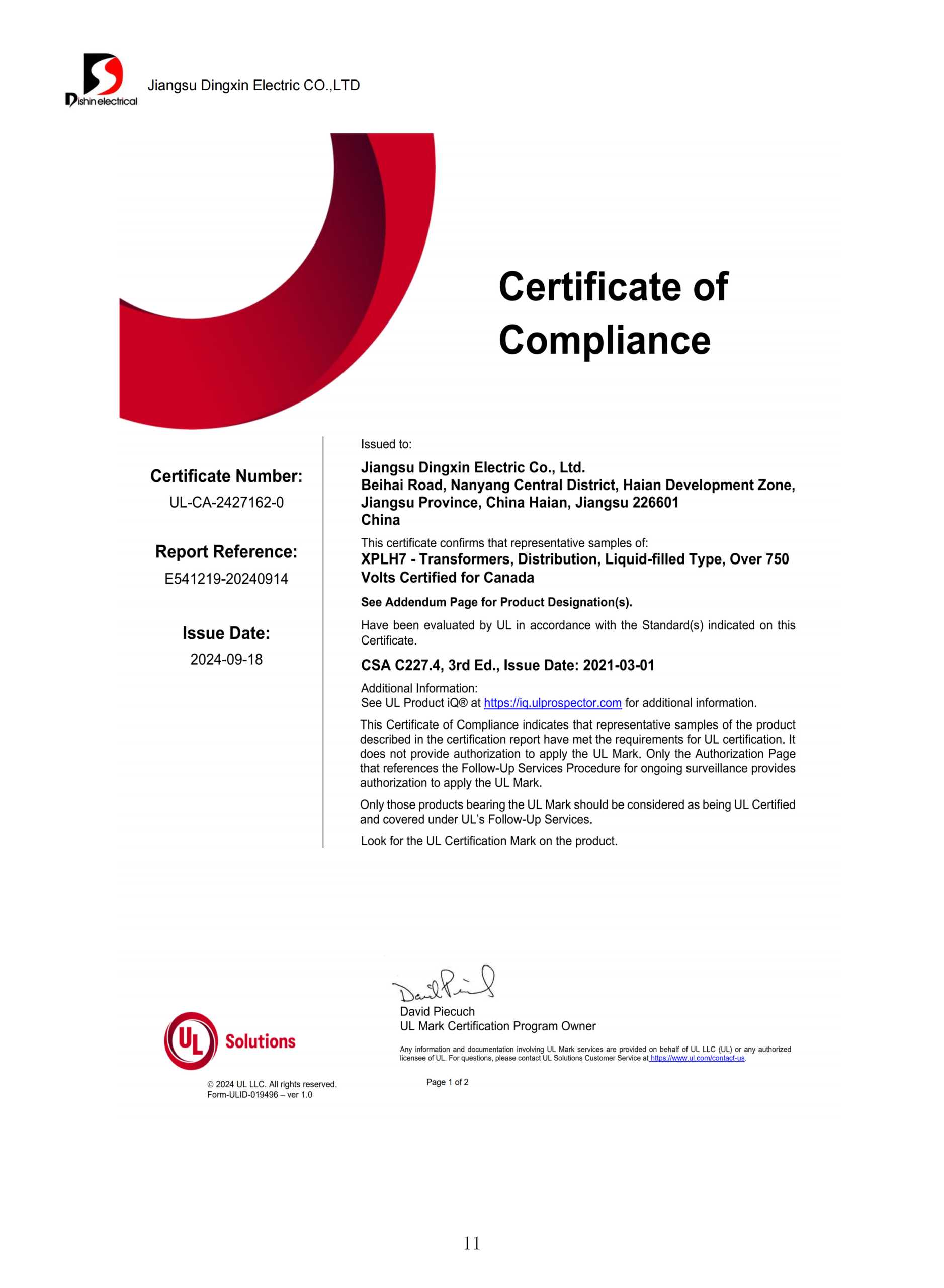
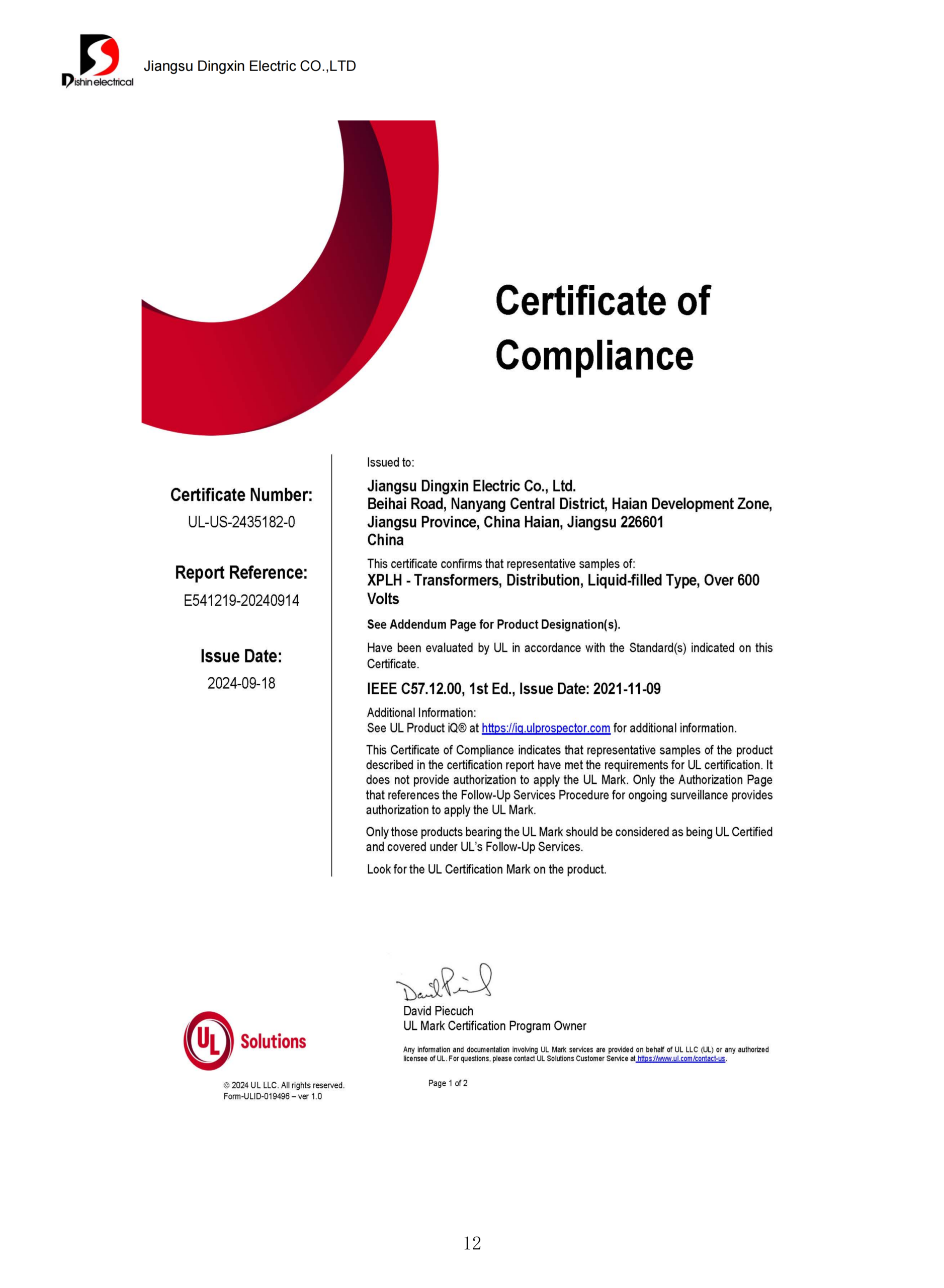
![Enlarged Certificate]()
Confirm Standards, Protection, Control, Testing, and Technical Documents
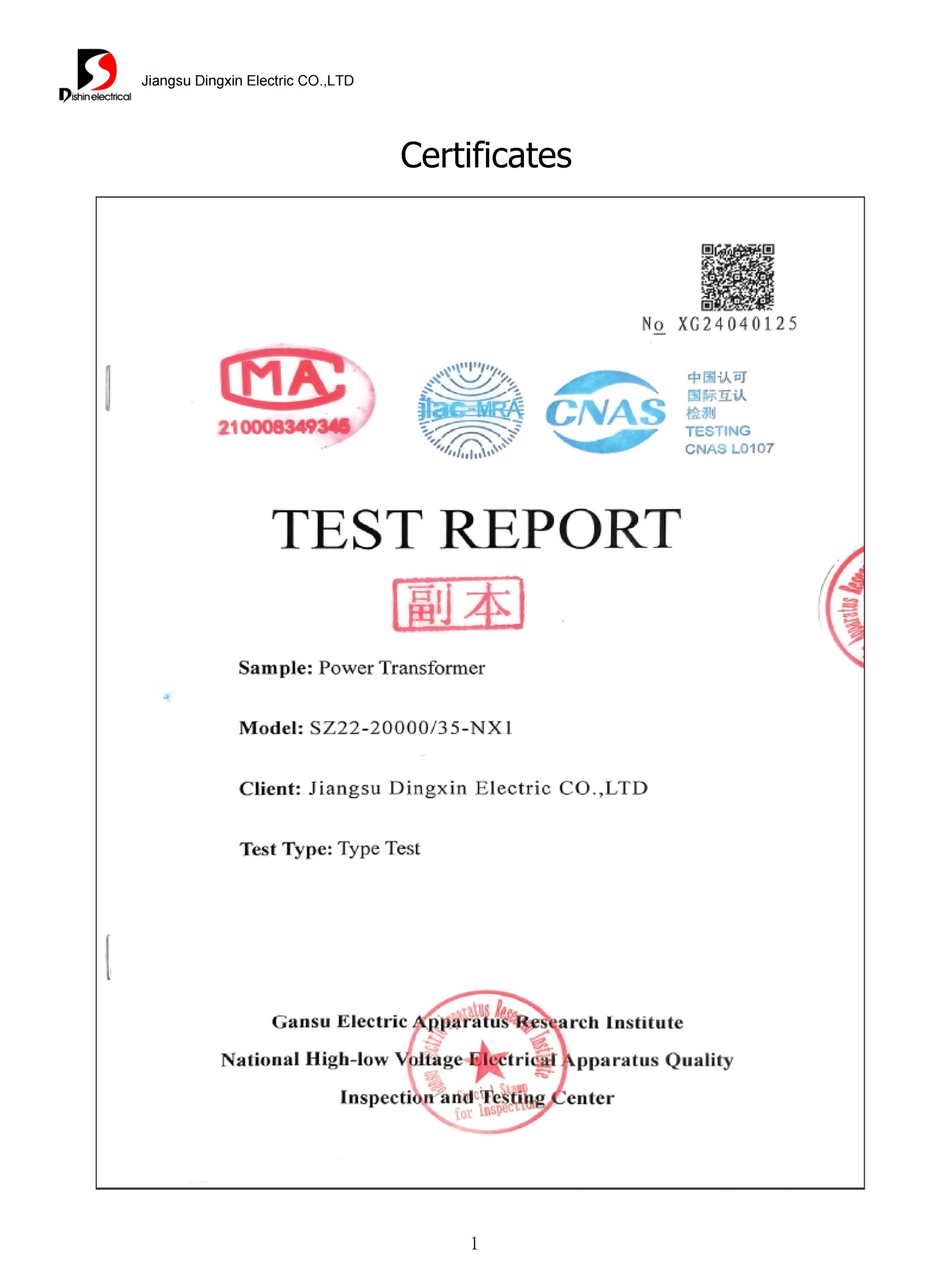
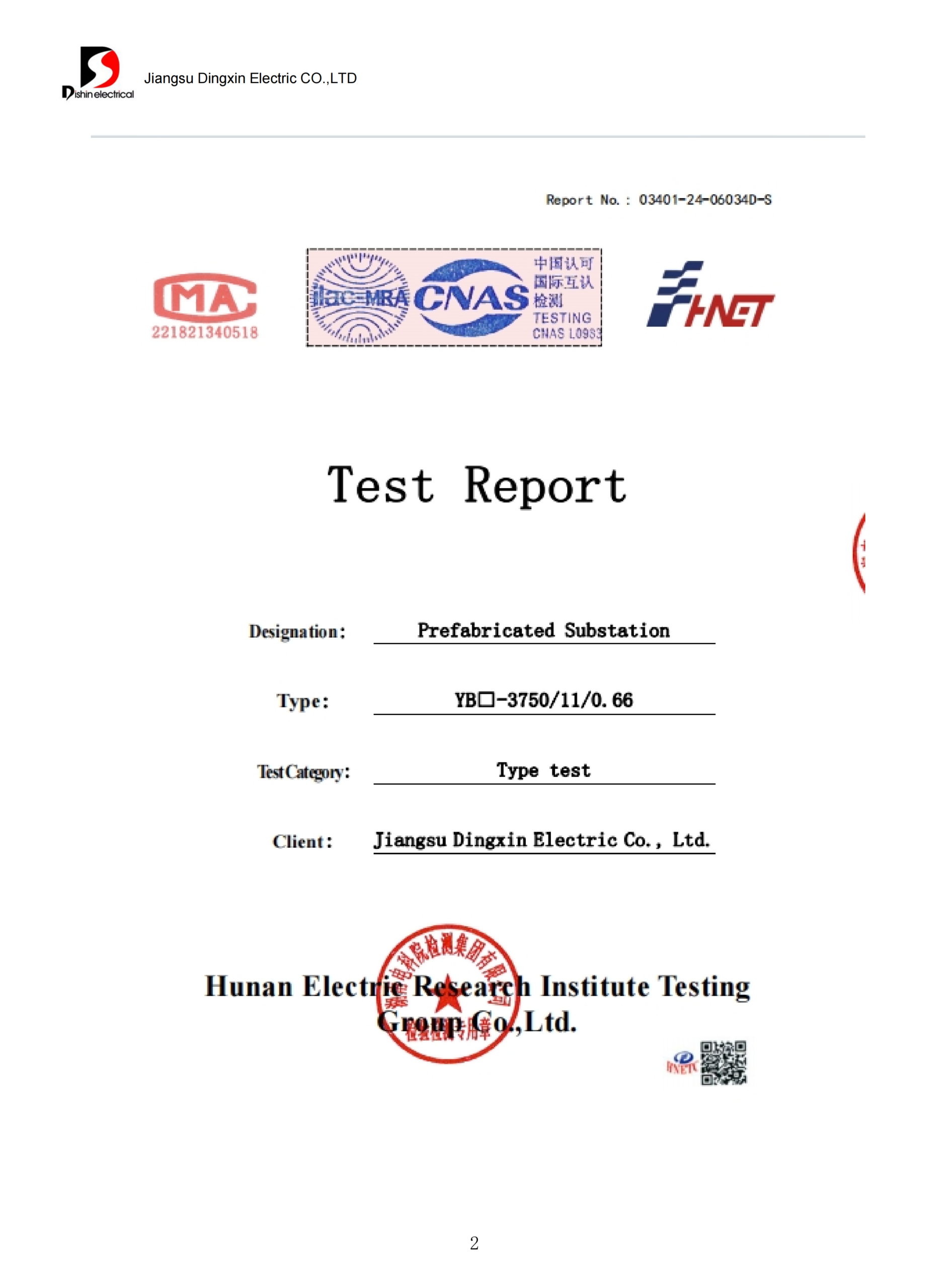
Trust improves when each claim has a visible evidence status. Talite’s company history, model documents, public-authority requirements, and project-approved data serve different purposes and should not be blended into one claim.
❮
❯
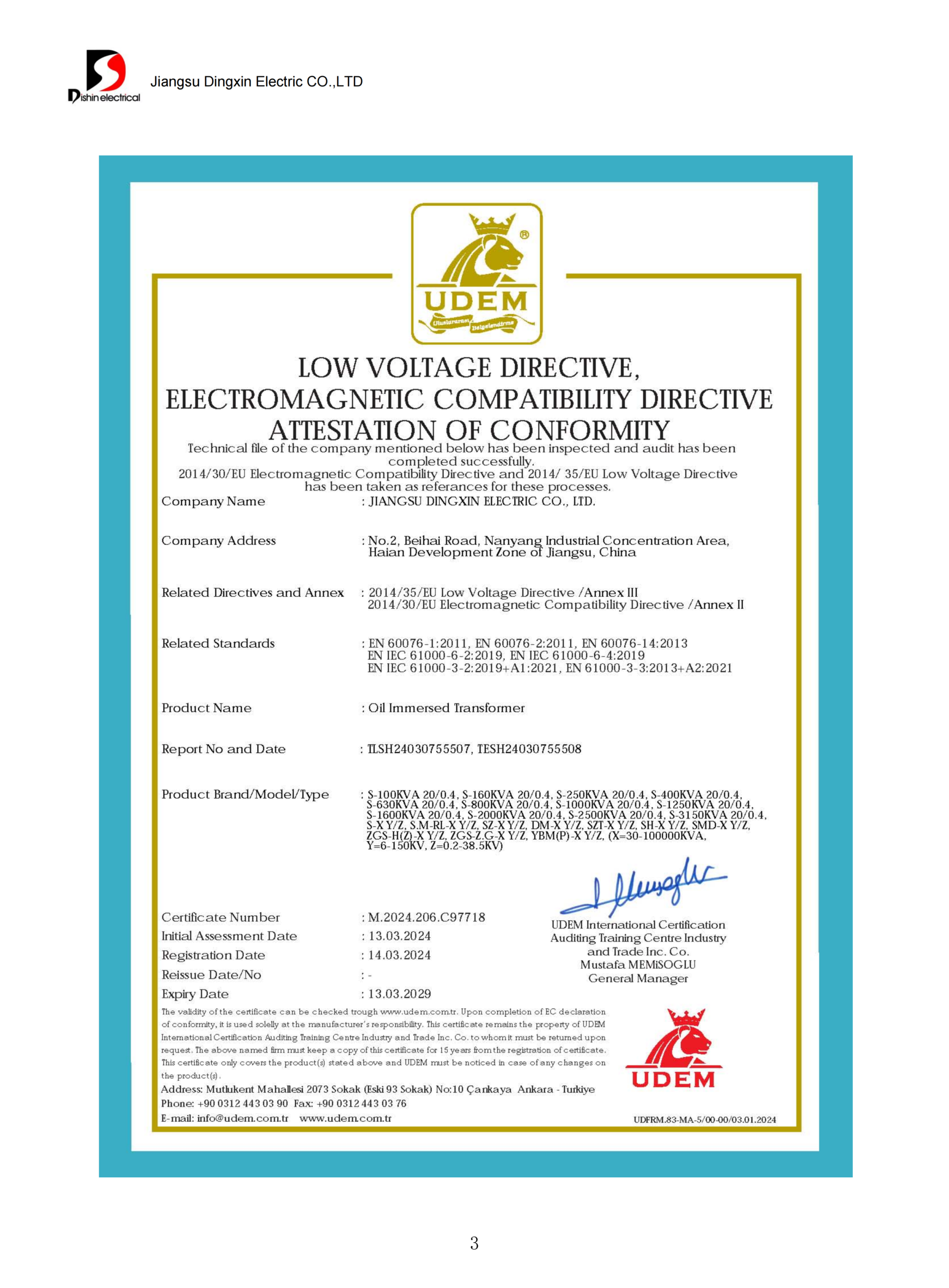
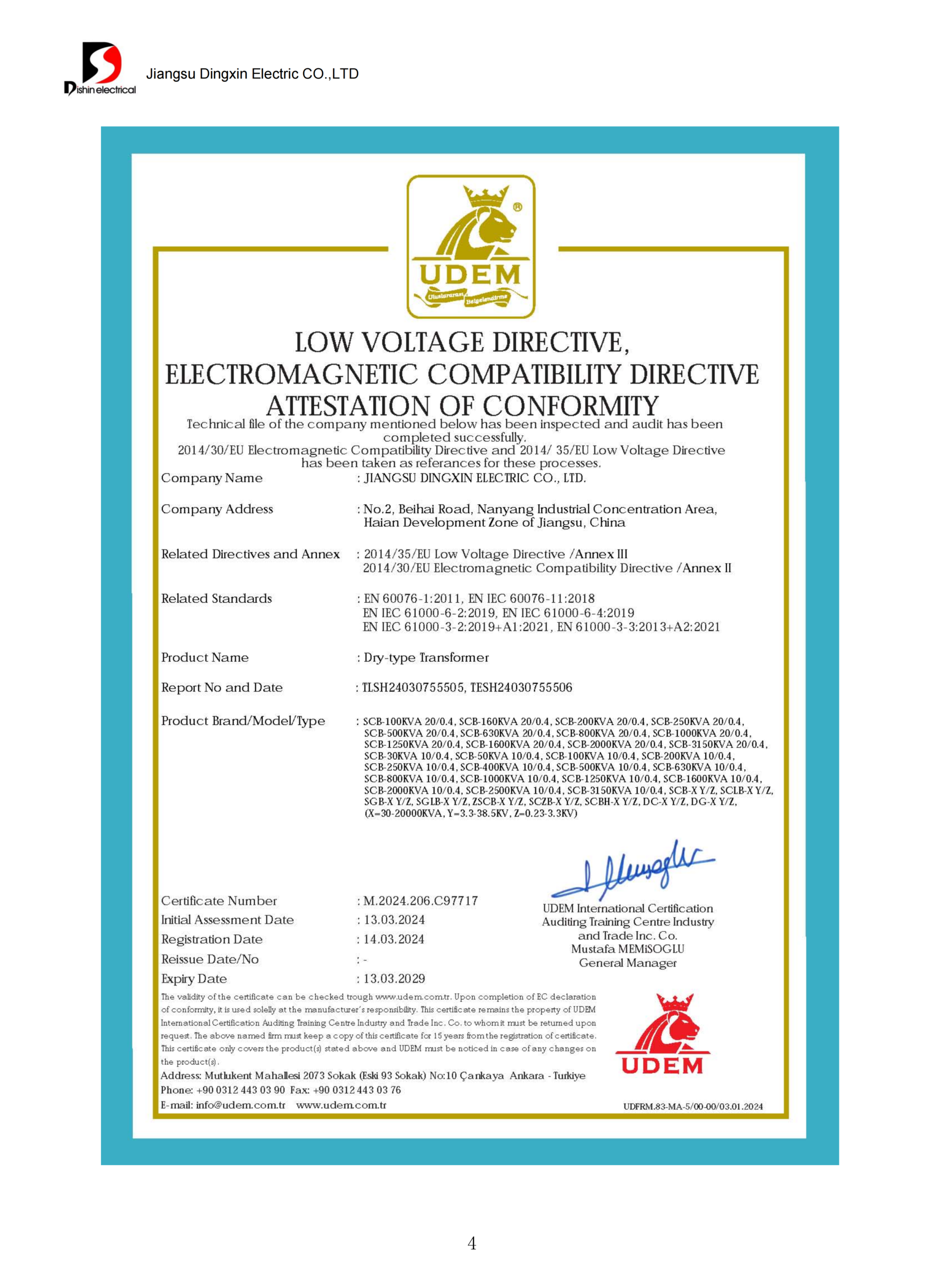
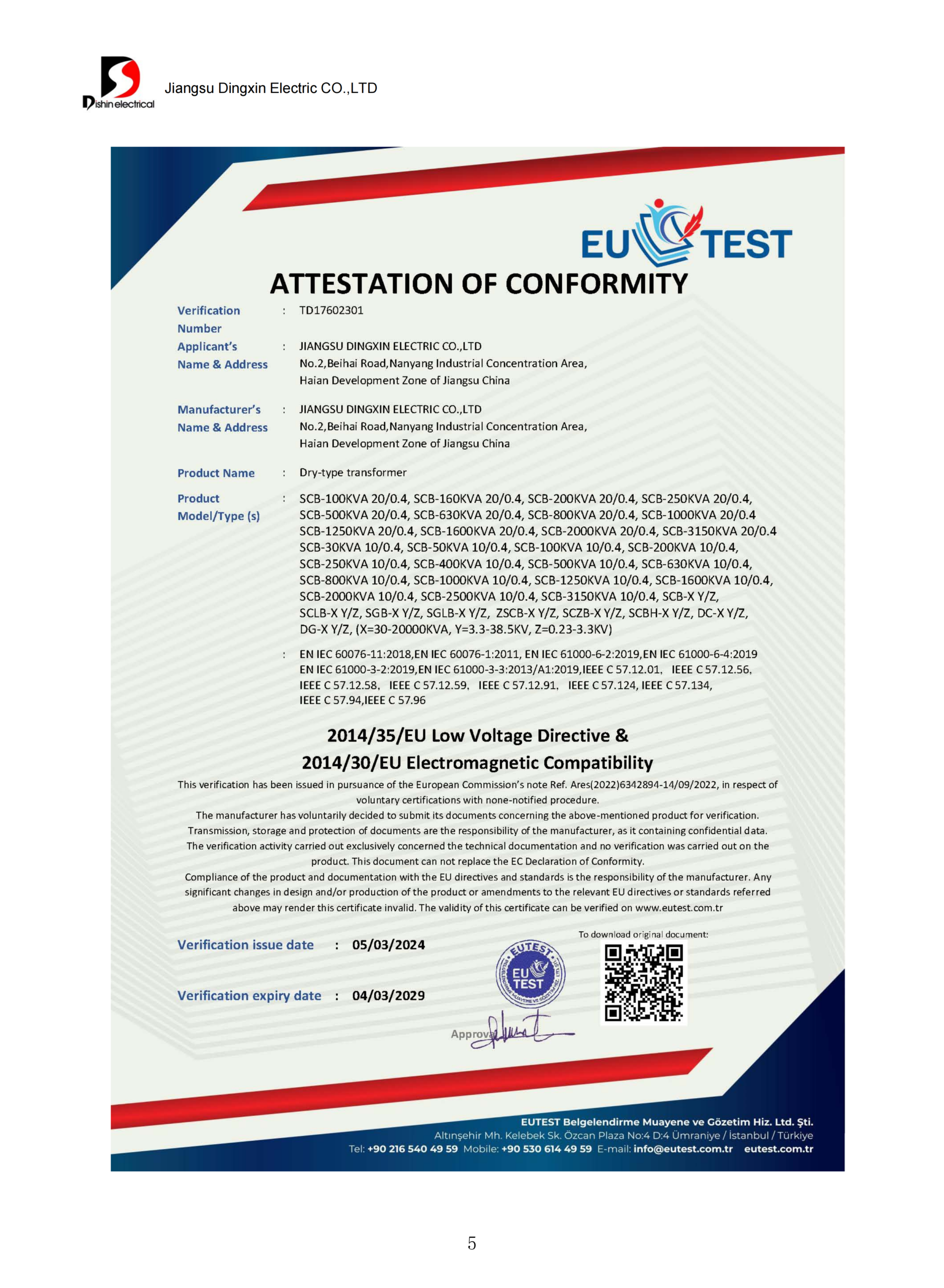
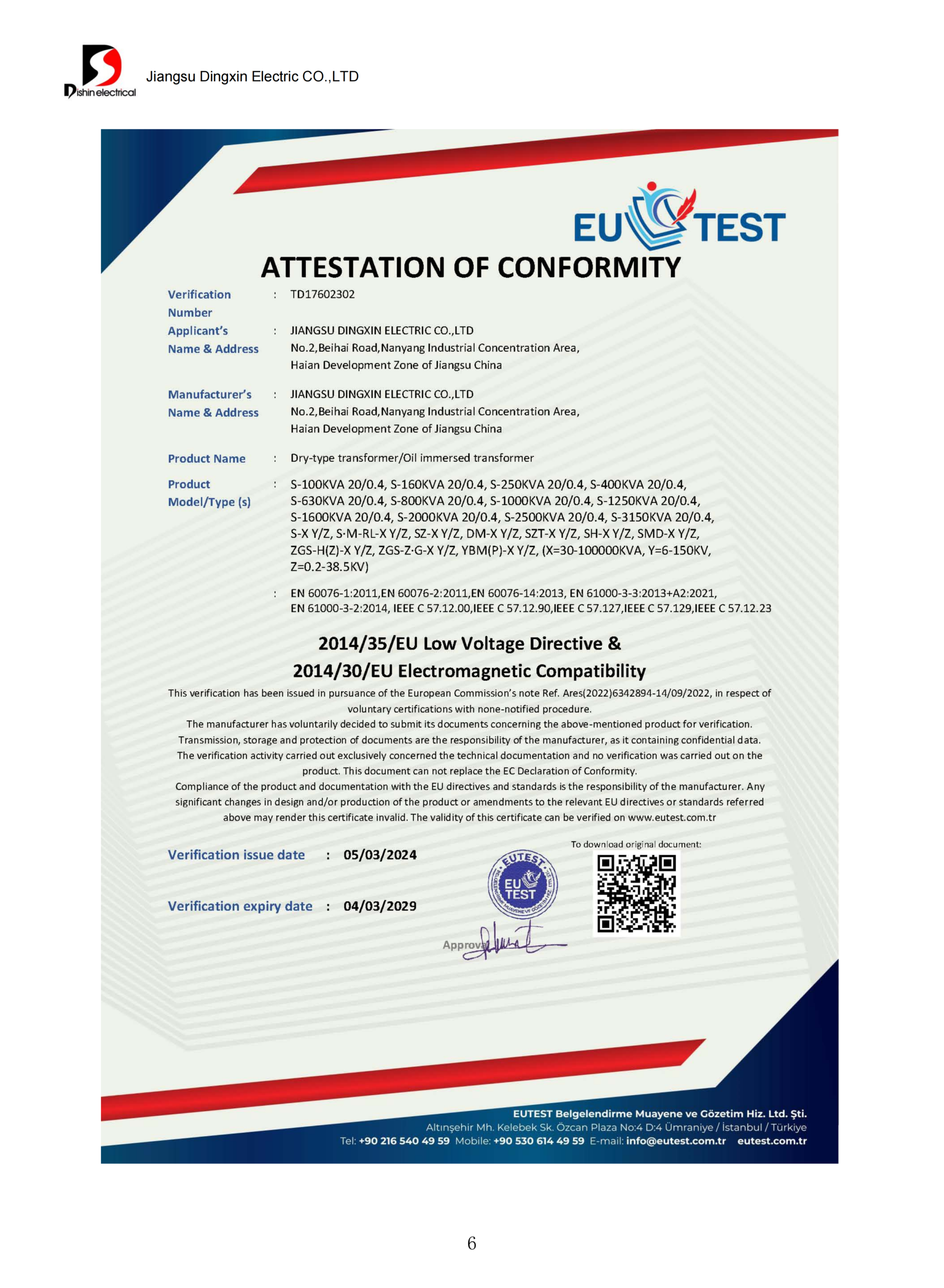
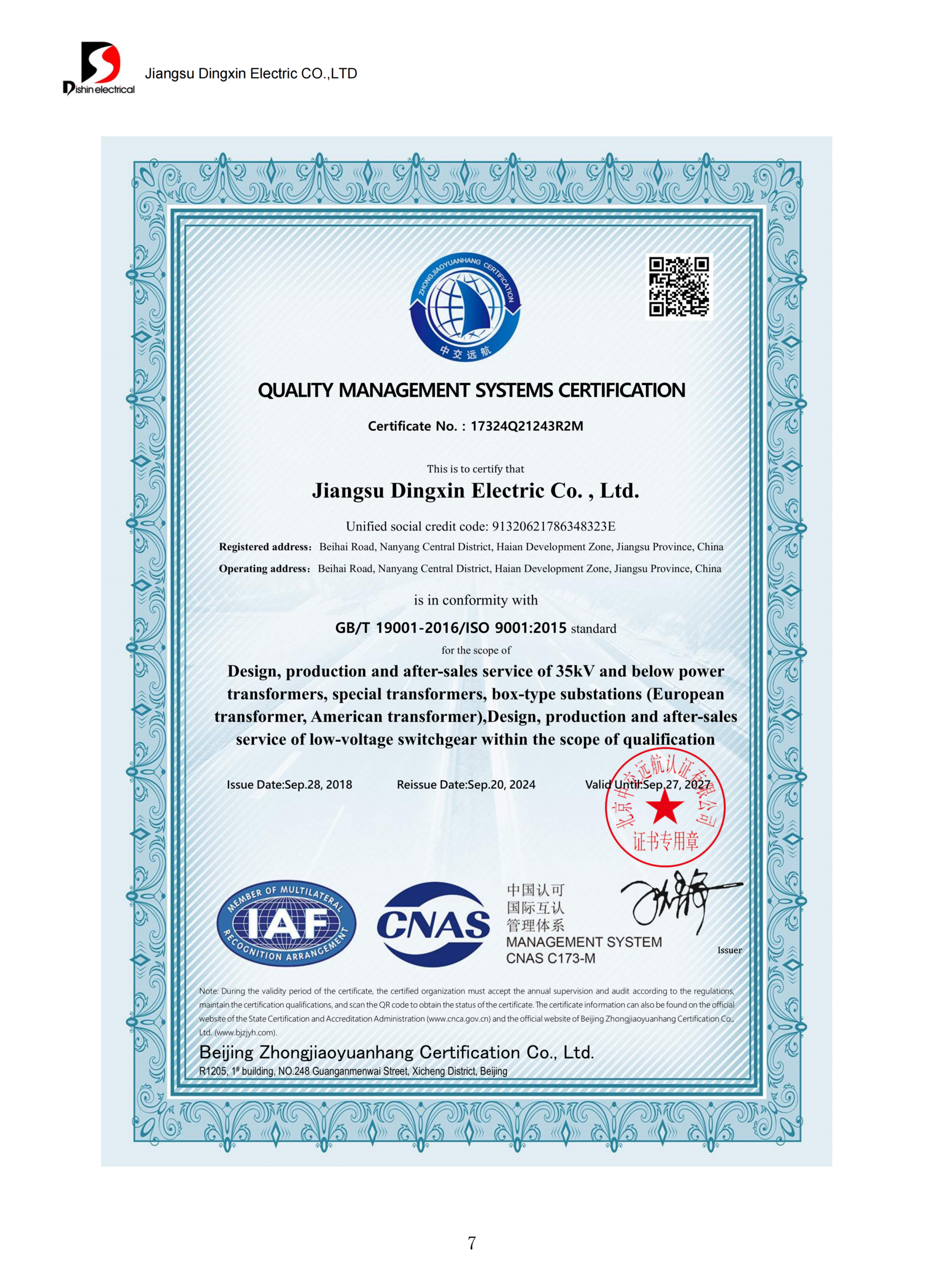
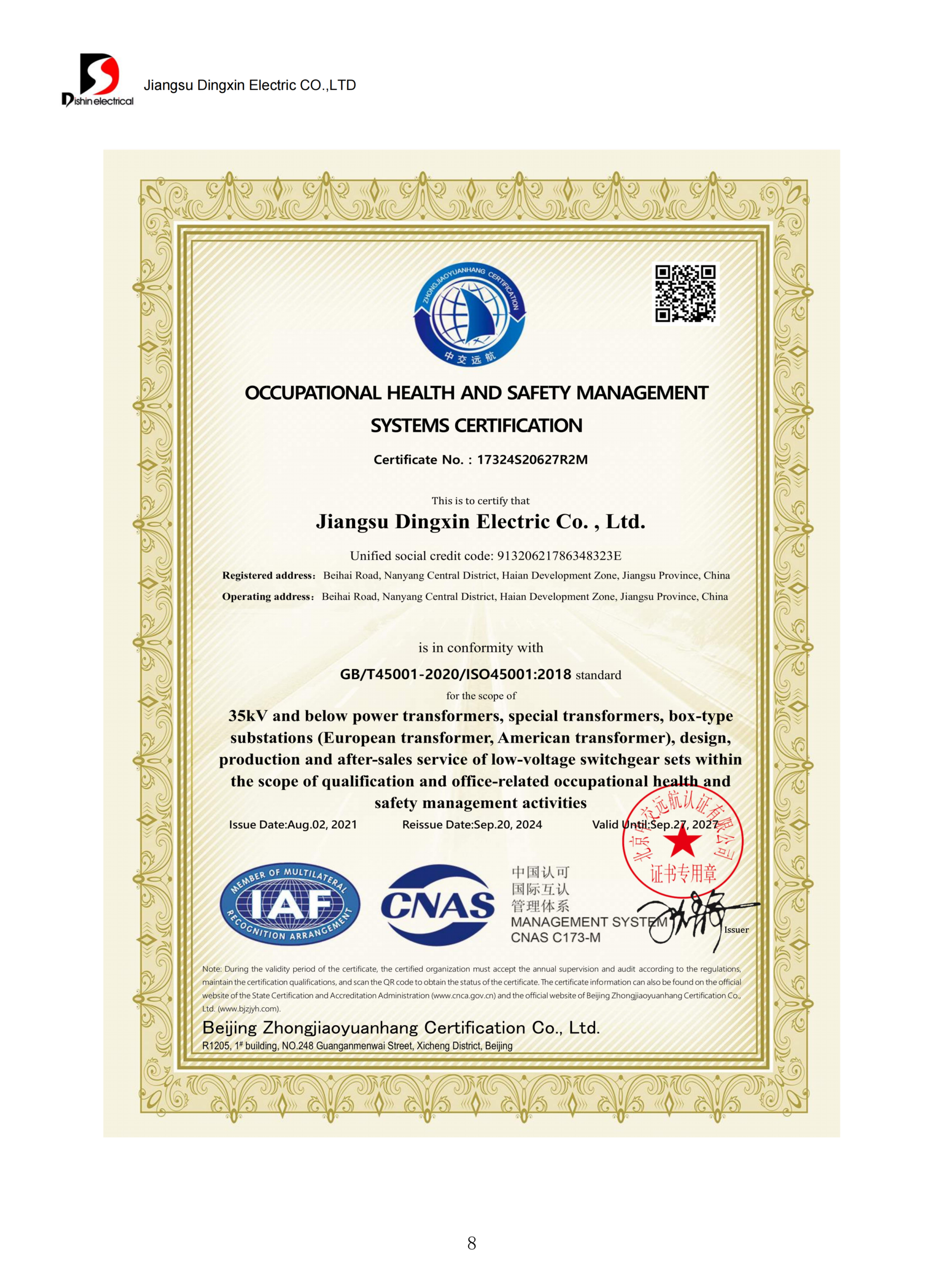
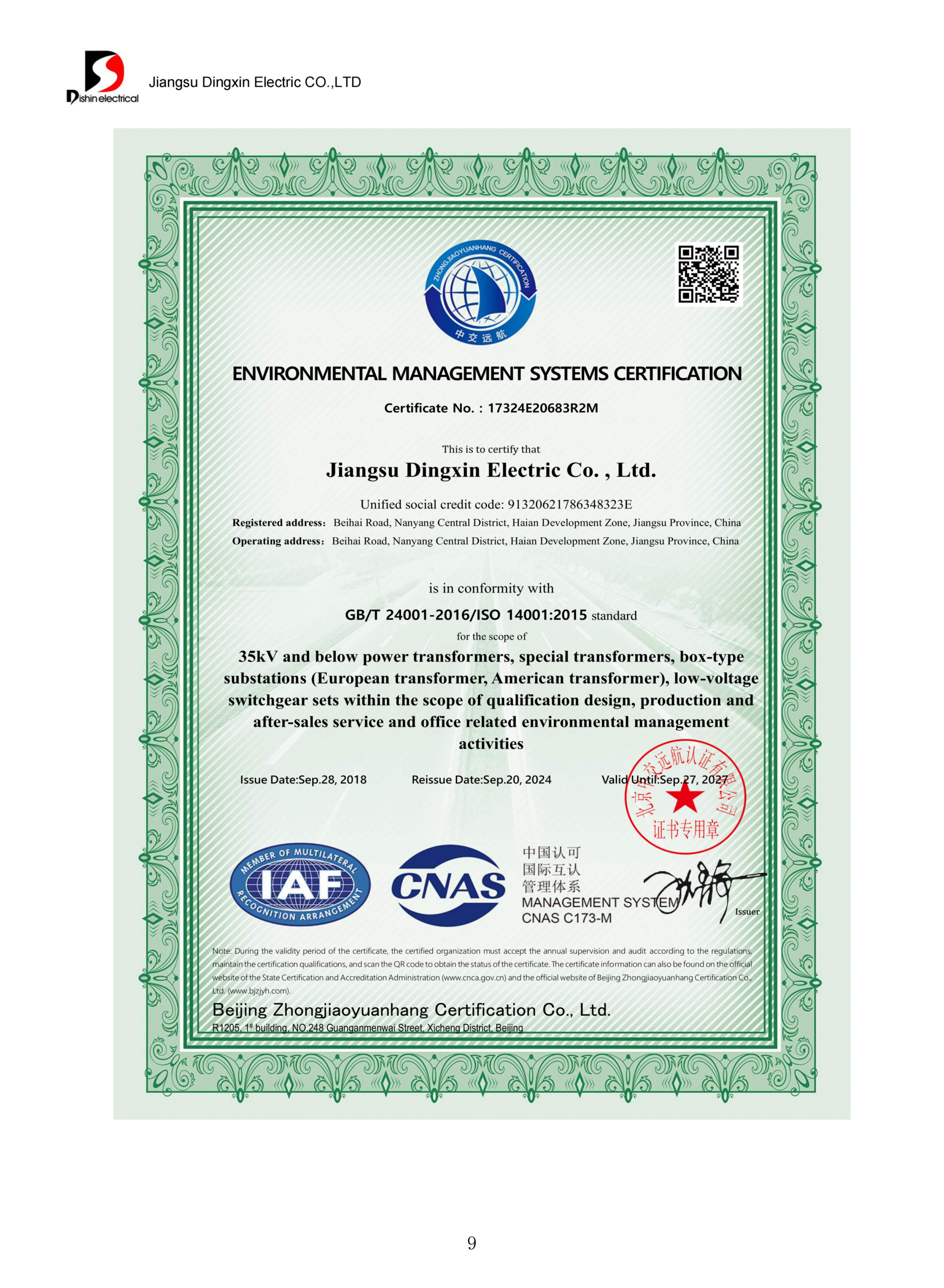
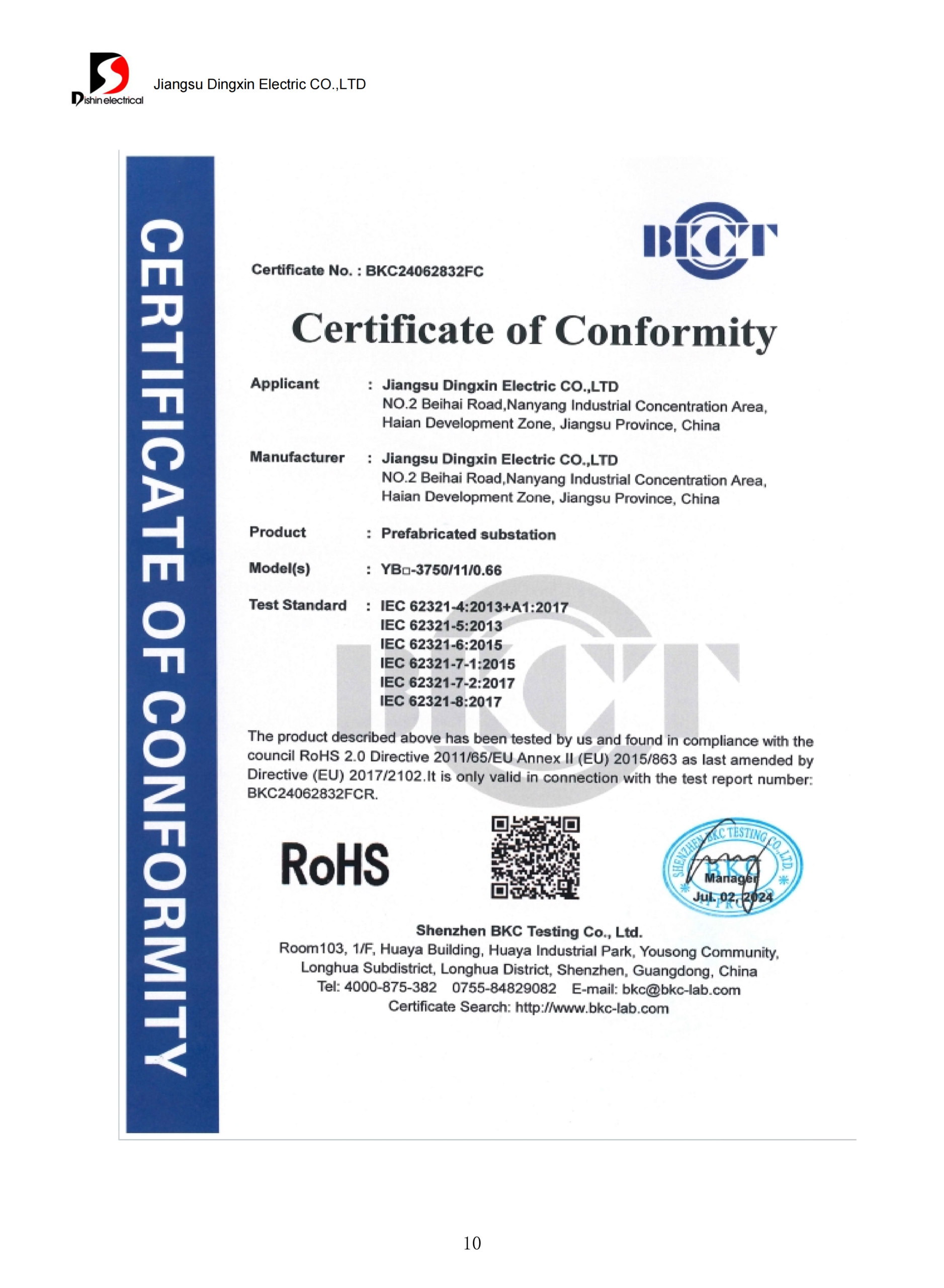
Company Statement
More than three decades, supplied by Talite and not independently verified on this page
Model-Scoped Data
Ratings tied to one Talite product document
Authority Requirement
Current regulator or standards-publisher boundary
Project-Confirmed
Frozen in drawings, data sheets, and contract documents
Protection and Control Inputs
Available fault current and protection coordination
Breaker, fuse, relay, metering, and interlocks
Automation, remote control, and monitoring
Communication protocol and utility interface
Requested Document Schedule
Datasheet, SLD, and general arrangement
Wiring diagrams, equipment list, and nameplate schedule
Test plan, test records, and deviation list
Packing list, installation information, and O&M documents
| U.S. Decision Gate | Inputs to Check | Claim Boundary |
|---|---|---|
| DOE distribution-transformer coverage | Input/output voltage, 60 Hz, kVA, liquid or dry type, exclusion status | Coverage attaches to the transformer, not the “prefabricated substation” market name |
| OSHA 29 CFR 1910.303 | Workplace scope, acceptance path, available fault current, interrupting rating, coordination | Do not claim approved, listed, labeled, or suitable without product and installation evidence |
| IEEE C37.121-2020 | Three-phase step-down scope, 112.5 kVA+, 601 V–52 kV primary, exclusions | Do not use the superseded 2012 scope or treat unit substation as a universal synonym |
Evidence Gap to Avoid
A procurement or supplier audit can fail if a 3000 kVA claim, an IEC reference, a FAT report, and an approved drawing describe different configurations. The differentiator is a Talite evidence schedule and traceability matrix, not a longer list of certificate scopes.
The U.S. Department of Energy outlines the current federal distribution-transformer program and coverage context on its distribution-transformers page. Final applicability depends on the embedded transformer’s actual ratings, type, exclusions, and compliance evidence.
Understand What Changes Price, Lead Time, and Delivery Scope
A “typical price” is not useful when two quotations cover different transformers, switchgear, protection, enclosures, tests, documents, packing, transport, or site services. Compare the technical and delivery boundaries first; then compare price.
01
Bronze ROI treatment
No universal %
Factory integration may move work off-site, but exact cost, schedule, and return still depend on the agreed configuration and project interfaces.
Commercial quote drivers
- Primary/secondary voltage, kVA, frequency, fault level
- Transformer, switchgear, breaker, fuse, relay, and metering scope
- Enclosure, coating, thermal management, access, and special environment
- Quantity, tests, witness points, documents, packing, destination, and site support
02
Authority evidence, used carefully
The honest version is a trade-off, not an automatic saving: the U.S. DOE reports distribution-transformer constraints, while the U.S. GAO reports manufacturing, labor, material, cost, and transport barriers for large power transformers. Neither source establishes a Talite project duration or prefab substation cost.
Comparable quotations show inclusions, exclusions, exceptions, deliverables, commercial terms, and open items. Fixed price and lead time belong in Talite’s written quotation after the configuration review.
03
Why a prefabricated design can still have a long critical path
Switchgear failure and extended lead time can expose a project risk because design freeze, transformer availability, special-purpose components, witness testing, the shipping route, and civil readiness all influence delivery. Major electrical-equipment backorders do not disappear simply because Talite moves integration into the factory.
Before technical freeze
Open SLD, fault-level, protection, dimensions, access, or standard questions can keep engineering and procurement from settling.
During manufacturing
Transformer, circuit breakers, fuses, relays, special coatings, or control hardware may follow different supply paths.
Before shipment and energization
Witness tests, deviations, documents, packing split, route approval, foundation, cabling, and authority acceptance can remain critical.
Prefabricated Substation Engineering Tools
Prefabricated Substation Project Input Readiness Calculator
Mark the information already available for your RFQ. The score measures input completeness only; it is not an engineering approval or equipment-sizing result.
Compare Three Model-Scoped Prefabricated Substation Examples
Select at least two columns to compare values found in three Talite product documents. This tool shows documented examples, not the company’s complete range and not a substitute for a project quotation.
Factory-to-Site Responsibility Map
Assign a proposed owner to each interface group before design freeze. Its result exposes open responsibilities; it does not create contractual obligations.
FAQ
FAQ: Questions Buyers Ask Before Issuing an RFQ
Send the single-line diagram, primary and secondary voltage, capacity and load profile, frequency, available fault level, equipment preferences, enclosure/site conditions, applicable standards, quantity, destination, and site-service boundary. Include the required drawing, inspection, and test list if the owner or utility has already issued it. Unknown fields can remain open for technical clarification, but labeling them early prevents hidden assumptions from entering the price.
Not in every specification. “Package” or “compact” may describe an arrangement inside a wider prefabricated assembly.
Consider a containerized format when transport dimensions, a closed electrical room, limited field assembly, environmental control, or later relocation affects the project. Check the internal heat load, HVAC redundancy, condensation control, cable entry, fire boundary, maintenance aisle, lifting points, shipping split, road limits, and foundation. Also state whether the transformer sits inside the container, in an adjacent bay, or outside the electrical building because that choice changes ventilation, fire, cable, and installation interfaces.
Reviewed Talite documents show 1600 kVA at 11/12/13.8 kV, 2000 kVA at 11 kV, and 3000 kVA at 24.94/12.47 kV. Each value belongs to one product example, not a complete range.
Source-backed documents describe high-voltage equipment, a power transformer, low-voltage equipment, and an enclosure. Buyers may also ask for circuit breakers or fuses, relays, metering, internal cabling, control power, automation, remote monitoring, communications, HVAC, lighting, fire provisions, spare parts, and tools. Do not assume these items are standard: the equipment list, SLD, quotation, and technical agreement should show what is included, excluded, optional, or supplied by others.
Electrical ratings affect the transformer, insulation, switchgear, protection, conductors, and enclosure; site conditions affect materials, coating, ventilation, HVAC, access, dimensions, and packing, while owner requirements affect engineering, documents, witness points, tests, and approvals. Quantity, destination, transport split, unloading, installation, commissioning, spares, and training change the commercial boundary too; lead time begins to become dependable only after key inputs are frozen and critical equipment availability is checked, because prefabrication cannot erase a late design change, a special component, a delayed witness, an unsuitable transport route, or an unfinished foundation.
A project may request datasheets, an SLD, general arrangement, foundation/interface information, wiring diagrams, equipment and nameplate schedules, protection documents, inspection/test plans, test reports, packing lists, and installation or O&M information. Talite must confirm the exact deliverable list, language, format, review cycle, and submission date in the quotation or technical agreement.
Begin with an interface matrix, then carry the same split into drawings, the equipment list, the price schedule, and the commissioning plan. The factory column may include contracted equipment, internal earth provisions, internal wiring, agreed inspections, packing, lifting details, and support, while the site column commonly addresses geotechnical data, grading, foundation, earth grid, cable trenches, external cables and terminations, unloading, crane access, assembly, permits, protection settings, site tests, utility witness, and energization. Responsibility varies by contract, so every row needs an owner, due date, input, output, and acceptance record; if the supplier provides supervision rather than installation, identify who supplies labor, tools, lifting equipment, consumables, temporary power, test instruments, and safety control.
Treat the applicable standard, edition, local code, and utility rule as project inputs. Talite should return a compliance or deviation schedule for the exact configuration, backed by the agreed design, certificate, drawing, inspection, and test evidence. A standard named in an inquiry does not automatically apply to every component or prove that every Talite model is certified to it.