Get in touch with Talite Transformer Co., Ltd Company

Utility transformer manufacturers are manufacturers of record that make equipment for defined grid duties. The comparison covers ten companies with published utility-relevant portfolios, while each offered unit’s responsible manufacturer and factory still require project-level verification. Compare documented duty, model, plant, tests, and service scope, not company name alone.
By XCX | Updated August 2026
Not a best-to-worst rankingEach company entered the comparison because a current official source shows utility-relevant transformer scope. Inclusion doesn’t prove that a particular model, factory, test plan, approval, service route, or delivery date fits your project.
The safest outcome isn’t one universal winner. It’s a shorter set of suppliers that can answer the same project questions with traceable evidence. Product configuration and quotation intent remain with the relevant product owner, while this article owns the manufacturer-comparison and supplier-vetting task.
What Counts as a Utility Transformer Manufacturer?
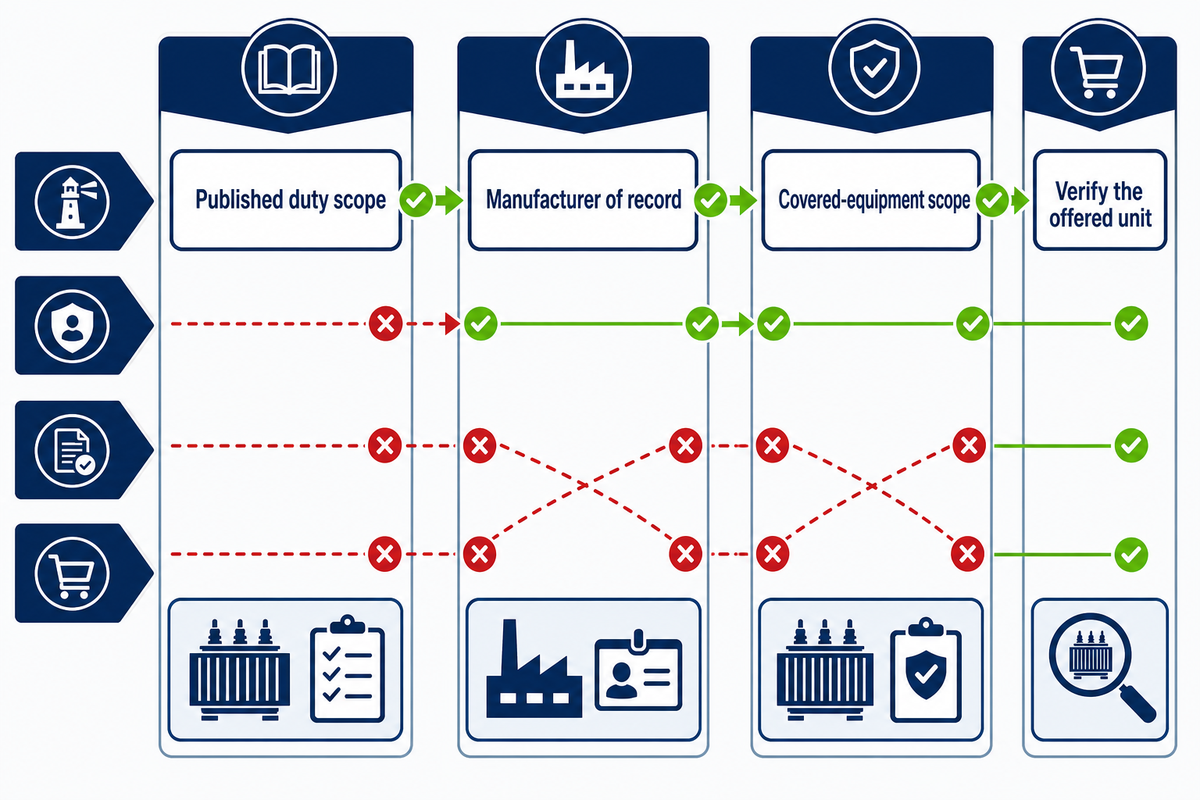
A utility transformer manufacturer makes equipment for one or more grid positions, such as pole-mounted or pad-mounted distribution, network, substation, or large-power duty. For this comparison, a published portfolio is only an inclusion signal; buyers must still verify the manufacturer of record, responsible factory, offered model, applicable standard, and utility specification.
That shared evidence basis starts with a precise definition. The United States regulatory definition is narrower than the commercial phrase. Department of Energy distribution-transformer rules apply only to covered equipment and exclude several classes, including autotransformers, grounding transformers, regulating transformers, and special-impedance transformers.
Reliability and high-quality construction are goals, not auditable acceptance fields. Translate them into the insulation system, thermal duty, loss guarantees, component requirements, test evidence, and service responsibilities that the offered model must satisfy.
Engineering
Define duty, ratings, standards, tests, and deviations.
Define duty, ratings, standards, tests, and deviations.
Procurement
Normalize price basis, schedule, exclusions, and documents.
Normalize price basis, schedule, exclusions, and documents.
Operations
Check spares, service, compatibility, data access, and response ownership.
Check spares, service, compatibility, data access, and response ownership.
For the adjacent capability question, use the site’s guide to audit model-bound evidence for a distribution bid. For terminology and lifecycle context, see how to trace transformer roles across the grid. Large-power projects should also separate large-power supplier qualification.
How We Built This Manufacturer Comparison
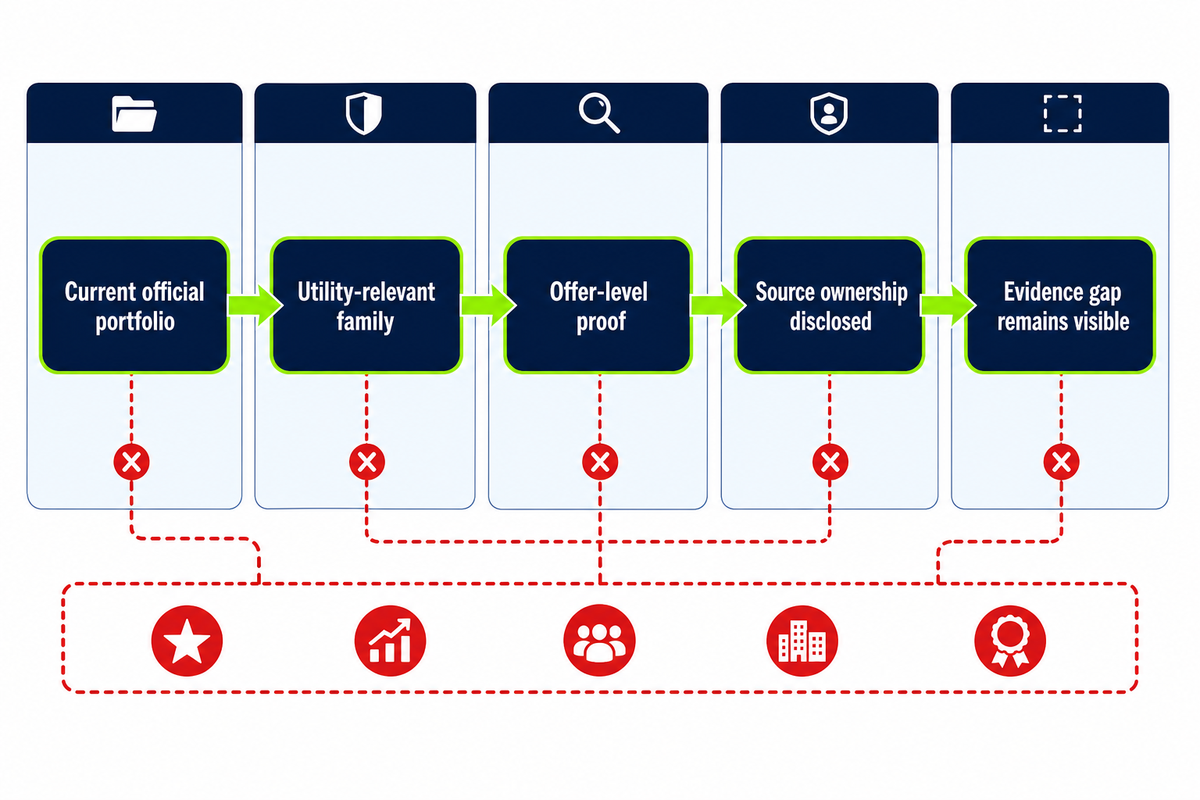
We included a company only when its current official page showed a utility-relevant distribution, substation, or power-transformer family. We didn’t rank revenue, popularity, factory size, or reputation. Every profile separates the owner’s published scope from independent procurement evidence and the project-specific proof a buyer still needs.
- Confirm a relevant portfolio — use the company’s current product source, not a directory summary.
- Map portfolio to duty — separate distribution, substation, and large-power applications.
- Find a verification gap — identify the model, plant, tests, service, or schedule that the portfolio does not prove.
- Apply one buyer screen — send the same revision and evidence request to every bidder.
This approach also protects against stale list pages. Readers may search for a list of utility transformer manufacturers, the largest utility transformer manufacturers, utility transformer manufacturers in the USA, or the best utility transformer manufacturers; those phrases are discovery prompts, not evidence of size or market coverage. The first organic result recorded during research no longer preserved the list article implied by its search title. A live URL, transparent inclusion rule, and an independent utility bid record that evaluates purchase price and losses are more useful than an unexplained ordinal ranking.
10 Utility Transformer Manufacturers at a Glance
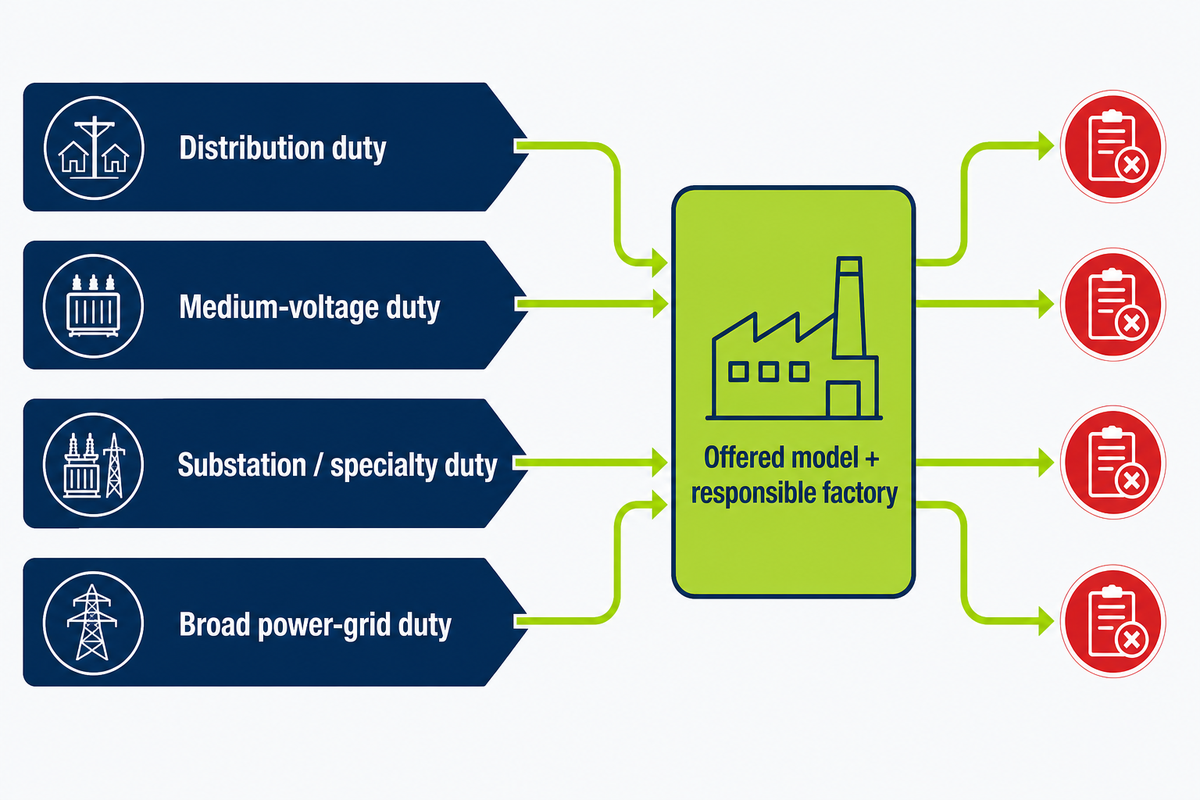
The Portfolio-to-Duty Map shows where each official portfolio can enter a buyer’s longlist and, more importantly, what the source doesn’t establish. Read each row as a research starting point. Published scope alone isn’t a utility approval, a current production slot, or a guarantee for every region.
| Company / published portfolio owner | Published utility-relevant scope | Best first investigation | Limitations / verify next |
|---|---|---|---|
| Hitachi Energy | Liquid and dry distribution; pole, pad, ground, substation, network | Multi-family grid portfolio | Offered plant, model ratings, test package, local service |
| Siemens Energy | Power, liquid distribution, cast-resin, lifecycle services | Power-to-distribution programs | Regional availability, responsible factory, service boundary |
| GE Vernova | Pole, pad, network, substation, regulators, power transformers | Utility distribution families | Exact product page, standards, ratings, market availability |
| Prolec | Distribution, power, renewable, and specialty families | Wide duty range on one published portfolio | Contracting entity, manufacturing site, test and schedule basis |
| Eaton | Medium-voltage transformer products for utility, commercial, and industrial applications | Medium-voltage distribution shortlist | Current model compliance, range, plant, and project scope |
| ERMCO | Distribution transformers and utility-partner solutions | Pole and pad distribution inquiry | Current catalog, model range, approval, tests, delivery |
| Virginia Transformer | Liquid, dry, specialty, utility and generation applications | Specialized substation or power duty | Do not rely on self-ranking language; verify offered design |
| Howard Industries | Liquid-filled substation and documented network products | Substation and selected network duty | Request current complete portfolio and project-specific range |
| WEG | Transformers, high-voltage equipment, substations, service | International transmission/distribution program | Regional data, product family, responsible plant, service route |
| Talite Transformer manufacturing responsibility unverified |
First-party utility page routes pole, pad, and substation duties | Project-specific evidence request | No independent capability proof found; verify every claim at model level |
| Evidence type | What it resolves | Owner |
|---|---|---|
| Product data | Offered ratings and configuration | Engineering |
| Deviation register | Differences from the request | Engineering and procurement |
| Factory identity | Production responsibility | Supplier |
| Quality plan | Hold points and records | Quality |
| Test plan | Acceptance and witness scope | Engineering and quality |
| Document register | Review and release sequence | Project controls |
| Milestone schedule | Delivery dependencies | Supplier and procurement |
| Service matrix | Warranty, spares, and response | Operations |
| Funding record | Conditional eligibility documents | Funding and procurement |
After the map identifies the relevant installation family, use the category page to choose the downstream equipment route.
Hitachi Energy and Siemens Energy: Broad Grid Portfolios
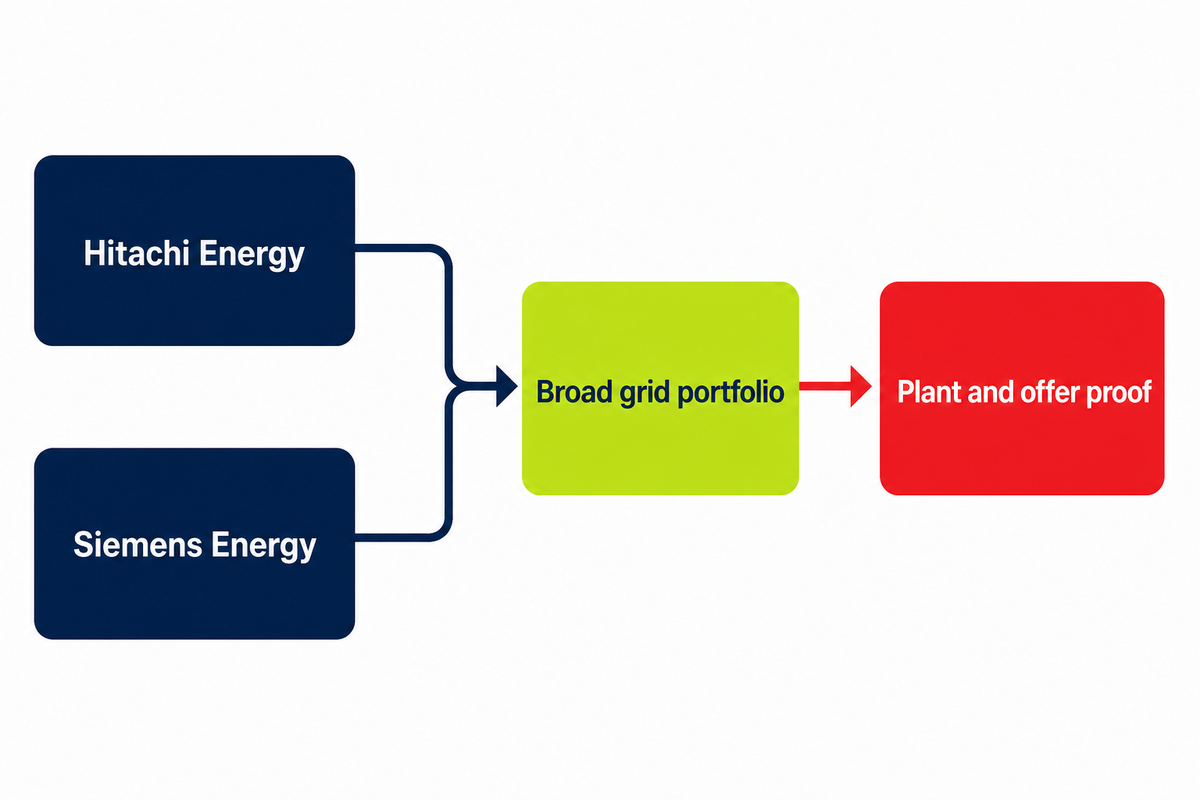
Hitachi Energy and Siemens Energy publish broad transformer portfolios that span distribution and power-grid applications. That breadth can simplify early program research, especially when a buyer also needs lifecycle or digital-service discussions. It doesn’t show that the same plant, model, approval, or production window is available for every destination.
Hitachi Energy
Investigate liquid or dry distribution, pole, pad, network, substation, and monitoring scope. Ask which legal entity and plant own the offered model.
Siemens Energy
Investigate power and distribution families, cast-resin options, lifecycle service, and digital functions. Confirm the regional product route and service responsibility.
For either company, request the offered data sheet, standards and editions, deviation schedule, test plan, document register, factory identity, and service escalation path. “Global portfolio” is a discovery signal, not a project acceptance criterion.
GE Vernova and Prolec: Distribution-to-Power Coverage
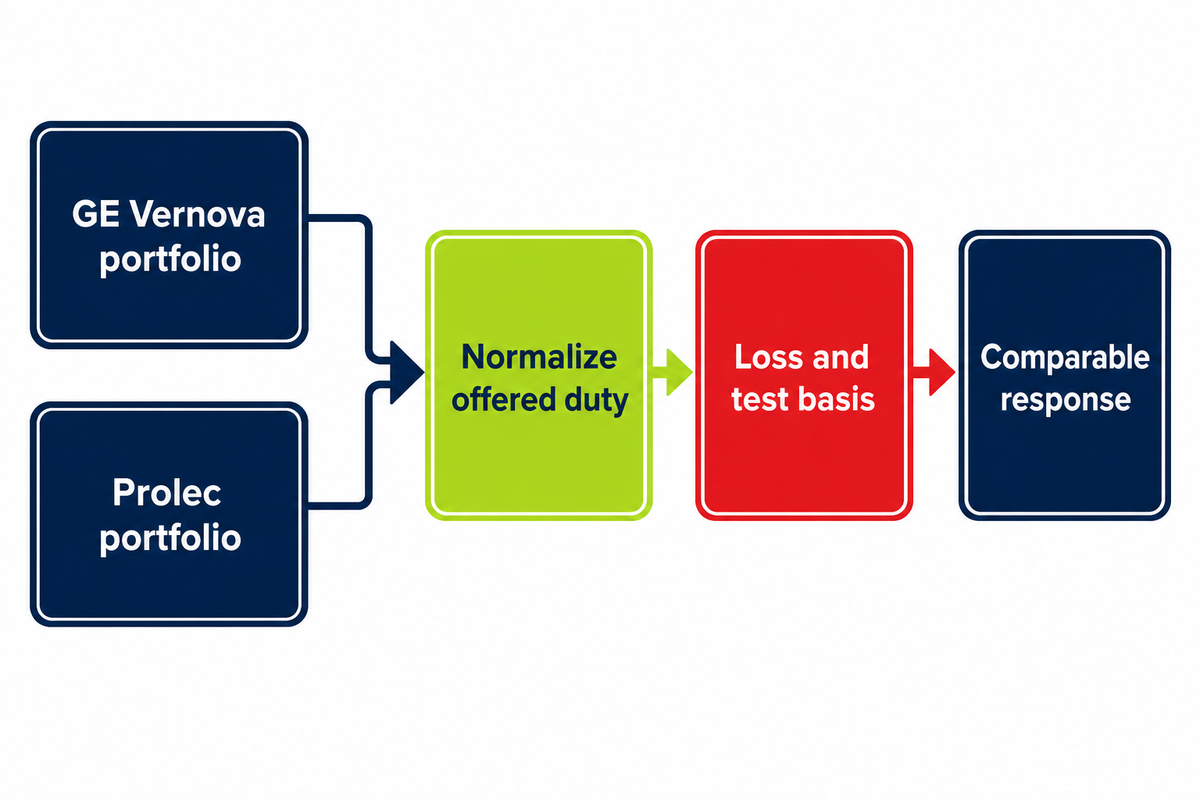
GE Vernova and Prolec both publish utility-relevant distribution and power-transformer families, but their pages organize the portfolios differently. GE Vernova separates pole, pad, network, substation, regulator, and power categories. Prolec publishes broad distribution and power ranges. Buyers still need the exact product page and responsible manufacturing site.
Use GE Vernova to investigate
Which named distribution or power family matches the one-line diagram and installation.
Which named distribution or power family matches the one-line diagram and installation.
Use Prolec to investigate
Which published range, plant, standards, tests, and regional support apply to the quote.
Which published range, plant, standards, tests, and regional support apply to the quote.
Don’t compare Prolec’s published range against a GE category label as if they were equivalent units. Normalize the offered kVA or MVA duty, voltage, phase, impedance, cooling, taps, enclosure, accessories, loss evaluation, standards, and test obligations first.
Eaton and ERMCO: Distribution and Medium-Voltage Shortlists
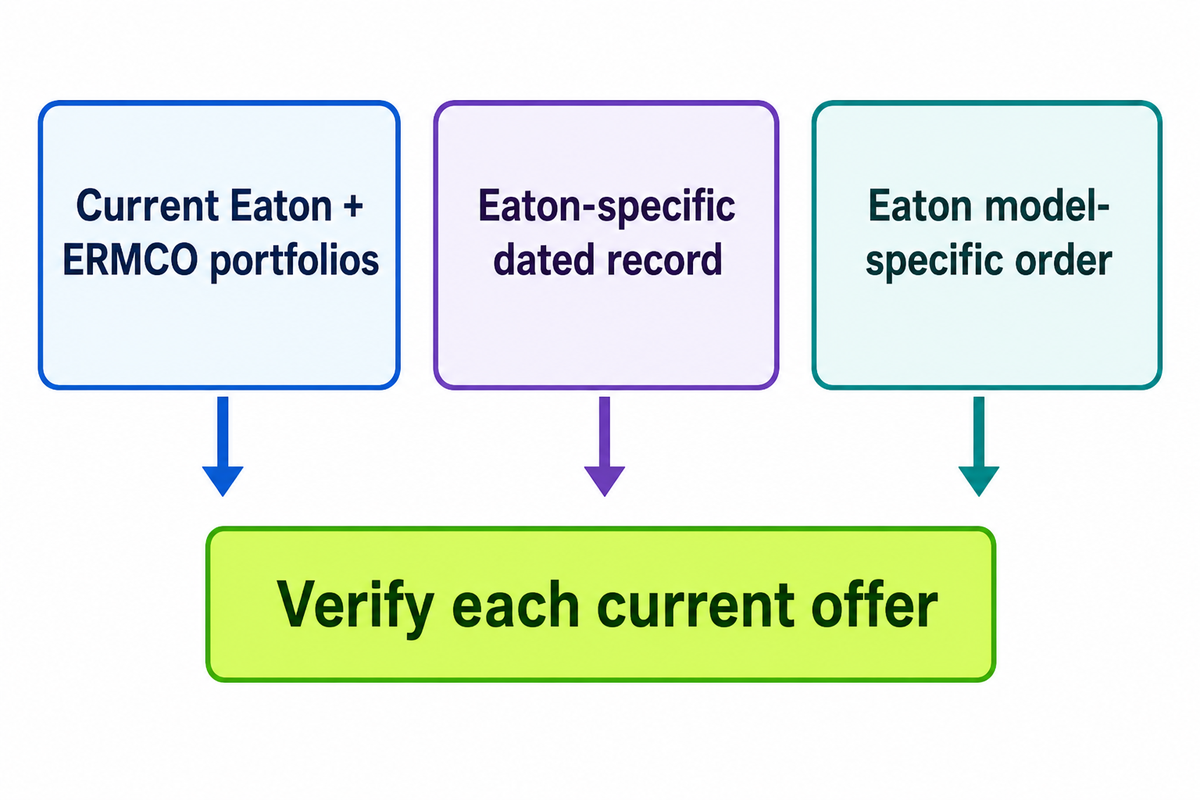
Eaton and ERMCO are relevant when the project centers on distribution or medium-voltage transformer duty. Their official pages support portfolio inclusion, while municipal records add dated procurement evidence. Those records are historical and model-specific; they improve proofability but can’t establish current availability, current compliance, or a universal performance ranking.
After that portfolio normalization, treat ERMCO’s current company page as a longlist source, not a project award. Confirm the offered series, rating, responsible plant, tests, approval, and delivery in the controlled response; historical purchases cannot establish any of those conditions today.
Austin Energy’s 2012 isolation-transformer record evaluated purchase price plus losses over an expected 30-year life. Eaton appeared among several bidders, but the record supports an evaluation method, not a current company ranking. A separate 2019 Department of Energy order concerned one Eaton distribution-transformer model. It shows why offered-model compliance evidence matters and doesn’t characterize Eaton’s current portfolio.
Virginia Transformer and Howard Industries: Specialized Utility Options
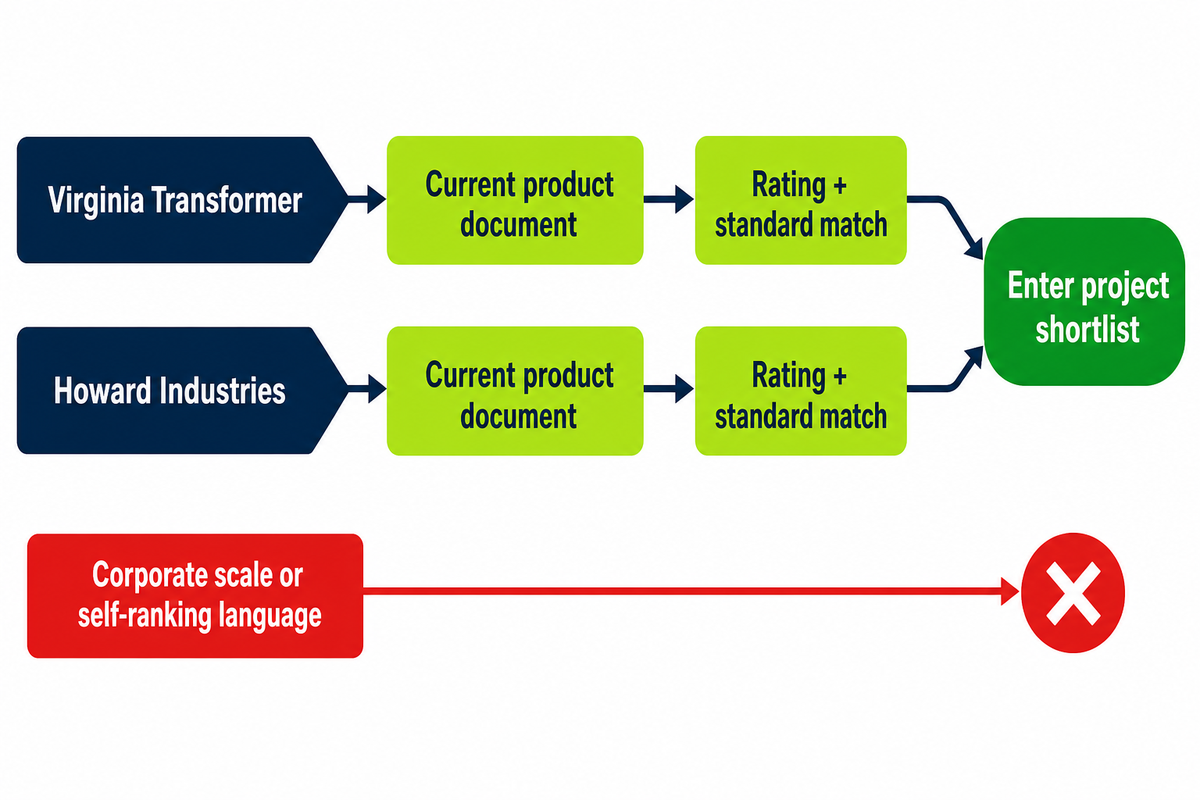
Virginia Transformer and Howard Industries enter the shortlist through published liquid-filled, dry, specialty, substation, or network scope. They warrant closer review when the duty is more specific than a standard pole or pad unit. The buyer should request the current product document instead of relying on corporate scale or self-ranking language.
Published-Scope Blind Spot Review
Published corporate scope answers “Should we investigate?” The offered data sheet, deviations, drawings, test plan, factory, and service route answer “Can this supplier enter this project shortlist?”
Published corporate scope answers “Should we investigate?” The offered data sheet, deviations, drawings, test plan, factory, and service route answer “Can this supplier enter this project shortlist?”
Applying the same offered-model check, Virginia Transformer’s corporate brochure can open a specialized liquid, dry, generation, renewable, or utility inquiry. Howard’s retrieved document supports liquid-filled substation duty and its library includes network material. In both cases, obtain the current rating range and match it to the purchase specification and applicable transformer standard before comparing price or schedule.
WEG and Talite Transformer: International Project Review
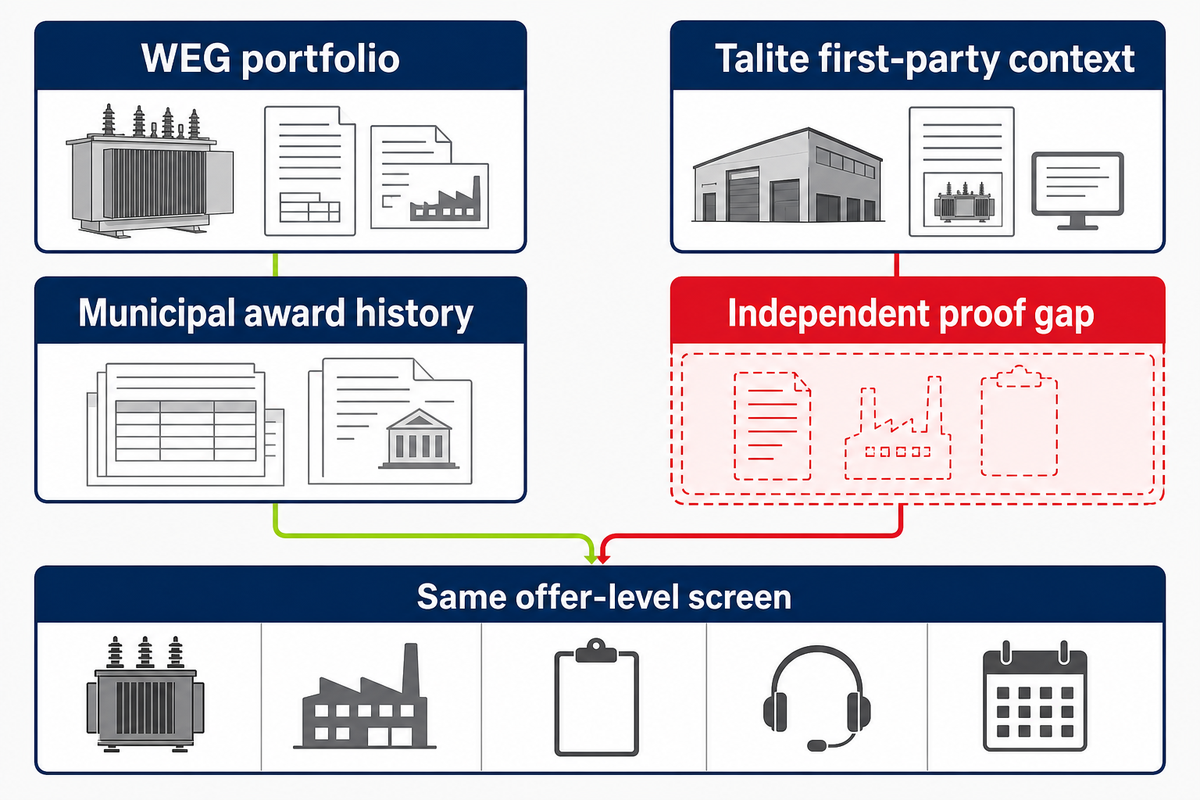
WEG publishes a transmission-and-distribution portfolio with transformers, high-voltage equipment, substations, and service. Talite’s current site routes utility buyers among pole, pad, and substation duties. WEG has dated independent municipal procurement evidence; no comparable independent Talite capability source was found, so Talite remains a first-party qualification candidate.
The City of Dover bid history records WEG awards for three-phase transformers for stock in 2021 and 2022. Those entries demonstrate past municipal procurement, not current capacity, price leadership, or suitability for another utility.
Talite publishing disclosure
Talite supplied the publishing brief and is the publishing brand for this site. Its company history and capability language are first-party context. Before shortlisting Talite, request the legal contracting entity, responsible factory, offered-model data, applicable standards, current test plan, serial-number evidence format, project references, warranty, spares, service route, and schedule assumptions.
Apply the same screen to every company. If Talite fits the duty after that review, route a shortlisted duty into Talite project review for configuration and quotation.
Apply the Serial-Bound Supplier Qualification Sequence Before Shortlisting
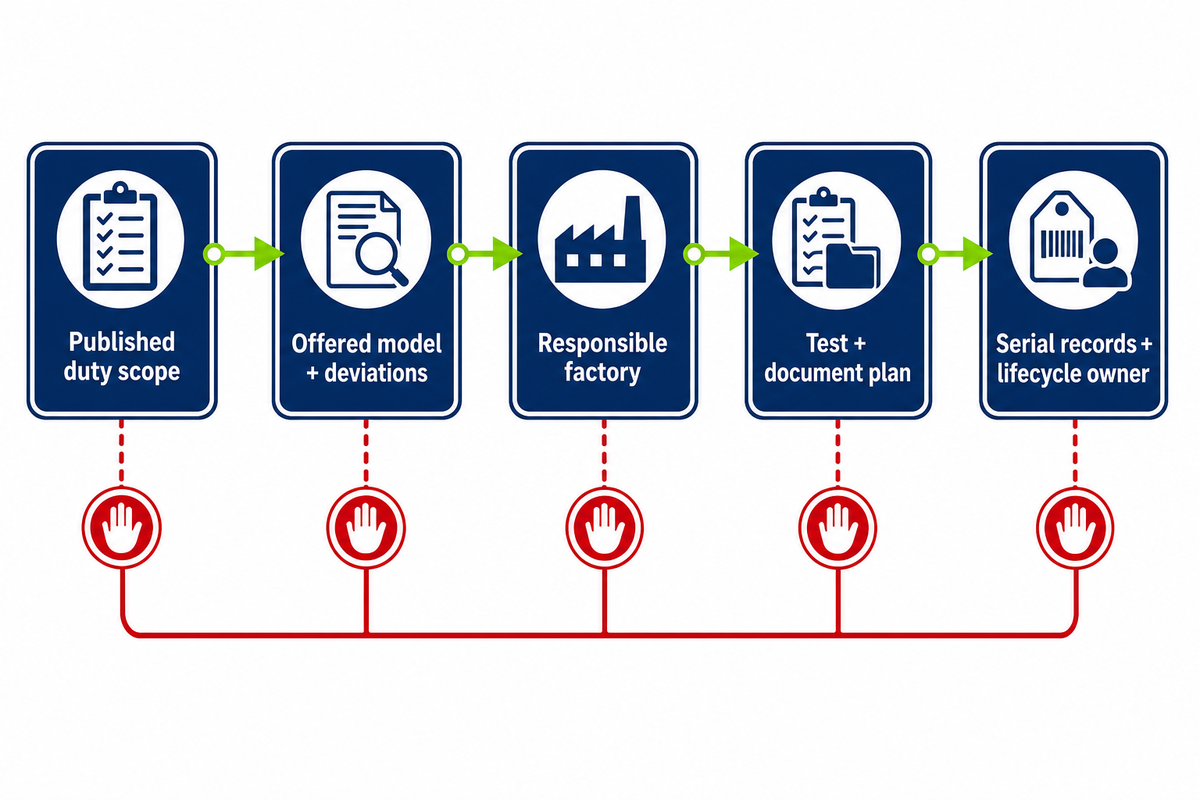
The Serial-Bound Supplier Qualification Sequence screens a company through five evidence transitions: published duty scope, offered model and deviations, responsible factory, approved test and document plan, and serial-number records with lifecycle ownership. It keeps shortlist evidence separate from the detailed electrical configuration and quotation inputs owned by the product inquiry.
- Confirm published duty coverage — current product family, intended grid role, regional availability, and unresolved limits.
- Bind the offered model — data sheet, deviations, permitted substitutions, and applicable standards.
- Name manufacturing responsibility — contracting entity, production location, quality records, critical suppliers, and document owner.
- Approve the test and document plan — routine, type, special, witness, hold points, report format, and serial-number linkage.
- Close schedule and lifecycle ownership — dated milestones, warranty, spares, field service, response, data access, and escalation.
Shortlist evidence screen: request the same evidence categories from every candidate.
| Evidence category | Evidence to request | Why it matters | How to verify |
|---|---|---|---|
| Published product scope | Current product-family and model data for the intended utility duty | Separates a relevant portfolio from a category-only claim | Owner page and current data sheet |
| Offer identity | Legal entity, factory, model, revision, deviations, substitutions | Prevents portfolio substitution | Signed offer and deviation register |
| Standards and tests | Applicable standards, editions, test categories, witness and hold points | Defines acceptance evidence | Inspection and test plan |
| Manufacturing and documents | Quality plan, document register, report format, serial-record sample | Binds evidence to the responsible factory | Controlled records and named owners |
| Funding condition | Applicable award terms, domestic-content documents, waiver status | Avoids ineligible equipment | Funding officer and manufacturer records |
| Schedule evidence | Dated approval, material, production, test, document, and ship milestones | Exposes dependencies | Dated milestone schedule |
| Lifecycle ownership | Warranty, spares, field service, response, data and access owner | Prevents post-award gaps | Contract responsibility matrix |
For applicable federally assisted public-infrastructure awards, Department of Energy Build America, Buy America guidance says the requirement can flow through contracts and purchase orders and that proof must be retained. Ask the funding officer whether it applies; do not label every utility project or manufacturer compliant by default.
If the offered unit includes remote monitoring, vendor access, software, or connected services, add a conditional cyber and data-risk review. Applicability depends on the asset and entity. The conventional transformer checklist should not silently become a universal cyber certification claim.
Buyer decision rule
Promote a supplier only when every field is traceable to the offered model, responsible party, dated evidence, and contract boundary.
Why Lead Time and Compliance Belong in the Comparison
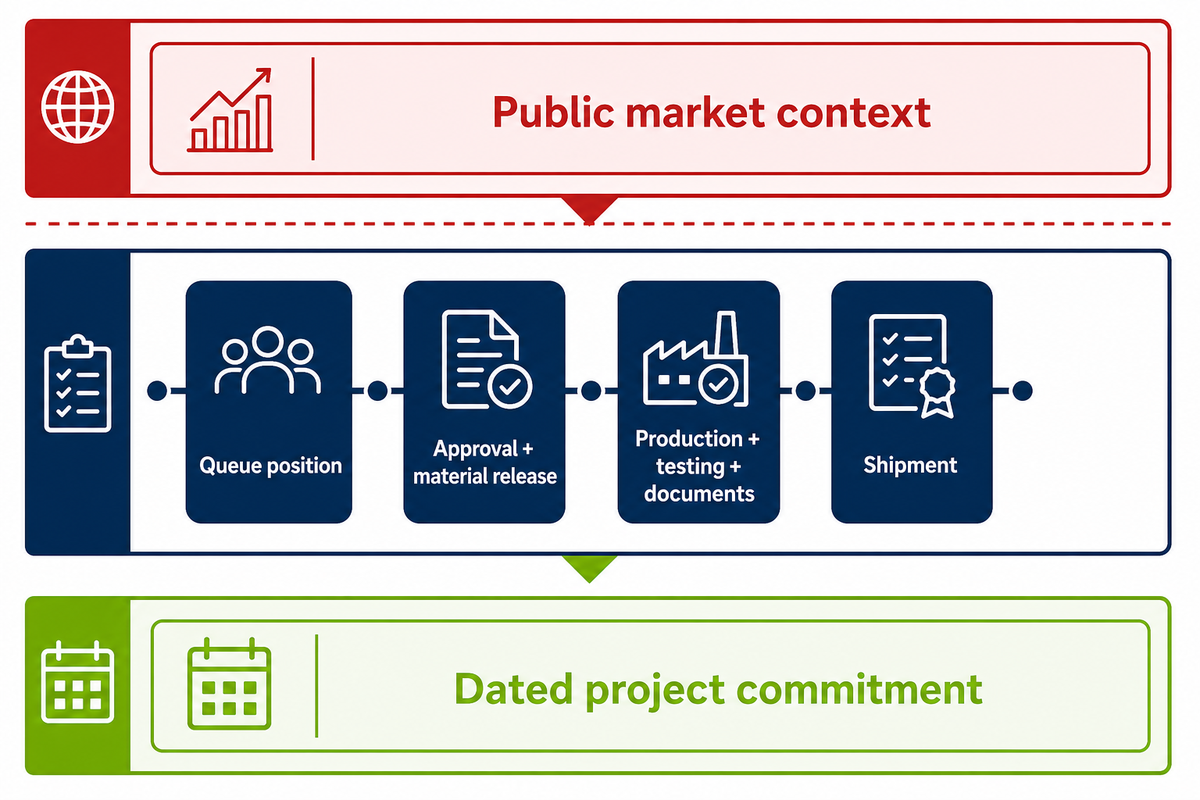
Schedule and compliance belong in the first comparison sheet because a technically suitable transformer can still miss the project through an unrealistic production assumption, an inapplicable rule statement, or a funding condition. Record the source date, offered-model scope, approvals, material dependencies, production milestones, and the party responsible for regulatory evidence.
“Demand for distribution transformers has jumped 41% since 2019.”
The same transcript says 2024 distribution-transformer orders often carried lead times of one to two years or longer, while large transformers could take three to four years. Those are market observations, not the delivery date for any company above.
Since 2019
DOE context: distribution-transformer demand increased 41% by March 2026.
DOE context: distribution-transformer demand increased 41% by March 2026.
2024
DOE context: one to two years or longer.
DOE context: one to two years or longer.
April 23, 2029
Current compliance date for covered equipment.
Current compliance date for covered equipment.
The current 2029 date isn’t the whole policy story. A June 2026 Department of Energy information request is examining redesign burden, materials, domestic capacity, supply resilience, cost, and national-security effects. Buyers should state the rule basis and date in the request for quotation, then obtain an offered-model applicability and responsibility statement.
Why are transformer lead times so long?
Department of Energy material links longer lead times to demand growth, materials, labor, manufacturing capacity, and customization. In each quote, buyers should separately track critical components, accessories, production location, and utility-specific requirements. A supplier quote should separate queue position from design approval, material release, production, testing, documents, and shipment; emergency spare-pool compatibility cannot be inferred from the quoted factory date.
Frequently Asked Questions
Who makes transformers for utility companies?
Utilities buy from global transformer groups, regional specialists, and project-specific manufacturers. The manufacturer still has to document the exact model, plant, tests, schedule, and service route.
This comparison includes Hitachi Energy, Siemens Energy, GE Vernova, Eaton, Prolec, Virginia Transformer, Howard Industries, ERMCO, WEG, and Talite because their current official sources show utility-relevant scope. It compares published portfolios; it does not certify any company as the manufacturer of record for a particular unit. The serving utility and buyer still need to verify the offered model, responsible plant, tests, documents, funding conditions, schedule, and service route.
Which company transformer is best?
No company is best for every grid position, rating, standard, destination, and commercial boundary. The right choice is the traceable offer that meets the buyer’s controlled specification with acceptable deviations and risk ownership.
Define the duty first, then compare offered-model evidence under one controlled request. A broad portfolio may help a multi-site program, while a specialist may fit a defined configuration. The defensible decision is the supplier whose traceable offer meets the project requirement with acceptable deviations, tests, schedule assumptions, lifecycle support, and risk ownership.
Can one manufacturer supply both power and distribution transformers?
Some manufacturers publish both power- and distribution-transformer families.
That does not mean one plant, standard, test program, or service team covers both. Treat each offered product family as its own qualification package and verify the responsible production location, design ownership, ratings, tests, documents, and schedule. If a program uses two product families, require separate deviations, test records, production milestones, warranty contacts, and spare-parts plans for each family.
Does utility approval prove the manufacturer is suitable?
Utility approval can be important, but the phrase is incomplete without the approving entity, product, plant, conditions, and date. Approval still has to match the offered model and project destination.
Ask for the current approved-vendor or approved-product evidence and confirm it with the serving utility. Approval for one model or plant should not be extended to another. Project specifications, funding terms, test evidence, and contract requirements still apply even when a supplier appears on an approved list. Also check whether the approval covers the destination, accessory set, losses, current standard edition, software or monitoring option, and the responsible factory named in the offer.
How long does a utility transformer take to manufacture?
Lead time varies with duty, design, materials, approvals, factory loading, tests, documents, and destination. Ask for a dated milestone plan because a market-average lead time is not a delivery commitment.
Market context is not a project promise. Require a dated supplier milestone plan and list every assumption that could reopen the delivery date.
What evidence should I request before shortlisting a utility transformer manufacturer?
Request the offered model and factory identity, signed deviations, applicable standards, test and document plans, dated production milestones, warranty, spares, and service ownership. Use the same evidence categories for every candidate, then move detailed electrical configuration to the project inquiry.
Ask each candidate for the legal contracting entity, responsible factory, offered-model data sheet, signed deviation register, referenced standards and editions, inspection and test plan, sample serial-number records, document register, dated production milestones, warranty, spares, field-service route, and named owner for unresolved interfaces. Require the same evidence categories and controlled response format across the shortlist. Once a company clears this screen, send the project-specific one-line, voltages, connection, impedance, accessories, destination, and quantity through the product inquiry so configuration and quotation remain with the product page.
Ready to turn the shortlist into a project inquiry?
When a candidate clears the evidence screen, use the project inquiry to send the one-line, duty, site, standards, test, document, and schedule requirements and request an offered-model response from Talite.
References & Sources
- Distribution Transformers U.S. Department of Energy
- 10 CFR Part 431, Subpart K Electronic Code of Federal Regulations
- Distribution Transformer Webinar Text Alternative U.S. Department of Energy
- 2026 Distribution-Transformer Standards RFI U.S. Department of Energy
- Build America, Buy America U.S. Department of Energy
- Evaluation for Core-form Power Transformers National Rural Electric Cooperative Association
- Isolation Power Transformers Bid Record City of Austin / Austin Energy
- Bid and RFP Tabulations City of Dover, Delaware
- IEC 60076-1:2011 International Electrotechnical Commission
Editorial transparency: This comparison uses public government, standards, procurement, and company-published portfolio sources. Talite is the publishing brand for this site. No company is endorsed, and no model, factory, certification, project outcome, or delivery date is inferred beyond the cited evidence.
![Pad-Mounted Transformer: How It Works [2026 Guide]](https://toplit-transformer.com/wp-content/uploads/2026/08/pad-mounted-transformer-guide-featured-150x150.png)

![Single Phase Pad Mounted Transformer Guide [2026]](https://toplit-transformer.com/wp-content/uploads/2026/08/single-phase-pad-mounted-transformer-guide-featured-1-150x150.png)