Get in touch with Toplit Transformer Co., Ltd Company
Petrochemical Transformer Manufacturer for Refinery Power Systems
Talite supplies petrochemical transformer solutions for refinery intake substations, plant distribution, motor loads, rectifier systems and packaged substations. We review the single-line diagram, electrical duty, site conditions, tests and supply boundary before preparing a project-specific technical offer.
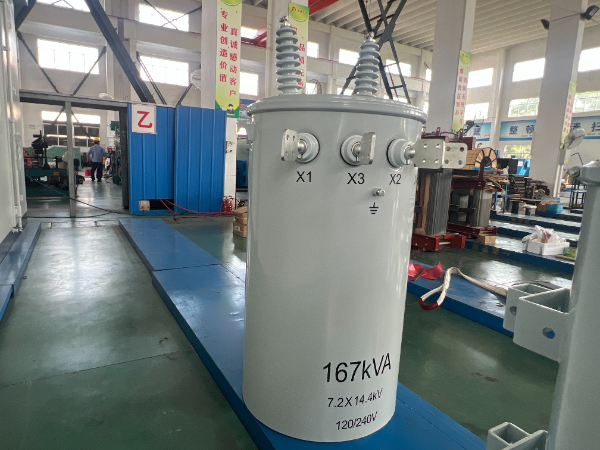
Build Your RFQ Input List
Send voltage, power rating, load type, installation environment and applicable standard to start the review.
Request a Technical Offer- Oil-immersed and dry-type options
- Two- or three-winding review
- Motor and harmonic duty inputs
- Contract test matrix
Petrochemical Transformer Supply at a Glance
Talite can review a one-set requirement or a multi-unit project against the same technical baseline.[2] A useful quotation states what’s included in the transformer, auxiliaries, tests, documents, packing and site interface.
“Two quotations can look similar while excluding different tests, documents, auxiliaries or site responsibilities.”
Minimum order
Minimum order quantity is one transformer set.
Payment structure
30% T/T deposit with the order and 70% balance before shipment.
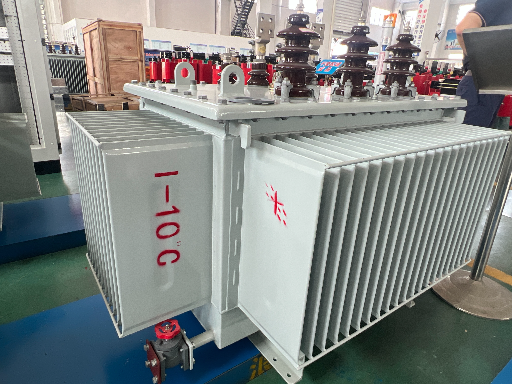
Refinery Power Transformer Engineering Scope
“A plant-wide power loss can force emergency shutdown before a replacement transformer is available.”
Refinery continuity risk reviewed against OSHA process-safety guidance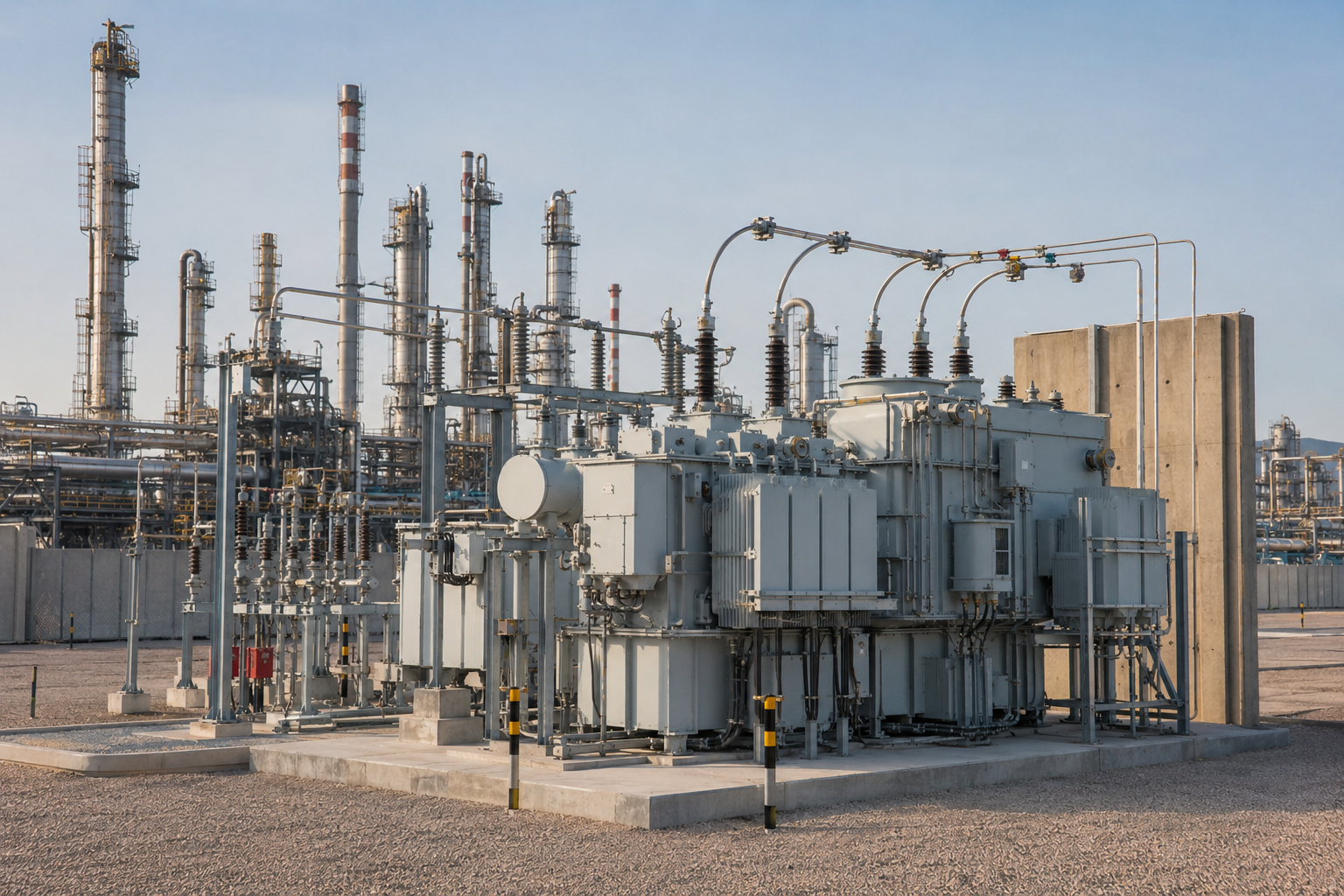
Electrical design basis
Incoming and outgoing voltage, normal and emergency loading, fault duty, impedance and tap range define the starting point for transformer selection.
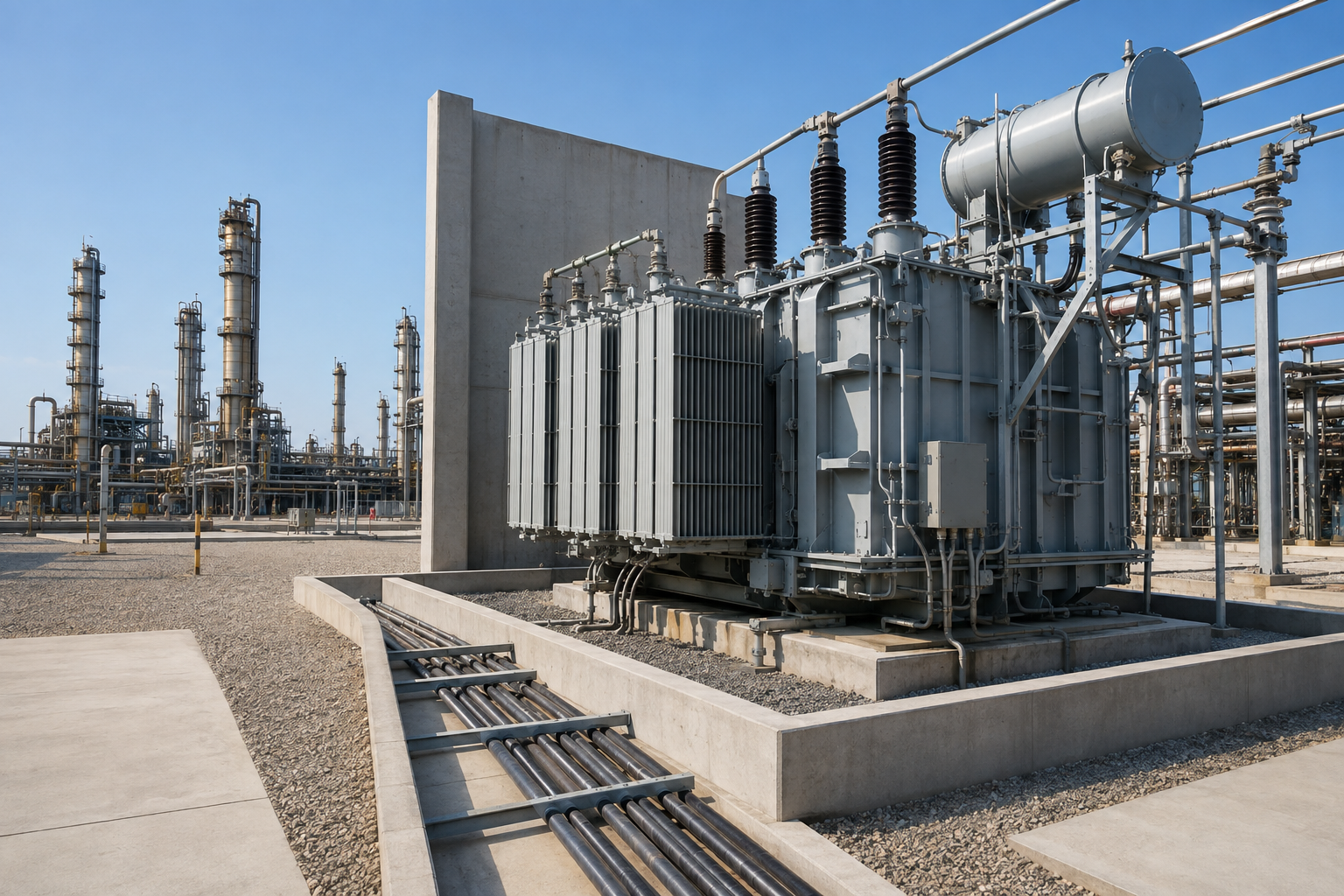
Process-load performance
Motor starting, variable-frequency drives and rectifiers can change winding losses, temperature rise, voltage drop and harmonic performance.
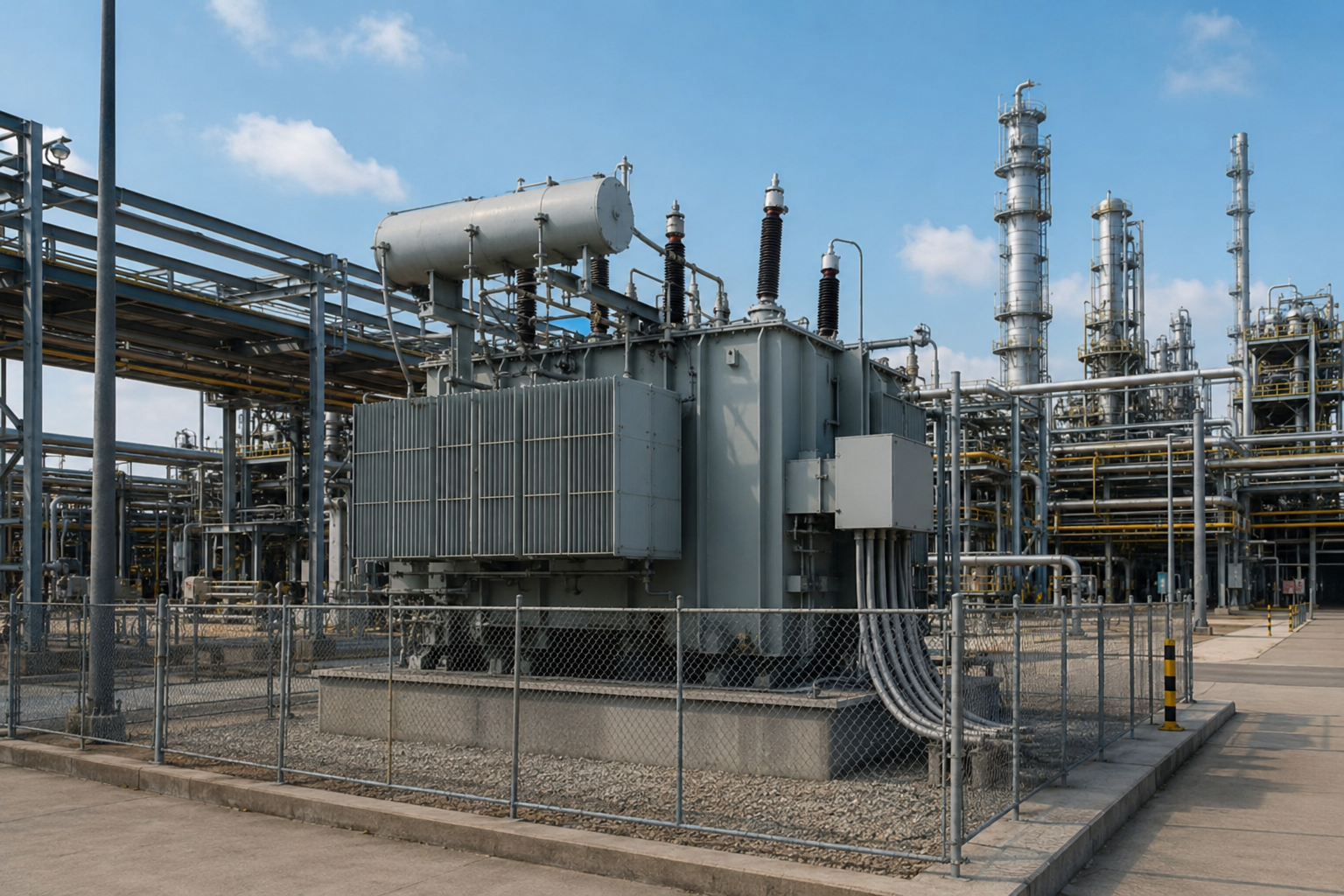
Continuity and protection
Redundant feeds, critical-load segregation, safe-shutdown duty and restart sequence determine how the transformer must behave within the power system.
Electrical design basis
Process-load performance
Continuity and protection
Interface gaps create rework risk because a transformer can match voltage yet miss protection, load or document requirements. Talite Transformer Co., Ltd. has worked in the power transformer industry for more than 30 years and engineers confirmed project inputs into a reviewable configuration, deviation list, test schedule and supply boundary. Expected equipment lifespan still depends on the industrial power supply duty, environment, maintenance and operating conditions.
Send these inputs for a useful technical response
- Single-line diagram, bus arrangement and upstream fault level
- Normal, peak, emergency and future-expansion load cases
- Motor starting sequence and harmonic spectrum for drive or rectifier loads
- Maintenance access, spare philosophy and allowed outage window
- Grid-code, utility and plant-interface constraints
Corporate Profile
Talite company profile
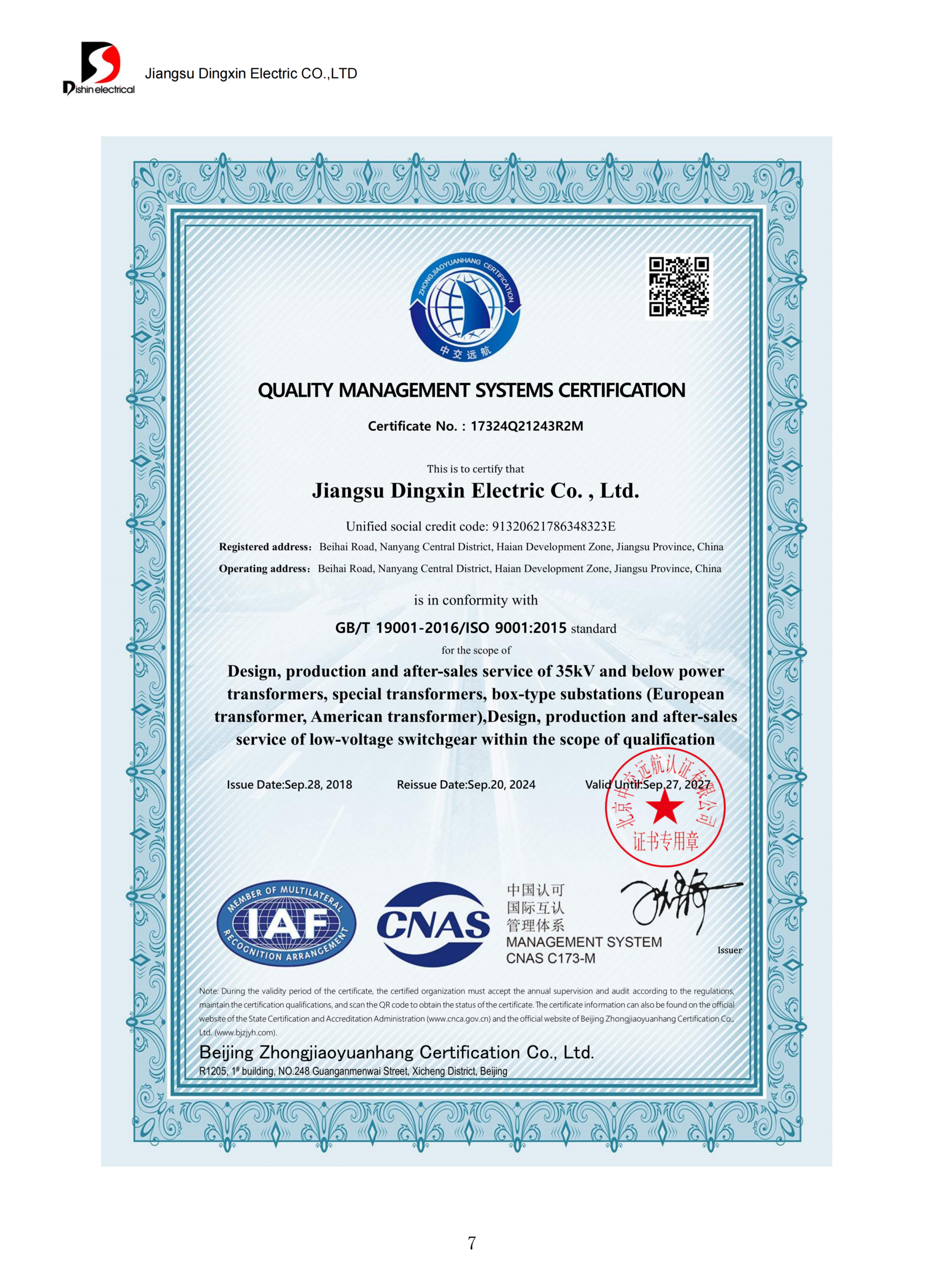
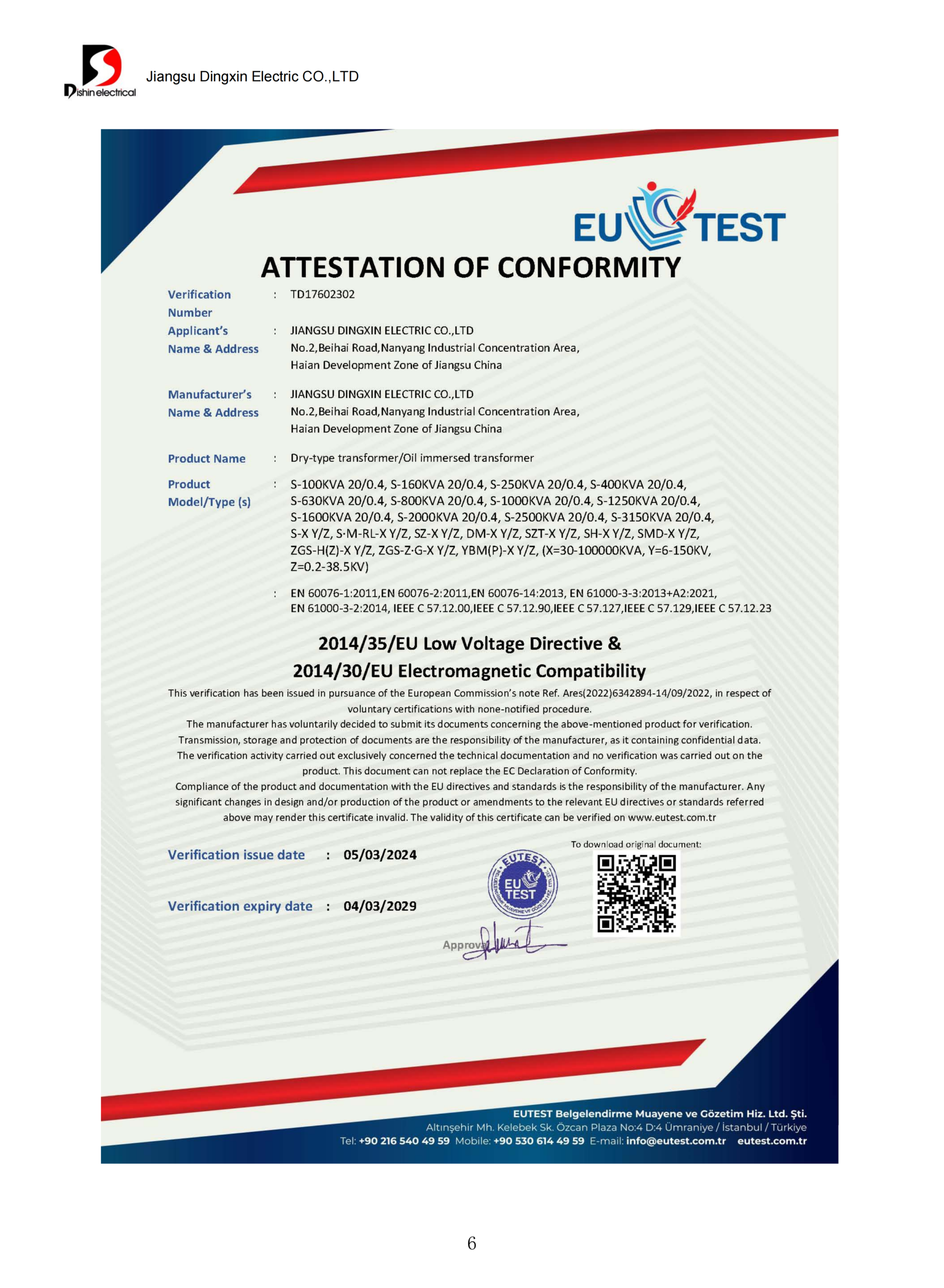
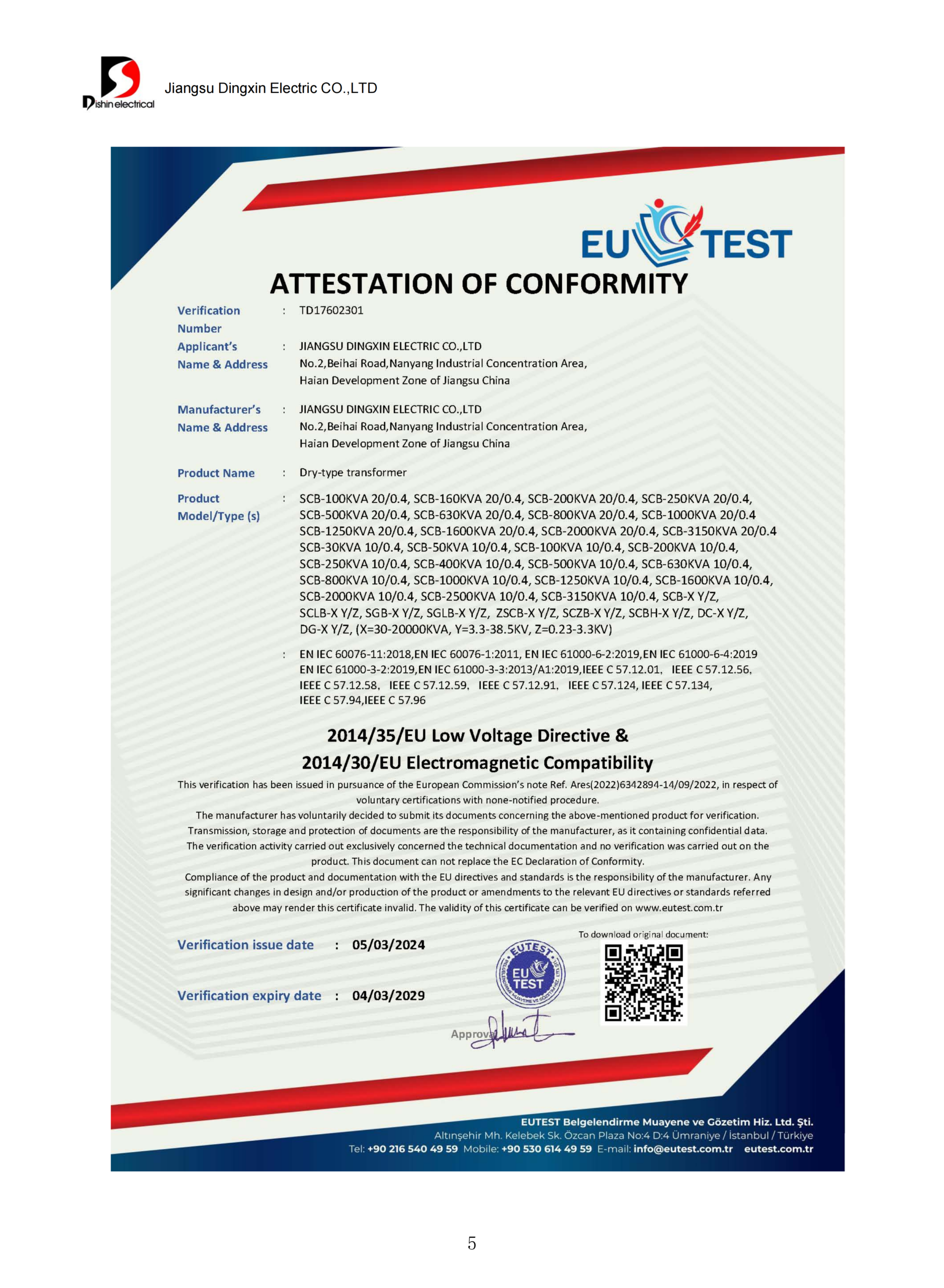
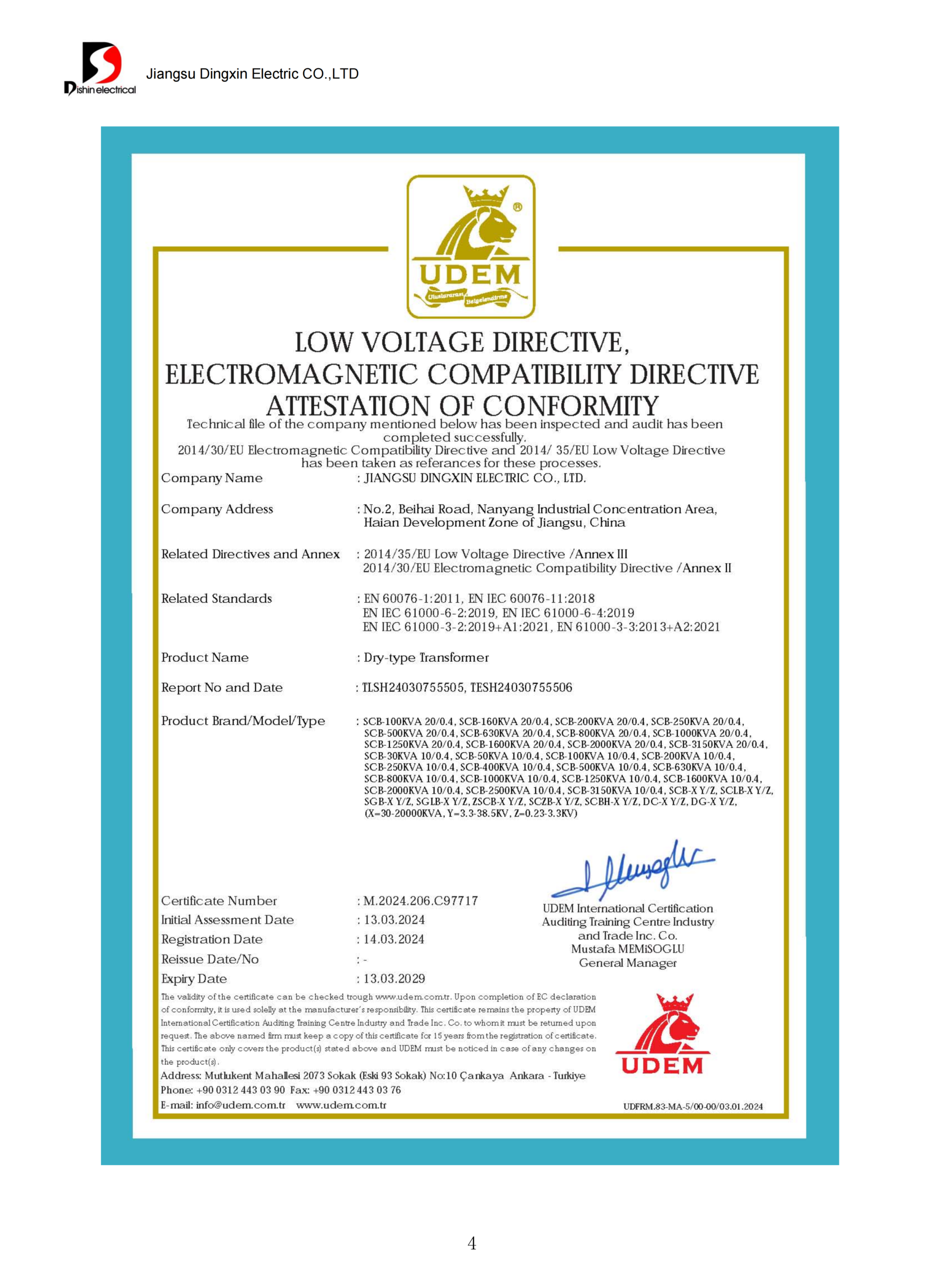
Talite was formerly Jiangsu Fangteng Industrial Co., Ltd. The company is located in the Hai’an Economic and Technological Development Zone of Nantong, Jiangsu Province. Talite operates as a high-tech enterprise serving clients worldwide.
Applications & Specifications
Transformer Designs for Refinery and Petrochemical Loads
The right transformer design depends on where the unit sits in the power system, what it supplies and how the plant operates after an outage. Talite reviews these application paths against the project specification rather than treating them as interchangeable catalogue products. These options are not interchangeable.
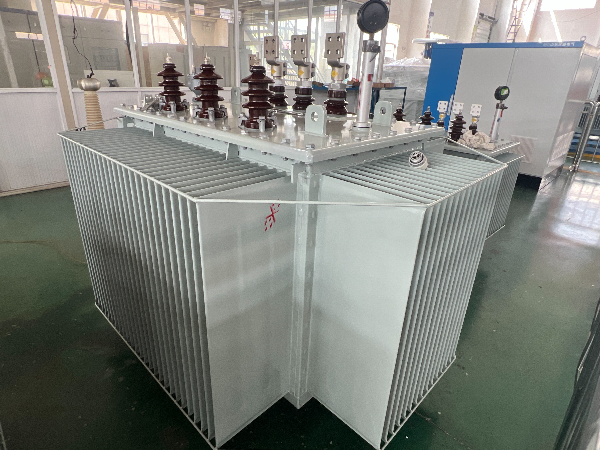
-
Liquid-immersed power transformer
Suitable for outdoor or dedicated transformer areas where liquid insulation and cooling are acceptable.[2]
Compare oil-immersed power transformer options by voltage, MVA duty, losses, impedance, fluid policy, containment and fire interface.
-
Dry-type or cast-resin transformer
Suitable for indoor plant distribution where a liquid containment system is undesirable.
Compare medium-voltage dry-type transformer options by enclosure, ventilation, ambient temperature, dust, condensation and sound limits.
-
Power and distribution transformers
Power-transformer duty can cover major system transfer, while distribution transformers serve local plant buses and process loads.
The technical offer should state rating, losses, impedance, connection, protection interfaces and guaranteed particulars for the selected duty.
-
Two- or three-winding arrangement
A two-winding unit provides one main voltage transformation path.
A three-winding unit can serve a tertiary or two secondary systems, but power split, inter-winding impedance and protection zones must be defined.
-
Drive or rectifier transformer
Non-linear process loads require the converter topology, current spectrum and operating cycle.
Those inputs support decisions on phase shift, thermal margin, winding arrangement and electrostatic shielding.
-
Skid-mounted substation interface
A packaged arrangement coordinates the transformer with switchgear, cable or bus connections and auxiliary systems.
Freeze mechanical interfaces, protection ownership, controls and site assembly responsibilities before approval drawings.
What the selection review produces
The output is a proposed architecture, stated design basis, deviation list and supply boundary. Final ratings and configuration remain subject to the buyer’s confirmed data and technical approval. A catalogue sheet is not a substitute for the project interface drawing.
Site Environment, Transformer Oil and Protection Interfaces
“A corrosive refinery environment is not the same decision as a classified hazardous location.”Specifications
Location-classification boundary reviewed against API RP 500
-
Climate
Record indoor or outdoor installation, minimum and maximum ambient temperature, altitude, humidity and condensation.
-
Atmosphere
Identify corrosive vapor, salt fog, dust, ingress exposure and the coating or enclosure expectation.
-
Physical duty
Define seismic criteria, noise limit, footprint, lifting path, cable entry and maintenance clearance.
-
Cooling utilities
State the permitted cooling method and the availability, voltage and redundancy of auxiliary power.
Insulating liquid selection
A liquid-filled transformer may use mineral transformer oil, natural ester or synthetic ester when the project specification permits. If mineral oil is proposed, state each required fluid property, including dielectric strength, thermal performance, fire point, biodegradability and material compatibility.
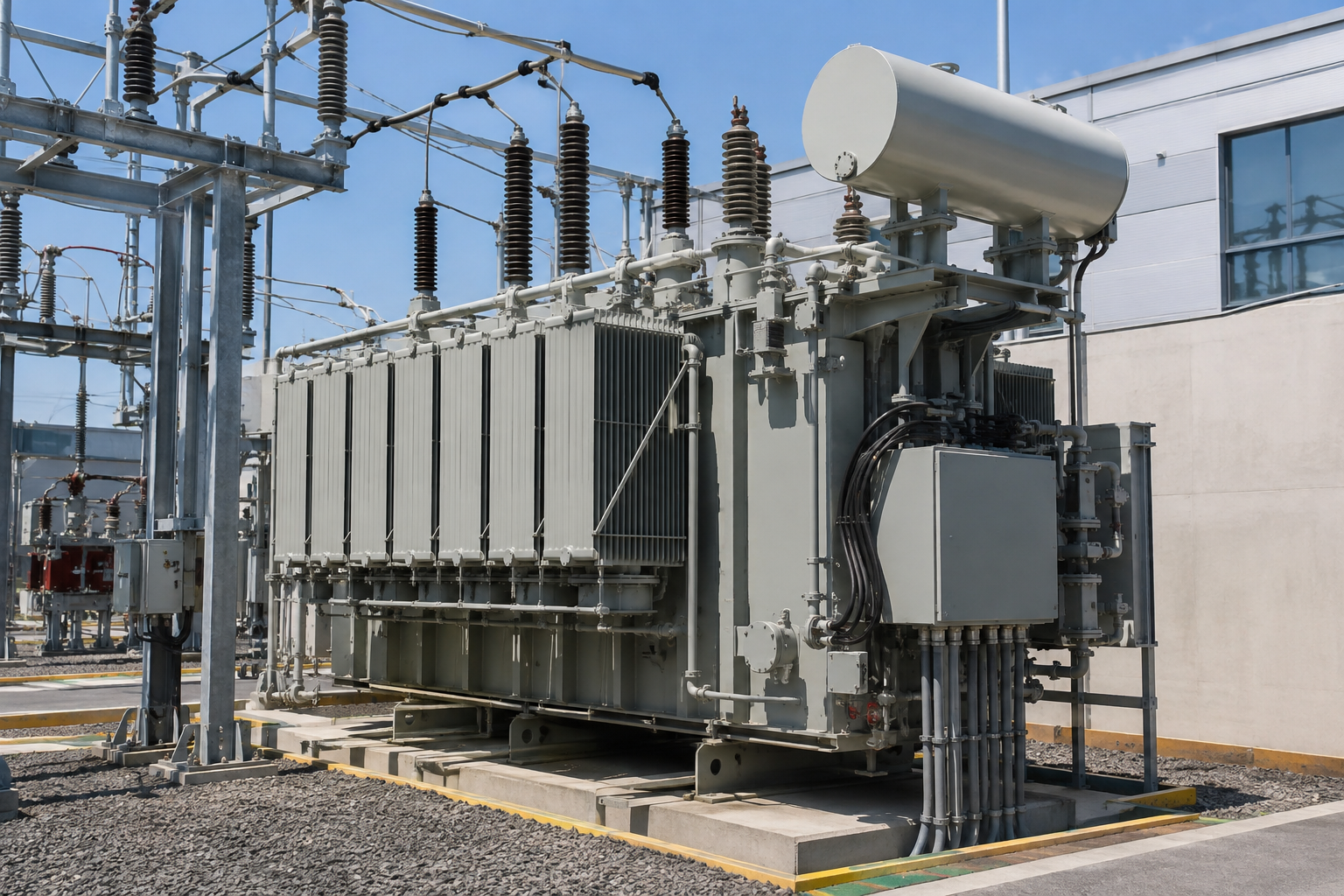
Location classification
A petrochemical site doesn’t automatically make every transformer location hazardous. When classification applies, the owner or EPC should provide the classified location, material group, temperature class, jurisdiction and equipment boundary. Harsh-environment protection is not interchangeable with hazardous-location classification.
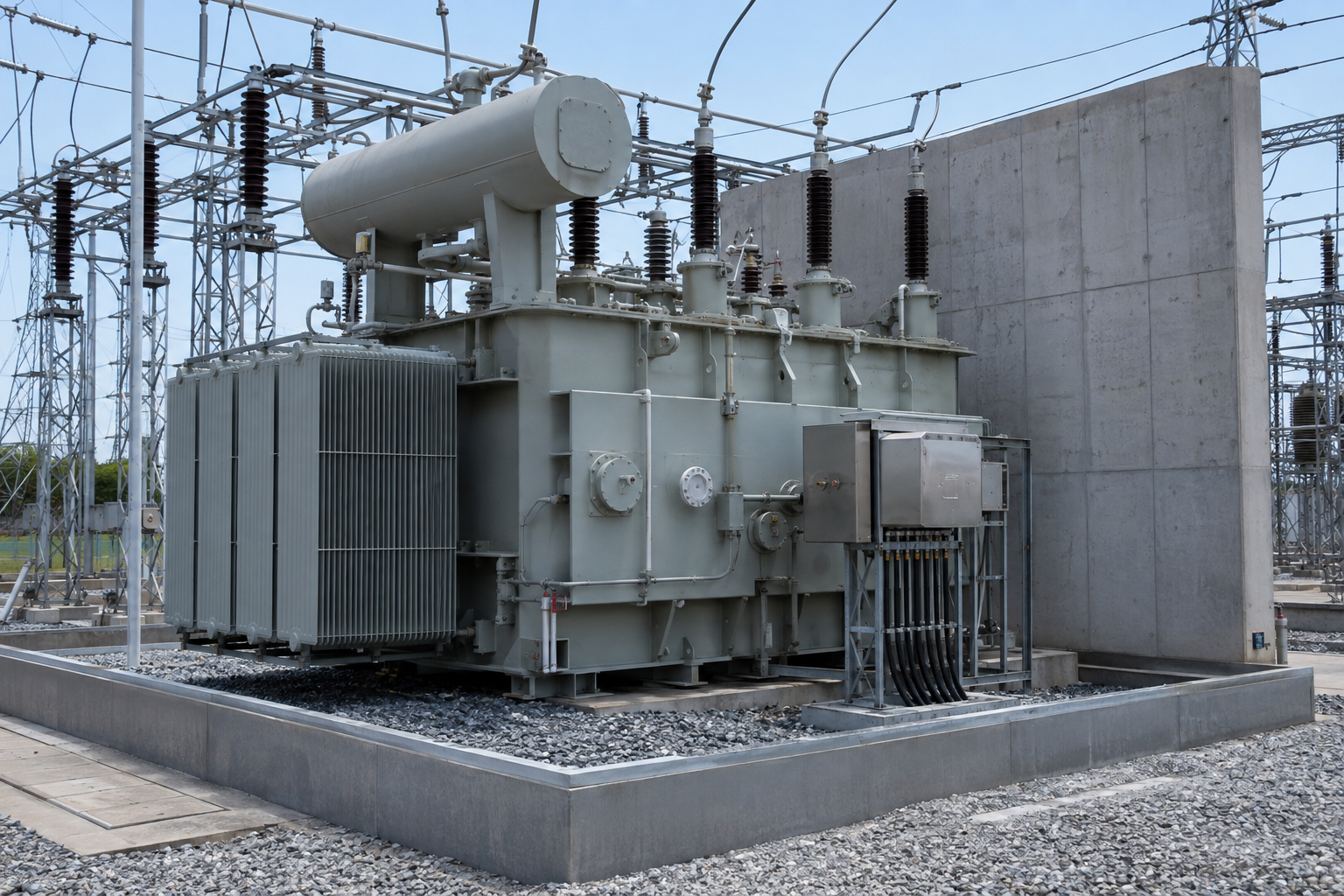
Application boundary
Oil-filled equipment containment
Transformer oil must insulate and cool the active part while remaining compatible with the site fire, drainage and environmental plan. Where the United States Spill Prevention, Control, and Countermeasure framework applies, capture liquid capacity and the connection to the site containment concept before the supply boundary is frozen.
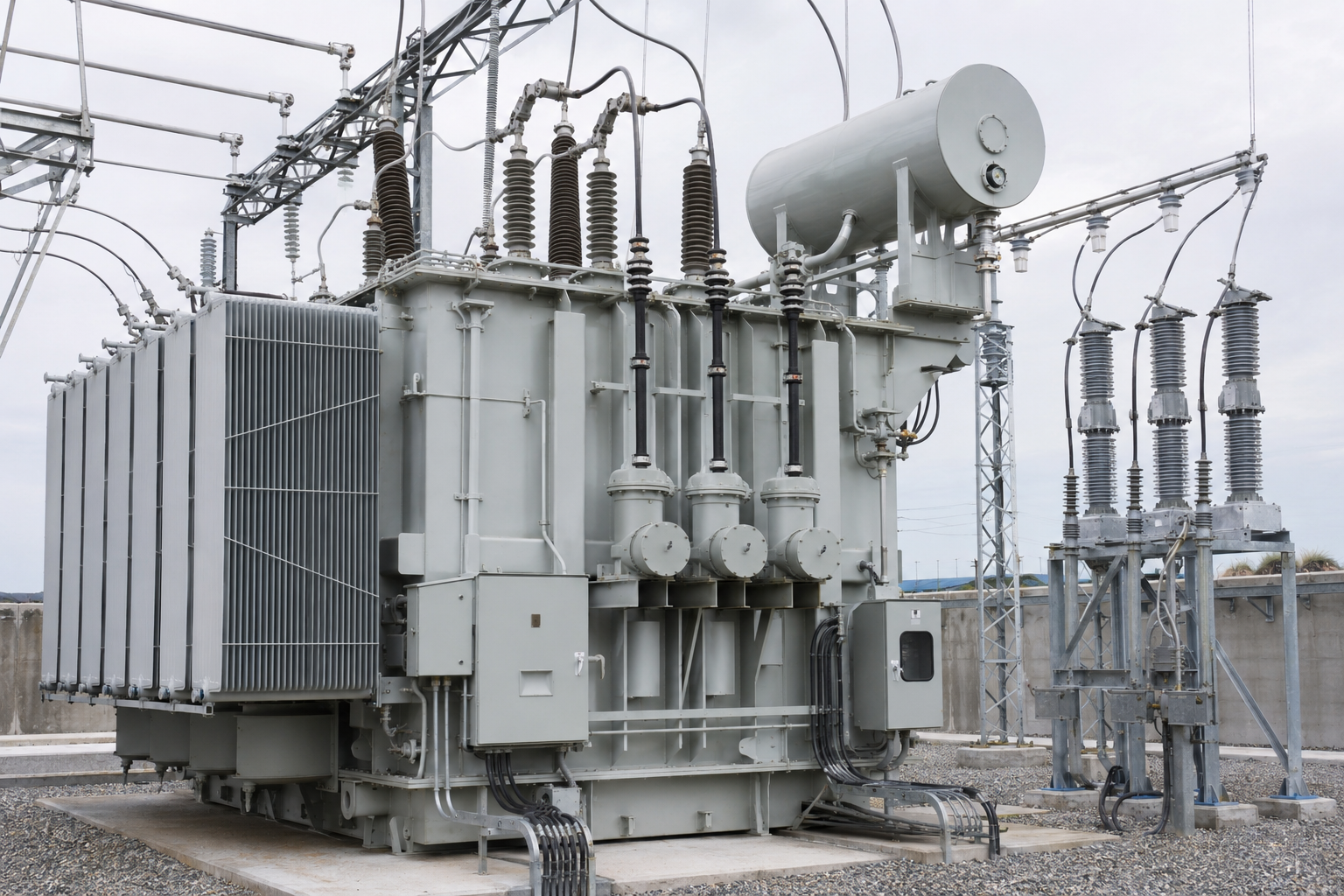
Electrical Duty and Interface Specification
“A nameplate rating does not resolve impedance, harmonic, motor-starting or parallel-operation interfaces.” Use this schedule to establish one refinery power transformer baseline, with buyer data in its stated unit and each power system deviation shown in the technical offer.[2]
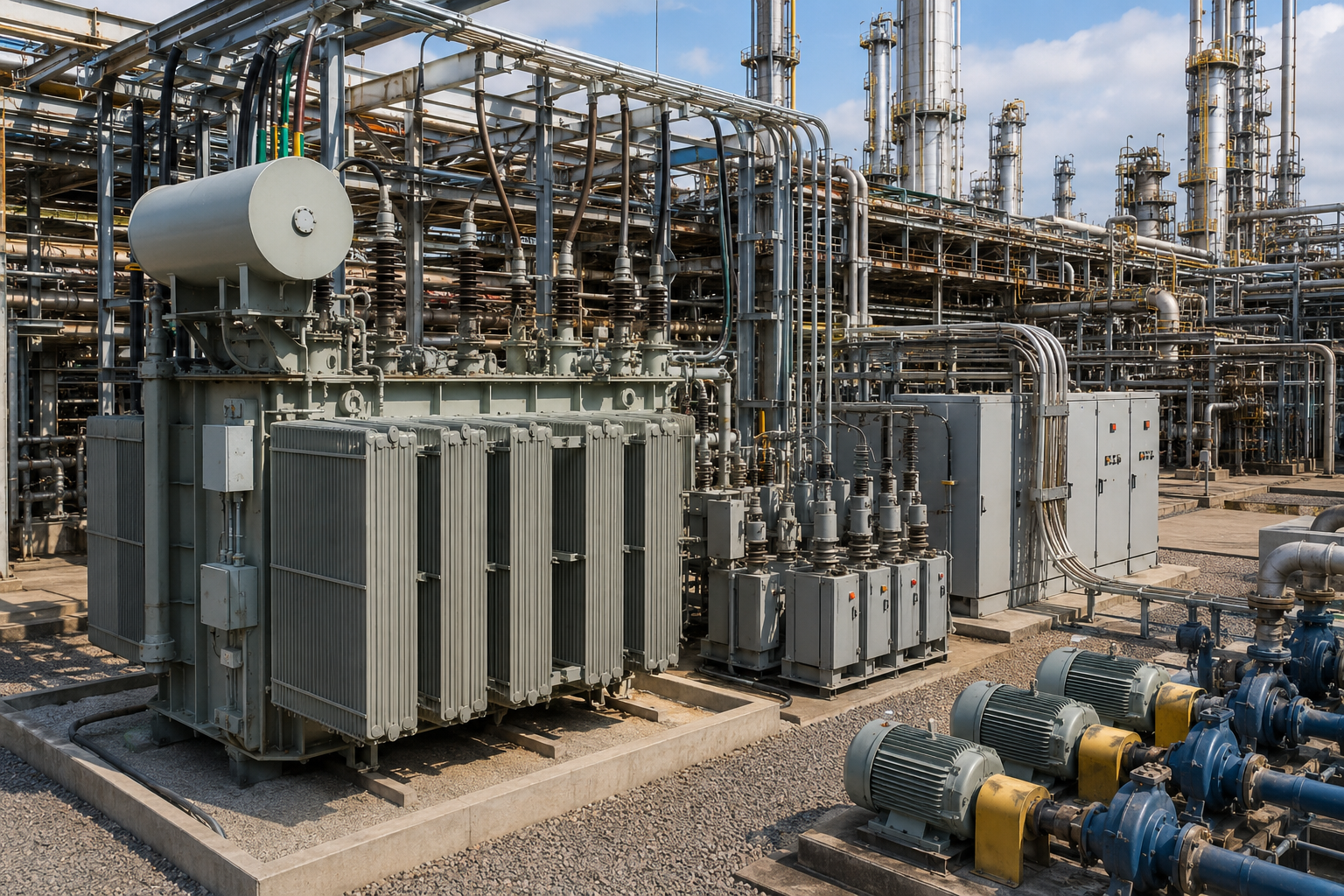
| Specification | Standard baseline | Buyer data | Technical-offer output |
|---|---|---|---|
| Rated power | State continuous and contingency duty | kVA or MVA by load case | Reviewed power rating and duty basis |
| Primary voltage | Nominal and maximum system voltage | kV, variation and utility interface | Primary winding and insulation basis |
| Secondary / tertiary voltage | Nominal bus requirements | kV at no-load and operating condition | Ratio schedule and terminals |
| Frequency | System frequency | 50 Hz or 60 Hz | Design frequency |
| Phases | System arrangement | 3-phase or stated alternative | Connection arrangement |
| Vector group | Coordinate grounding and phase shift | Required group, such as Dyn11 | Confirmed winding connection |
| Impedance | Coordinate fault current and voltage drop | Required percentage at stated MVA | Guaranteed impedance value |
| Tap changers | Off-circuit or on-load project decision | Tap type, range, steps and control voltage | Tap schedule and accessory scope |
| Insulation level | Coordinate system voltage and site conditions | Power-frequency and impulse withstand levels | Insulation coordination schedule |
| Short-circuit duty | Use the project fault study | Fault level, duration and X/R ratio | Mechanical and thermal duty basis |
| Load profile | Separate normal and emergency cases | Hourly or operating-case kW, kVA and power factor | Thermal loading basis |
| Harmonic spectrum | Required for non-linear loads | Current spectrum by harmonic order | Loss and thermal review basis |
| Motor starting | Identify largest start and sequence | Starting kVA, duration and starts per hour | Voltage-drop and thermal review |
| Ambient and altitude | State actual installation conditions | °C range and metres above sea level | Cooling and insulation adjustment |
| Cooling | Define normal and contingency states | Cooling preference and auxiliary availability | Cooling designation and auxiliary list |
| Temperature rise | Project or applicable-standard limit | Winding and liquid-rise requirement | Guaranteed thermal particulars |
| Overload duty | Separate emergency duty from continuous rating | Load %, duration and annual frequency | Thermal-aging review basis |
| Loss and noise limits | State evaluation and measurement basis | No-load loss, load loss and dB limits | Guaranteed values and test method |
| Neutral and earthing | Coordinate with the protection study | Grounding method and neutral current duty | Neutral terminal and insulation detail |
| Monitoring and protection | List mandatory signals and trip functions | Device schedule, protocol and control voltage | Accessory and I/O schedule |
| Installation envelope | Coordinate transport and service access | Maximum dimensions, mass, route and clearances | Outline and interface drawings |
| IEC requirements | Identify the applicable IEC 60076 parts | Edition, project amendments and order of precedence | Standards schedule |
| IEEE general requirements | Use IEEE C57.12.00 when it applies to the selected liquid-immersed unit | Edition and project amendments | Requirements cross-reference |
| IEEE test code | Use IEEE C57.12.90 when it applies to the selected transformer | Required tests, methods and witness points | Contractual test matrix |
Send Your Duty Data

Refinery Transformer Interface Register
Capture the baseline, deviations and responsibility owner in one printable project record.
Open the interface register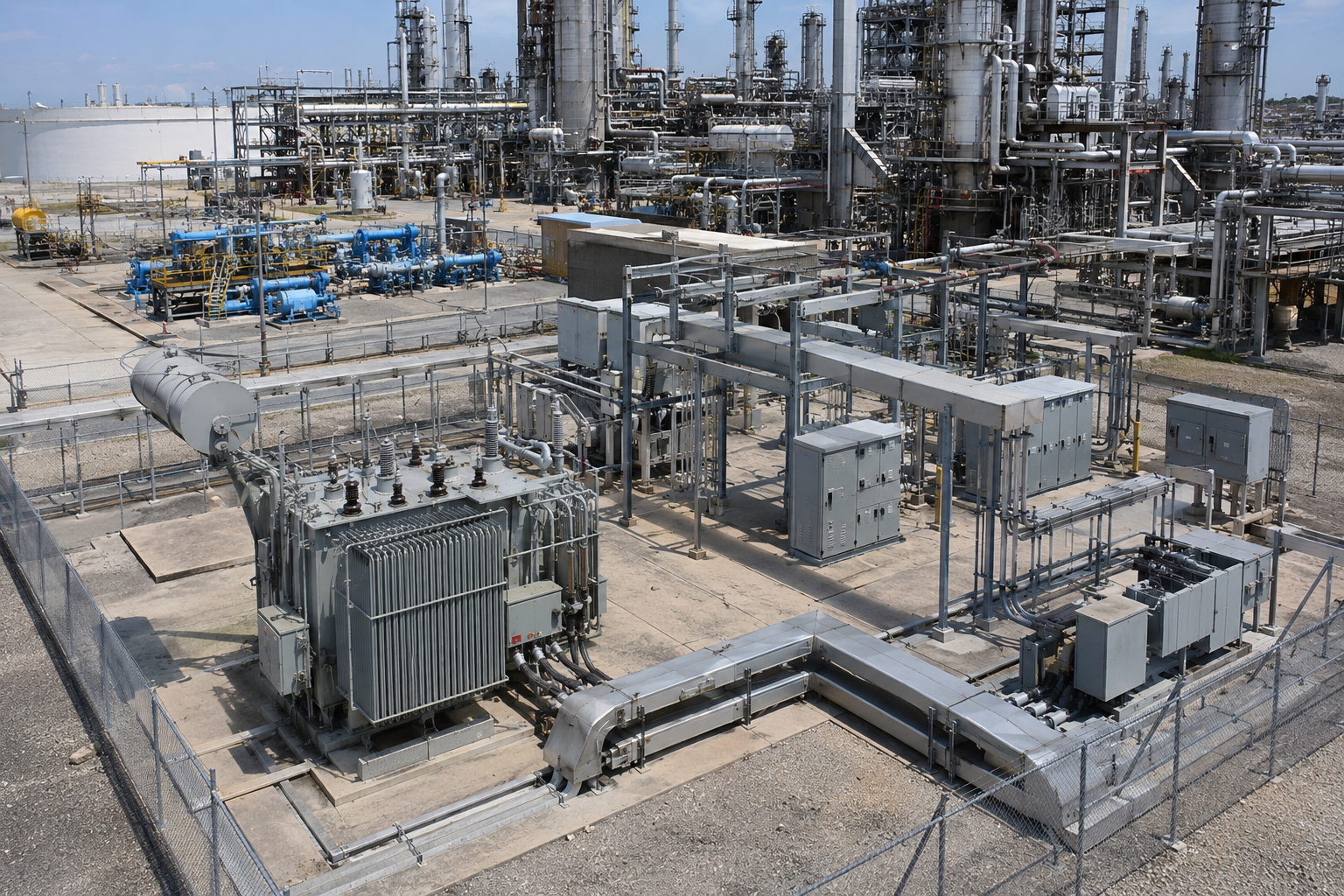
Transformer RFQ Input Builder
Check the electrical, environmental, testing and commercial fields before sending an enquiry.
Build an RFQ input list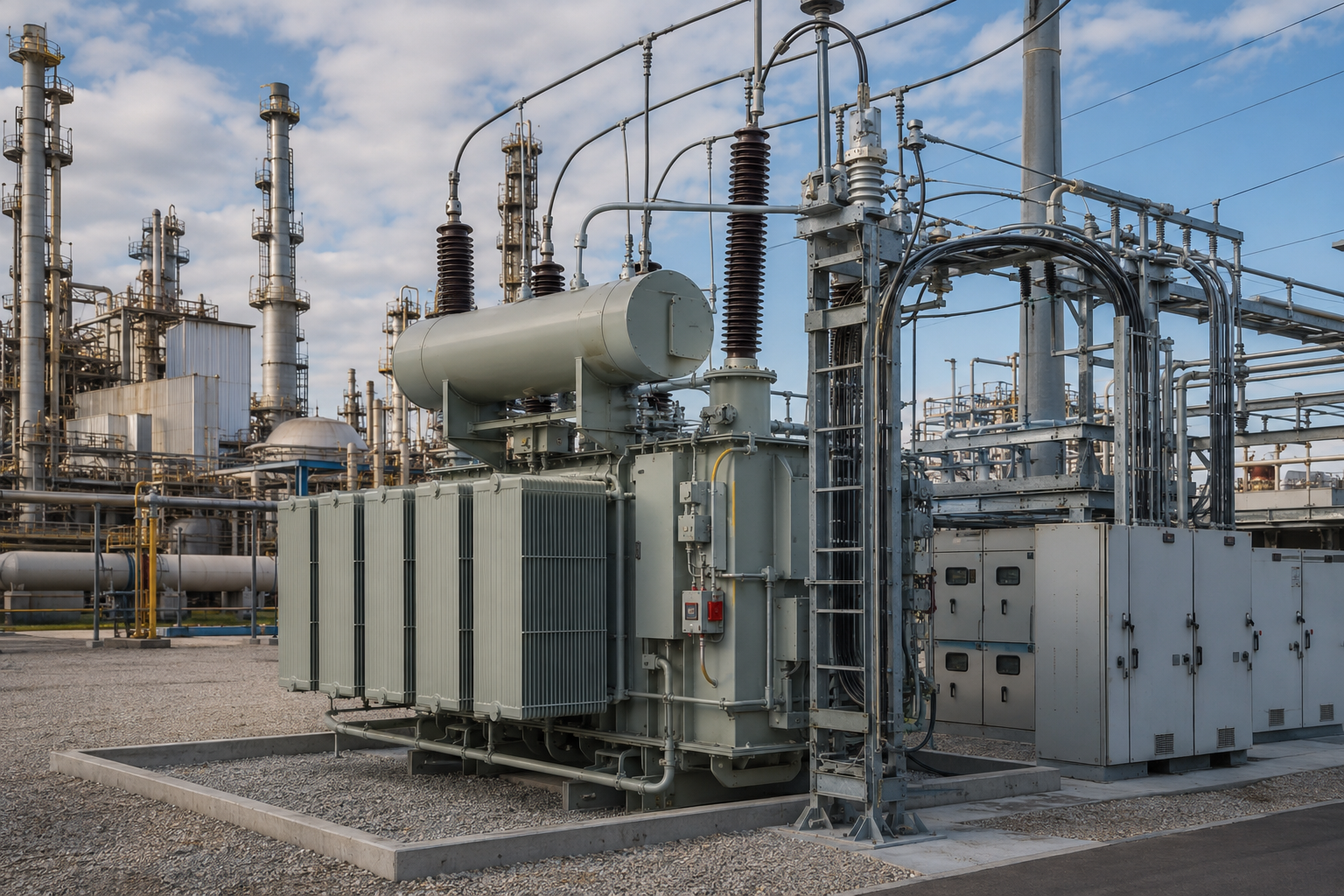
Architecture Comparison
Compare common architecture choices against redundancy, environment and interface needs.
Compare architecture optionsRefinery Power Transformer Price and Delivery Drivers
System Active
A refinery power transformer price is comparable only when suppliers receive the same duty and supply boundary. Align voltage, rating, winding arrangement, impedance, insulation, cooling system, accessories, tests, documents, packing and logistics before evaluating the commercial offer.
Use one interface schedule across refinery power transformer manufacturers so voltage, duty, tests, auxiliaries and site responsibilities stay visible. The same rule applies when comparing oil and gas transformer manufacturers for an oil refinery power transformer or skid mounted substation.
- Talite receives the baseline electrical, site and commercial inputs.
- Project deviations and missing interfaces are listed for clarification.
- Technical scope and the document schedule are aligned.
- A commercial quotation records the confirmed supply boundary.
- Approval, production and test milestones are set after order confirmation.
- Shipment proceeds against the agreed release documents and logistics scope.
| Driver | Cost or schedule effect | Buyer action |
|---|---|---|
| Electrical duty | Voltage, MVA, impedance and fault duty shape the active materials and design work. | Send the single-line diagram, load cases and fault study. |
| Non-standard interfaces | Special terminals, enclosure geometry, auxiliaries and control protocols add coordination. | Freeze the interface register before approval drawings. |
| Tests and witness points | Special tests, third-party inspection and witness attendance affect the production plan. | Separate required, optional and approval-stage records in the RFQ. |
| Logistics scope | Transport limits, preservation, export packing and delivery terms alter the commercial scope. | Provide destination, route limits and requested delivery term. |
Commercial baseline
- Minimum order: minimum order quantity is one transformer set.
- Payment: 30% T/T deposit with the order and 70% balance before shipment.
- Delivery time: confirmed after technical conditions, document requirements, witness points and supply scope are frozen.
From RFQ to a Manufacturing-Ready Technical Scope
-
01
Submit the design basis
Send the single-line diagram, voltage, MVA or kVA duty, load profile, site conditions and applicable standard.
-
02
Close missing inputs
Talite lists unresolved electrical, environmental, test, documentation and commercial fields.
-
03
Select the architecture
Oil-immersed or dry-type construction, winding arrangement, cooling and major accessories are reviewed against the duty.
-
04
Issue the technical offer
The proposed configuration, guaranteed particulars, exceptions and supply boundary are recorded for review.
-
05
Resolve buyer comments
Technical comments, witness points and document expectations are closed in a controlled schedule.
-
06
Freeze the contract basis
The accepted technical scope becomes the basis for manufacturing, inspection, packing and release planning.
Specification decisions that reduce rework
Start the Technical Review| Decision | Record in the RFQ | Why it matters |
|---|---|---|
| Load cases | Normal, emergency, starting and future-expansion duty | Prevents one headline MVA value from hiding the thermal duty. |
| System impedance | Target value, tolerance and parallel-operation requirement | Aligns fault current, voltage regulation and sharing studies. |
| Environment | Measured ambient, altitude, contaminants and enclosure expectation | Connects physical conditions to cooling, insulation and corrosion protection. |
| Acceptance evidence | Test, report, approval and witness matrix | Stops document expectations from appearing after production planning. |
Transformer Architecture Trade-Offs for Refinery Projects
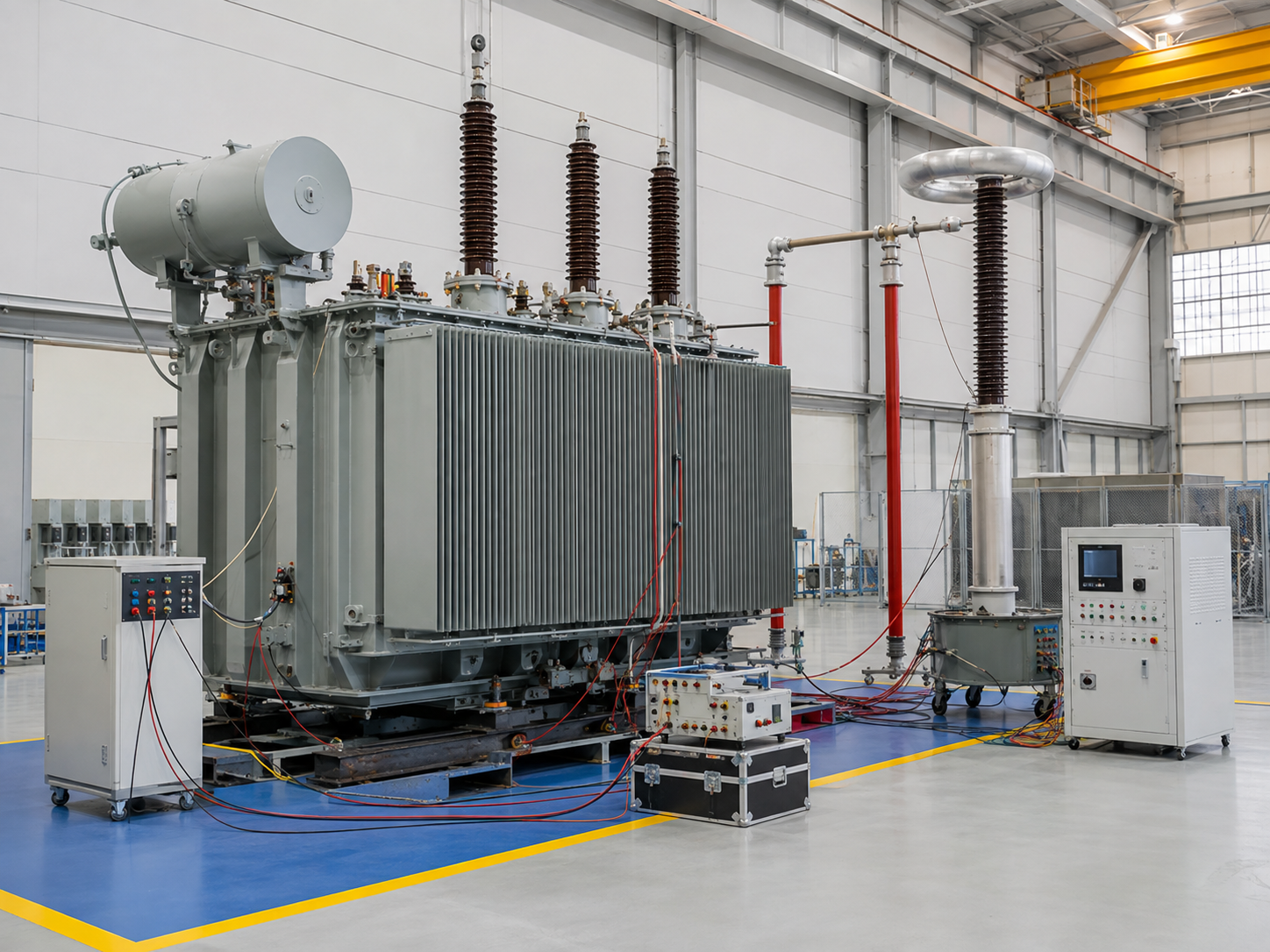
A suitable architecture depends on outage philosophy, installation environment and the system boundary.[2] The trade-off is the reliability outcome, interface work and acceptance evidence created by each option. Unlike a catalogue comparison, the right call follows the plant operating case rather than the shortest equipment description.
Architecture choice
Trade-off
Decision path
-
Oil-immersed vs dry-typeLiquid insulation can support outdoor and higher-duty applications, while an indoor dry-type option changes ventilation, enclosure and fire interfaces.Compare installation location, fire policy, containment, thermal duty and maintenance plan.
-
One large unit vs redundant unitsA single unit can simplify equipment count; redundancy can limit the load lost during maintenance or failure but adds switchgear and coordination.Define the load that must remain energized and the permitted operating state after one unit is unavailable.
-
Two vs three windingsA third winding can consolidate interfaces but introduces power-split, impedance and protection complexity.Compare bus architecture, protection zones, load growth and operational flexibility.
-
Standalone vs unit substationAn integrated interface can reduce site connection work but requires early mechanical and protection coordination.Freeze switchgear ownership, bus or cable connection, controls and site assembly boundary.
-
Routine vs project-specific testsAdditional tests can strengthen acceptance evidence but affect planning, cost and witness logistics.Name the decision each extra test must support, then place it in the contractual test matrix.
Oil & Gas Petrochemical Engineering Tools
Refinery Transformer Interface Register
Map and standardize physical and electrical interfaces for refinery transformer installations. Ensure precise alignment with existing petrochemical infrastructure.
Access ToolTransformer RFQ Input Builder
Configure technical specifications and load requirements for custom transformer quotes. Generate standardized RFQ documents for procurement.
Access ToolTransformer Architecture Comparison
Evaluate structural and cooling architectures for petrochemical applications. Compare footprint dimensions and efficiency metrics side-by-side.
Access ToolFAQ: Petrochemical and Refinery Transformers
What information is required for a petrochemical transformer quotation?
Provide the single-line diagram, primary and secondary voltage, frequency, MVA or kVA duty, load cases, fault level, impedance, grounding, site conditions and applicable standard. Add harmonic data, motor-starting duty, redundancy, tests, documents and the supply boundary when they affect the project.
How is transformer capacity selected for refinery process loads?
Capacity depends on coincident load, power factor, motor starting, normal and emergency cases, future expansion and the permitted loading of each redundant path. Show kW, kVA, duration and operating sequence for each case instead of relying on one connected-load total.
When should a refinery use an oil-immersed or dry-type transformer?
Compare rating, installation location, ventilation, thermal duty, fire policy, liquid containment and maintenance strategy. The decision should cover the complete installation, not only transformer purchase price.
How is transformer oil or ester specified?
Name the permitted fluid, required standard and performance properties, then confirm compatibility with seals, coatings and site policy. The project should also define fluid volume, fire point, containment, drainage and environmental responsibilities.
How do variable-frequency drives and rectifiers affect the design?
Non-linear current can increase winding losses, heating and neutral current and may change the phase-shift arrangement. Provide converter topology, harmonic spectrum and duty cycle so the thermal and winding review reflects the actual load.
How should redundancy be defined for critical refinery loads?
State which loads must remain energized after one transformer or feeder is unavailable, the allowed transfer time and any temporary overload. Include safe-shutdown loads and restart sequence because “N+1” alone doesn't define the operating state.
Does a petrochemical site automatically require explosion-proof certification?
No. The owner or EPC must provide the zone or class/division, material group, temperature class, jurisdiction and equipment boundary before the project determines which equipment and certificates apply.
Which transformer tests and documents should be contractual?
Name the applicable IEC 60076 parts or IEEE test code, routine and project-specific tests, acceptance values, report format and witness points. Also list guaranteed particulars, deviation schedule, drawings, accessory data, operating information and the final document index.
What drives refinery power transformer price and delivery?
Price and schedule follow voltage, rating, winding arrangement, impedance, cooling, accessories, testing, documents, packing, approval cycles and logistics. Delivery can be confirmed after the technical conditions, witness plan and destination scope are frozen.
Request a Petrochemical Transformer Technical Offer
Send the project country, primary and secondary voltage, required kVA or MVA, load type, installation environment, applicable standard, quantity and target delivery window. Attach the single-line diagram and load schedule when available.
Send Your Project RequirementsTalite will provide a specific engineering review of the submitted inputs and identify missing items before defining the technical and commercial scope.