Get in touch with Toplit Transformer Co., Ltd Company
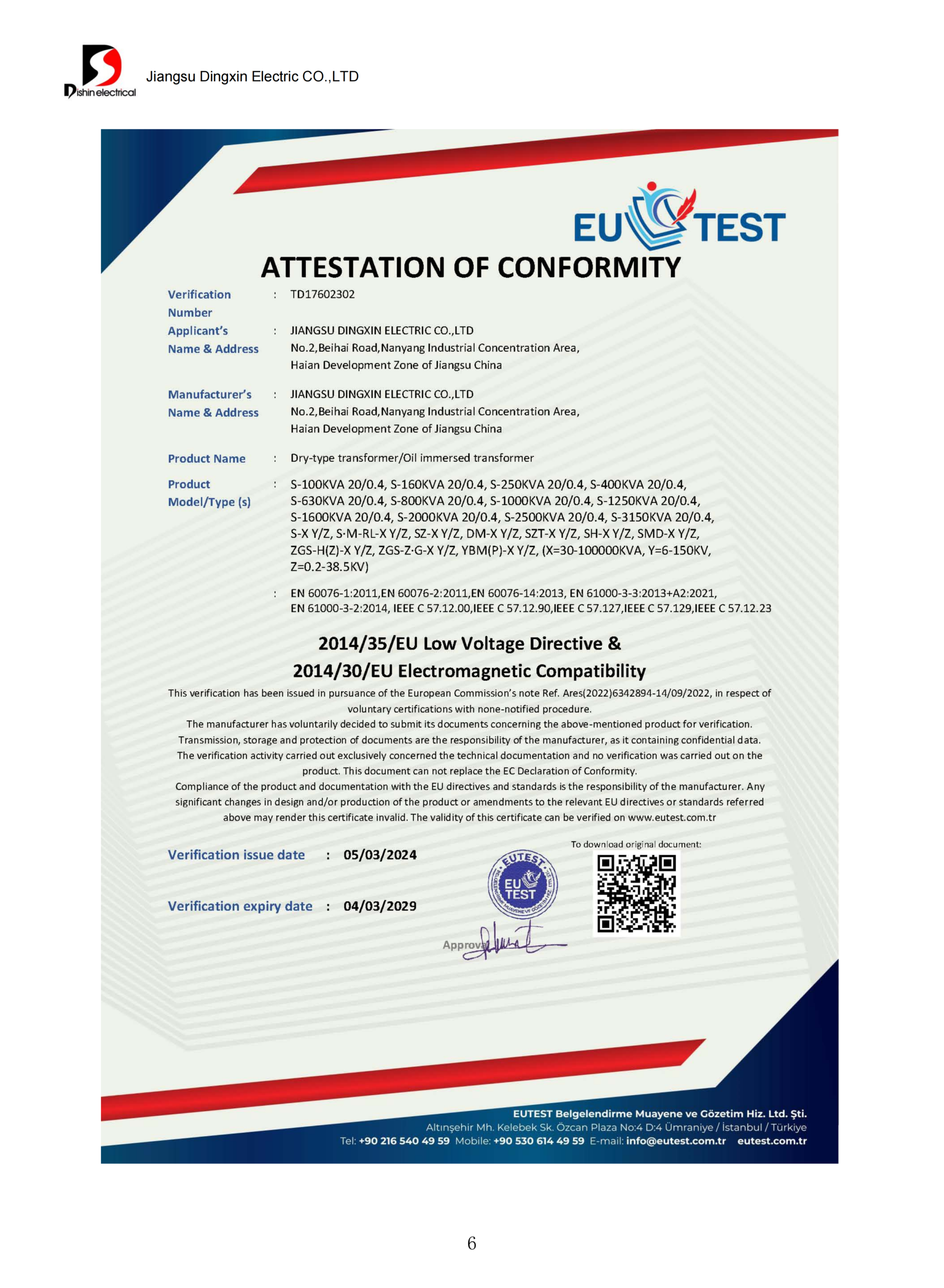
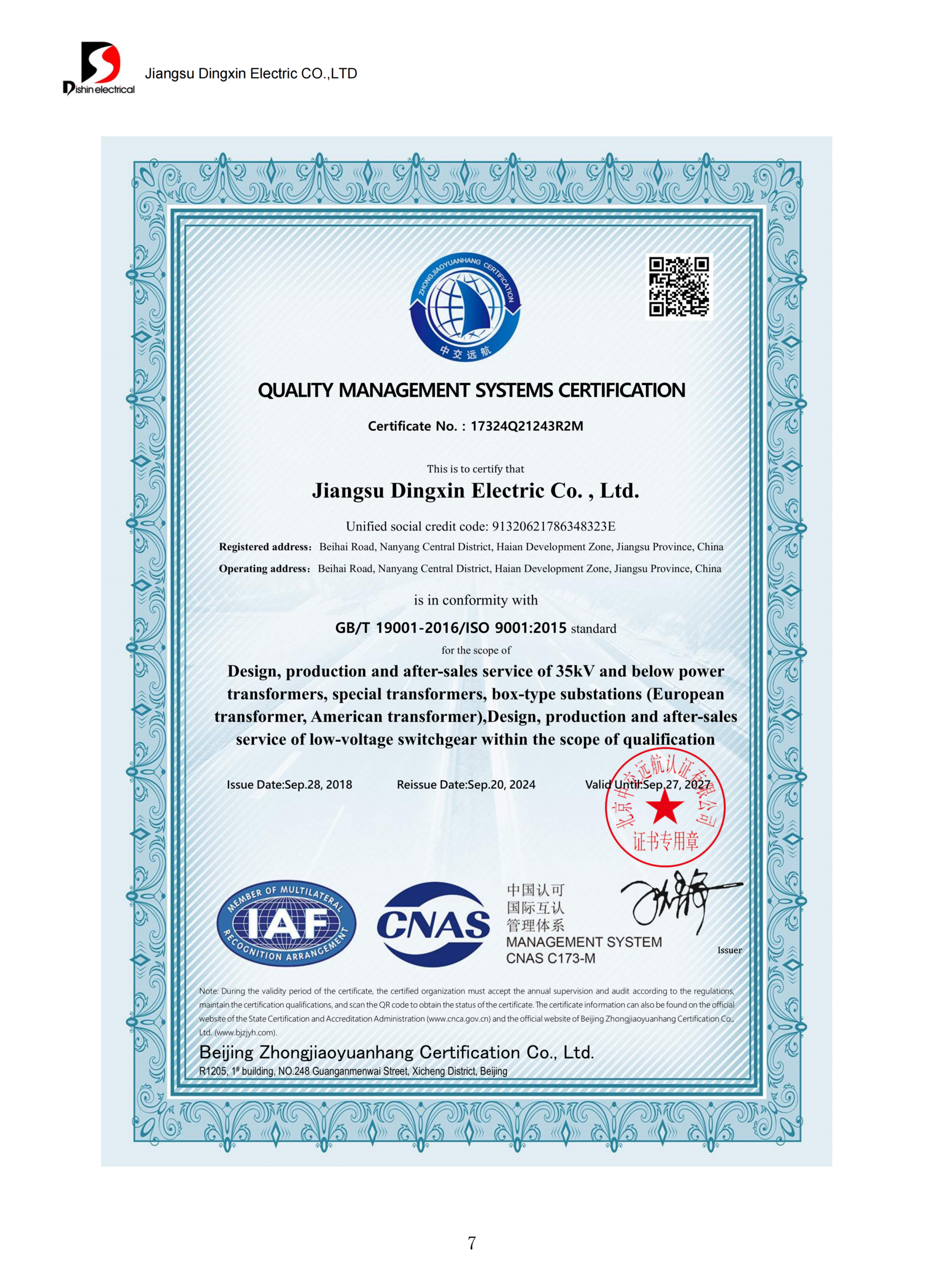
ISO 9001 Certified
Dry-Type Transformer
Dry Type Transformer Manufacturer for Project-Specific Power Distribution
Cast resin and open-wound familiesMedium-voltage project path1000 kVA / 11 kV cast-resin model3750 kVA open-wound model
A useful dry-type transformer quotation starts with the electrical duty, site environment, construction, cooling, enclosure and evidence requirements already defined. Talite Transformer routes each industrial power-distribution enquiry to the relevant product family instead of treating every dry transformer as a generic configuration.
Start with the electrical system
Send rated kVA, primary and secondary voltage, frequency, phase, vector group, target impedance and the load profile. Harmonics, motor starting, cyclic duty and future expansion can change thermal and protection decisions even when the nameplate kVA is unchanged.
Define the room and operating boundary
State indoor or outdoor placement, altitude, ambient range, dust, moisture, condensation, corrosion, ventilation, sound limits and available clearances. These inputs determine whether the proposal needs a cast-resin or open-wound path, an enclosure, fan assistance or further engineering review.
Send the single-line diagram, load schedule and project specification when available. Mark unknown fields for review instead of filling them with generic values.
Send Your Transformer Requirements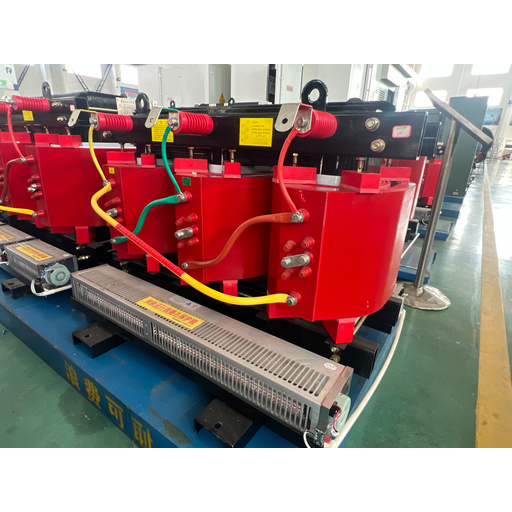
Cast-Resin Model
1000 kVA / 11 kV
Open-Wound Model
3750 kVA
SC(B) High-Voltage Options
6, 6.3, 10, 10.5 and 11 kV
SC(B) Low-Voltage Option
0.4 kV
Vector-Group Options
Yyn0 and Dyn11
Documented Design Basis
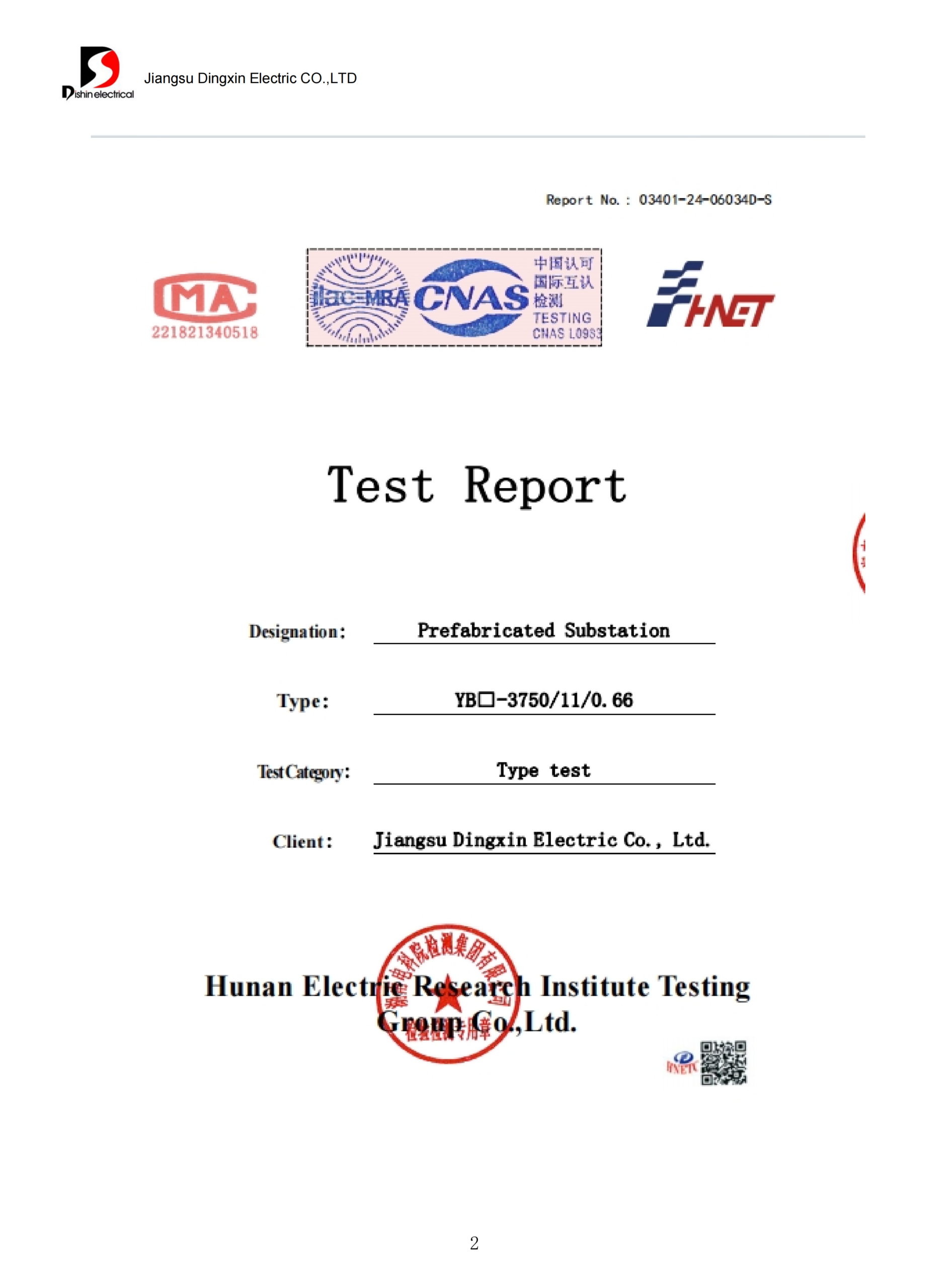
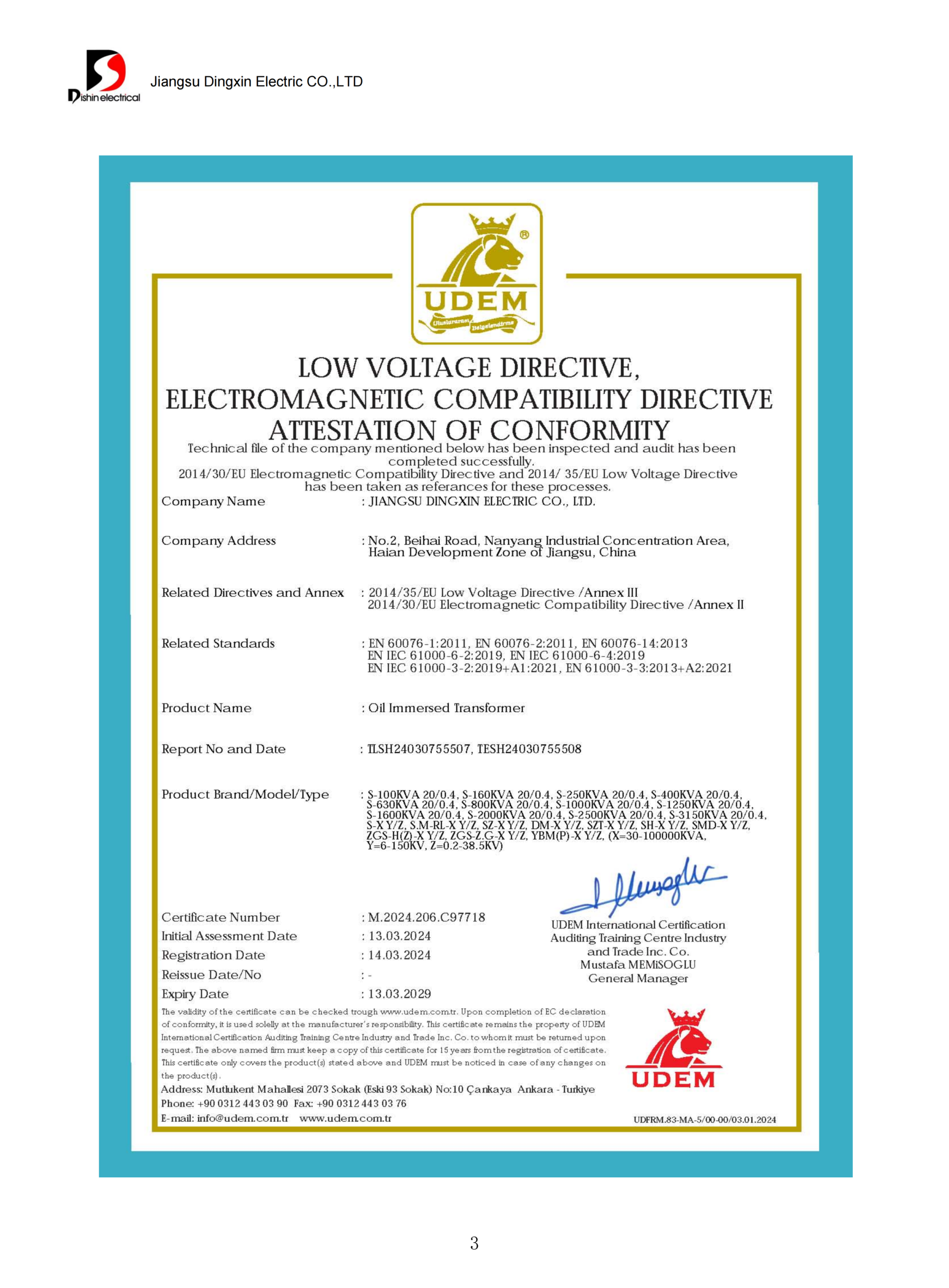
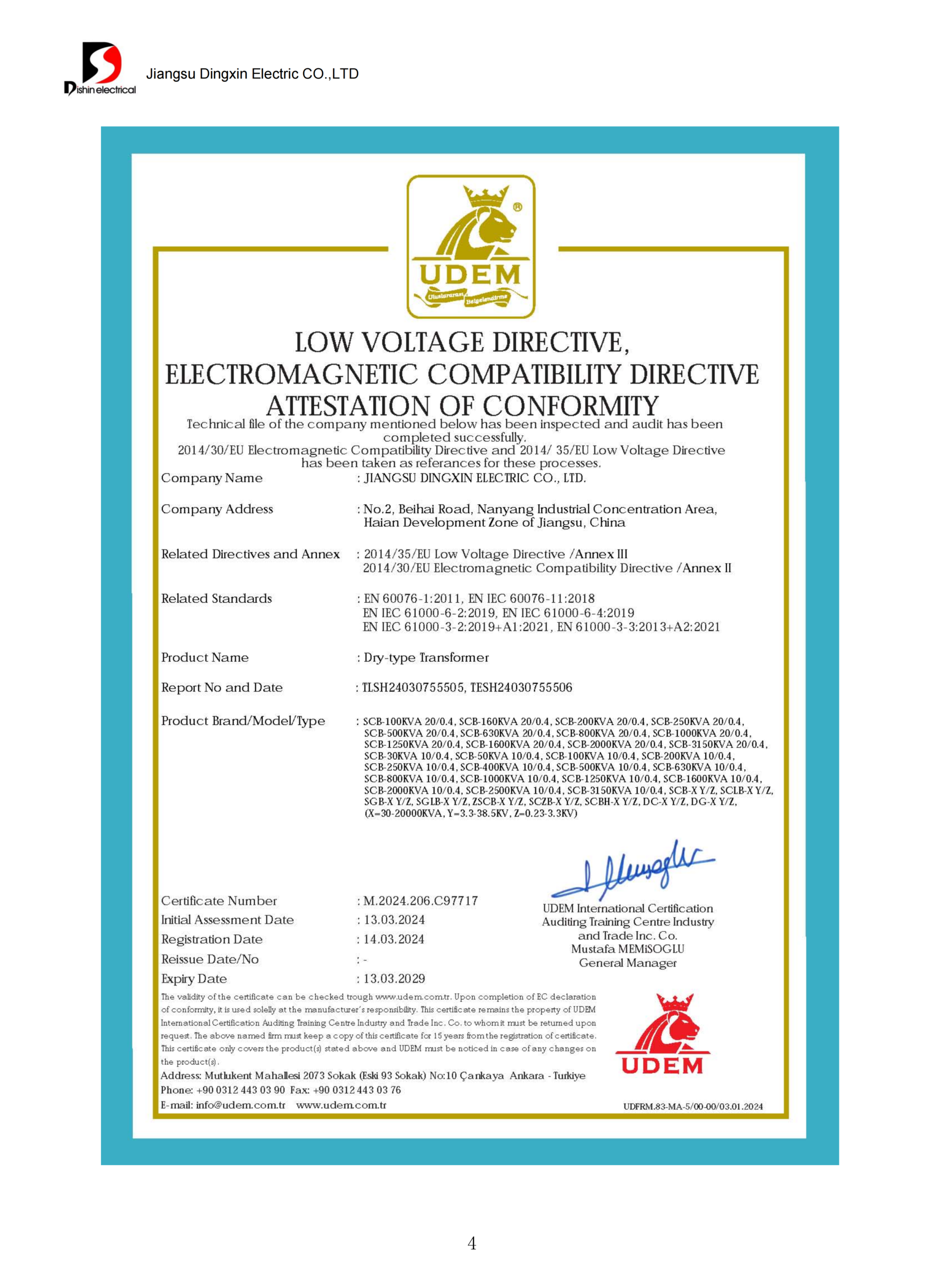
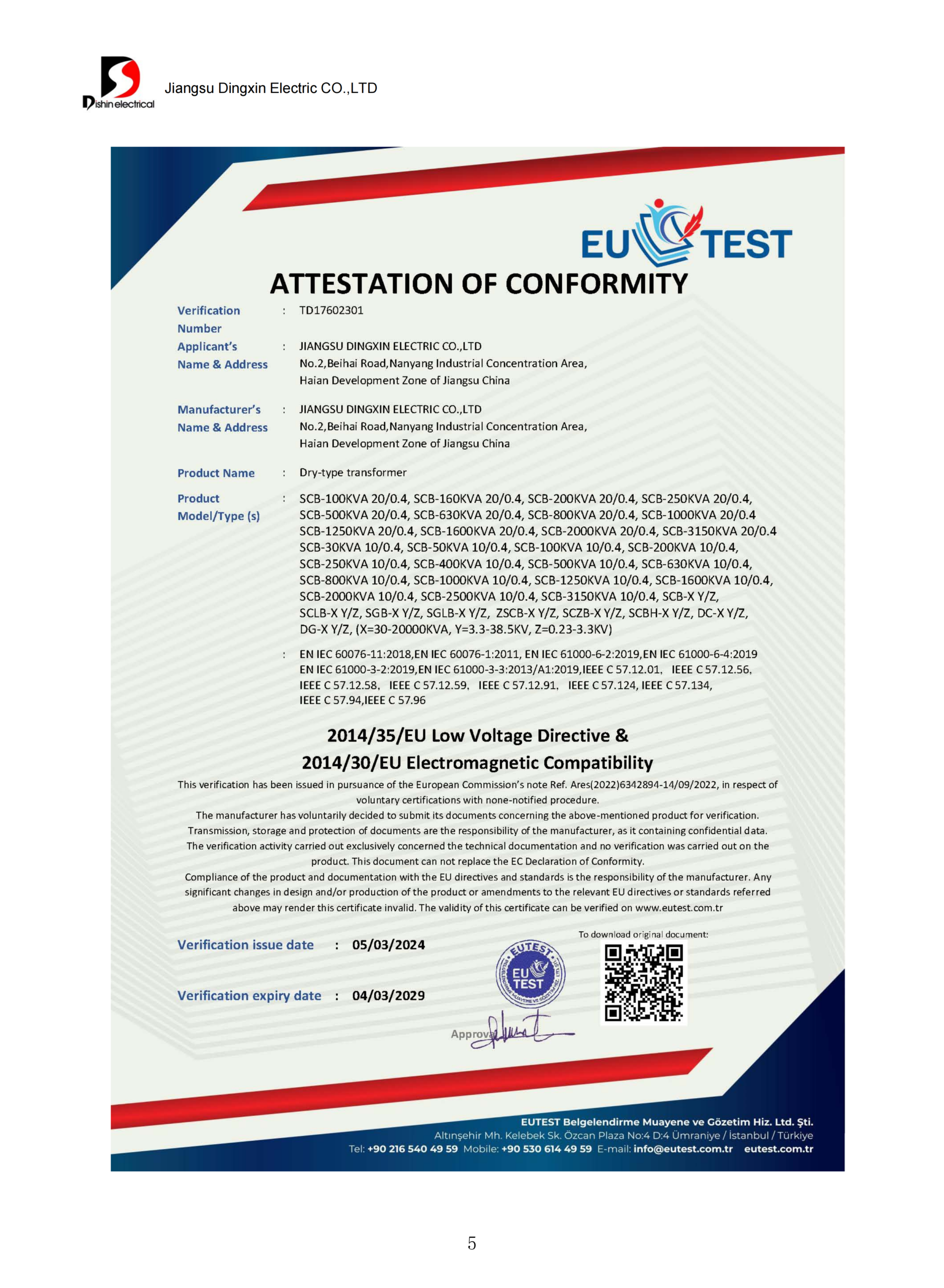
IEC 60076-11 and GB/T 10228
Talite Dry-Type Transformer Product Range
Talite Transformer Co., Ltd. has worked in power equipment for more than three decades and integrates research and development, production and sales. We supply cast resin dry-type transformer and open-wound dry-type transformer families, with a separate medium-voltage dry-type transformer route for projects that require more detailed insulation coordination and system review.
Product-family labels do not replace a project standard or construction definition. When IEEE C57.12.01 applies, the proposal should identify whether the transformer is ventilated, non-ventilated or sealed and then state the model-specific cooling and enclosure boundary.[2]
Product Family
Medium-Voltage Dry Type Transformer
Use this path when the primary system, basic insulation level, taps, terminals, enclosure, cooling and applicable standard must be coordinated as a medium-voltage package. We review the project voltage class and site conditions before the final ratings are fixed.
Review Medium-Voltage Options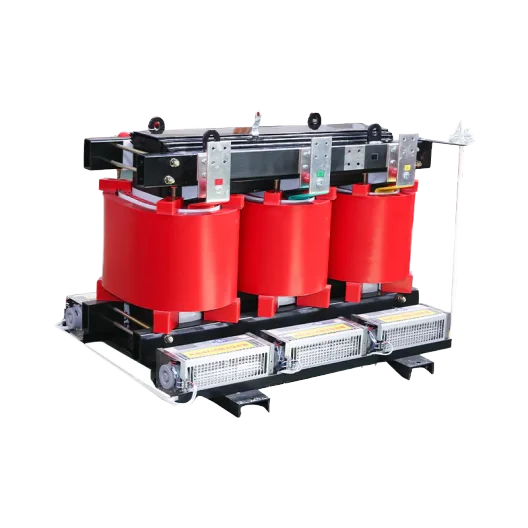
Construction Path
Cast Resin Dry Type Transformer
Epoxy cast-resin windings help address moisture, contamination and fire-sensitive indoor installation requirements without using insulating oil. We match the resin system, thermal class, cooling and enclosure to the project rather than using the cast-resin label as a complete specification.
Compare Cast-Resin Configurations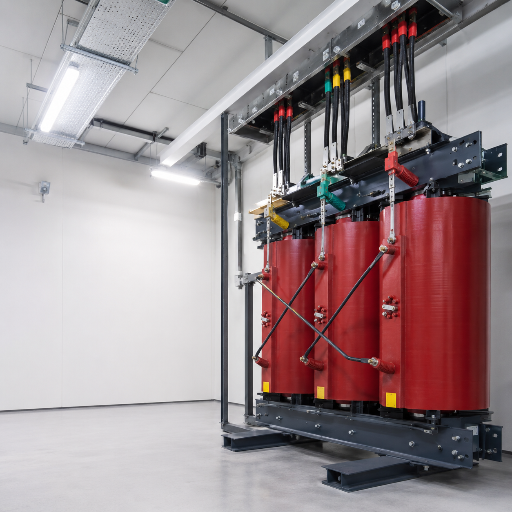
Specified Model
1000 kVA 11 kV Cast Resin Transformer
This product route covers a supplied 1000 kVA, 11 kV three-phase cast-resin model. We keep the 1000 kVA and 11 kV values attached to that model; a different load, voltage, impedance, enclosure or environmental duty receives a separate configuration review.
Review the 1000 kVA / 11 kV Model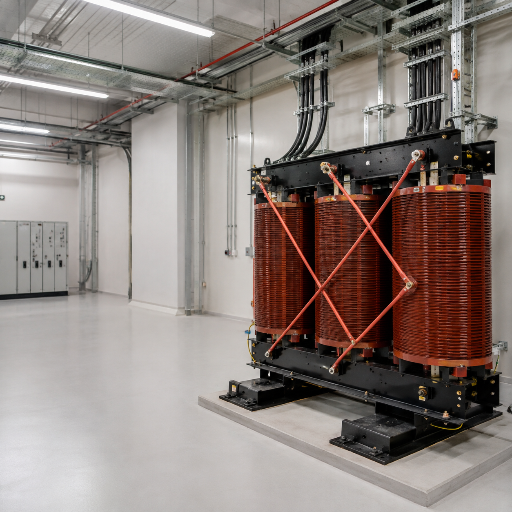
Construction Path
Open-Wound Dry Type Transformer
Open-wound construction keeps the winding structure ventilated and accessible to air, making room ventilation and contamination control central to the design. We offer a 3750 kVA open-wound model path for heavy-duty applications, subject to complete electrical and site inputs.
Review the Open-Wound ProductApplications that need project screening
Industrial plants with continuous process loads, large motors or production-critical feeders.
Data centers and commercial buildings where heat rejection, sound and room access affect equipment layout.
Hospitals, rail transit and occupied facilities where the insulation medium and fire strategy influence transformer selection.
Renewable-energy and infrastructure projects with site-specific grid voltage, enclosure and environmental requirements.
Metallurgical, petrochemical and manufacturing systems with heavy loading, contamination or unusual duty cycles.
Retrofits where the existing room, cable route, protection scheme and footprint limit the available design.
Cast Resin and Open-Wound Construction
Cast resin and open-wound constructions are not interchangeable. ‘Best’ is not the criterion; it’s a trade-off between winding protection, ventilation, heat removal, physical access, contamination risk, fire strategy, construction footprint and formal documentation required for project approvals.
IEEE C57.12.01 distinguishes ventilated, non-ventilated and sealed dry-type transformer categories; the project still has to define which construction and cooling boundary applies to the proposed model.[2]
| Decision field | Cast resin path | Open-wound path | Project input required |
|---|---|---|---|
| Winding exposure | Windings are encapsulated in resin | Ventilated winding structure remains open to cooling air | Dust, moisture, condensation and contamination profile |
| Heat rejection | Coordinate resin thermal system, ducts and optional fan cooling | Coordinate natural or forced airflow through the winding structure | Ambient range, room temperature rise and airflow path |
| Enclosure | Selected around access, environment and cooling | Especially important where an open structure needs environmental separation | Indoor/outdoor location, IP requirement and clearances |
| Inspection access | External condition, connections, sensors and cooling components remain service points | Open structure makes contamination and cleaning access more prominent | Maintenance plan, shutdown access and cleaning method |
| Common route | Occupied, moisture-sensitive or contamination-managed indoor projects | Controlled indoor rooms where ventilation and cleanliness are designed around the unit | Fire strategy, room design and local acceptance rules |
| Evidence | A construction name does not establish voltage class, efficiency, sound, partial discharge, enclosure rating or market certification. | Data sheet, drawings, test schedule and model-level evidence | |
A construction name alone is not a substitute for a project specification. Dry type can be the wrong answer when outdoor duty, large capacities, severe ventilation challenges or local fire regulations favor another transformer technology; that boundary is determined in relation to the specific site, its operating conditions and approval context.
Dry Type Transformer Selection Boundary Matrix
Use five gates before selecting a product card: electrical duty, installation environment, thermal path, evidence requirement and quotation scope. If any gate is undefined, the correct next step is to define it in the request for quotation, not to infer it from a brochure image or family name.
Gate 1
Electrical duty
kVA, voltages, frequency, phase, vector group, impedance, taps and load profile.
Gate 2
Environment
altitude, ambient, dust, moisture, corrosion, outdoor exposure and room access.
Gate 3
Thermal path
natural or forced air, heat rejection, clearance and fan duty.
Gate 4
Evidence
design standard, regulatory scope, product acceptance, tests and approval documents.
Gate 5
Quotation scope
accessories, quantity, destination, inspection, packaging and written commercial terms.
“A transformer proposal becomes comparable only when the electrical duty, installation boundary, evidence scope and commercial scope describe the same equipment.”
Materials, Insulation, and Thermal Design
A dry transformer does not use insulating oil as its winding insulation and cooling medium, so the solid insulation system and surrounding air path carry more of the design burden. We use cold-rolled grain-oriented silicon steel for the core and coordinate the winding insulation, thermal class and cooling arrangement with the specified duty.
A key risk is loss of thermal margin and premature insulation failure when nameplate kVA is treated as the whole thermal design. Because ambient temperature, altitude, harmonic current and airflow change heat rejection, Talite engineers confirm the cooling path and the 155°C F-class insulation boundary against the proposed model, IEC 60076-11 design basis and test scope. Talite records the trade-off between enclosure protection and ventilation as a project decision, not a generic family label.
The official IEC scope identifies IEC 60076-11:2018 as the dry-type transformer standard; it does not replace model-specific thermal data or project acceptance criteria.[1]
How Core Construction Affects Sound
Magnetic flux density, joint construction, clamping and silicon-steel magnetostriction all influence the core and coil assembly sound. A quiet room requirement should therefore be stated as a project sound criterion and verified against the proposed model, not assumed from the words “dry type.”
Winding insulation
Cast-resin windings use resin encapsulation around the high- and low-voltage winding system. Open-wound designs rely on a ventilated insulation structure, making cleanliness, airflow and enclosure selection part of the operating boundary.
Temperature monitoring
Temperature sensors, indication, alarm, trip logic and fan control must match the operating philosophy. We can configure natural air-cooled or forced air cooling paths when specified, while control voltages, set points and interfaces remain project inputs.
Partial discharge
The supplied cast-resin series material states a partial discharge level of <10 pC. We keep that value tied to the relevant cast-resin series and require the quotation and test protocol to identify the exact model, test method and acceptance criterion.
Why ambient and altitude belong in the first enquiry
Higher ambient temperature reduces the thermal margin available between the room and the insulation system. Higher altitude changes air density and affects cooling and dielectric coordination, so an installation outside the stated normal service conditions needs an engineered adjustment rather than a footnote after selection.
Thermal questions to close before approval
Is the load continuous, cyclic, harmonic-rich, motor-starting, rectifier, motor drive or converter duty?
Does the system call for a drive isolation transformer, a K-factor requirement or another response to harmonic currents and nonlinear loads?
What are the maximum, daily-average and annual-average ambient temperatures?
How will transformer losses be removed from the room at normal and emergency loading?
Will fans operate as normal duty, temporary overload support or contingency cooling?
What alarm, trip and building-management interfaces are required?
Is the sound criterion measured at a stated distance and operating condition?
Electrical Ratings and Service Conditions
Use this table as a qualification screen, not as a universal catalog range. Model-specific values remain tied to the named cast-resin or open-wound product path, and every proposal still needs the project load, fault study, protection, insulation coordination and installation conditions.
| Specification | Talite product data | Scope |
|---|---|---|
| Cast-resin model | 1000 kVA | Named three-phase cast-resin model |
| Cast-resin model voltage | 11 kV | Named 1000 kVA model |
| Open-wound model | 3750 kVA | Named open-wound model |
| SC(B) series high-voltage options | 6, 6.3, 10, 10.5 and 11 kV | SC(B) series table |
| SC(B) series low-voltage option | 0.4 kV | SC(B) series table |
| Tap range shown | ±5% or ±2 × 2.5% | SC(B) series table; final tap arrangement per project |
| Vector groups shown | Yyn0 and Dyn11 | SC(B) series options |
| Normal service altitude | Up to 1,000 m | Stated normal service condition |
| Maximum ambient temperature | +40°C | Stated normal service condition |
| Maximum daily average | +30°C | Stated normal service condition |
| Maximum annual average | +20°C | Stated normal service condition |
| Minimum ambient temperature | -25°C | Stated normal service condition |
| Insulation class temperature | 155°C | F-class material statement |
| Cast-resin partial discharge | <10 pC | Relevant series; confirm model and test protocol |
| Documented design basis | IEC 60076-11 and GB/T 10228 | Design reference, not product certification |
Configuration, Price Drivers, and Quotation Scope
A dry type transformer price follows the complete design and supply scope, not kVA alone. A dry type transformer specification should align winding material, voltage class, insulation construction, losses, temperature rise, impedance, enclosure, accessories, test plan, quantity, packaging and destination before quotations are compared.
01 Cost Drivers & Scope
02 Scope Alignment Before Price
03 Quotation Package Request
01
Cost drivers that belong on the comparison sheet
Driver
Why it changes the design or cost
Input that prevents ambiguity
Rated power and load profile
Continuous, cyclic, motor-starting and harmonic loads impose different thermal and electrical duties
Load schedule, demand profile, harmonic data and future expansion
Primary and secondary voltage
Voltage class affects insulation coordination, clearances, winding design, terminals and testing
Single-line diagram, system voltages, frequency and grounding method
Copper or aluminium conductor
Conductor choice changes material cost, dimensions, mass and winding design
Required conductor material or permission to compare alternatives
Cast resin or open wound
The insulation and cooling route changes manufacturing, enclosure and environmental fit
Installation conditions, contamination and fire strategy
Loss and temperature-rise requirements
Lower losses or a tighter thermal target can require more active material and different cooling
Guaranteed loss schedule, efficiency rule and temperature-rise limit
Impedance and fault duty
Impedance affects fault current, voltage regulation and winding mechanical design
Target impedance, system fault level and protection study
Enclosure and accessories
Ventilated, non-ventilated, totally enclosed and outdoor arrangements change the housing and cooling scope
IP or NEMA type, including NEMA 3R only when the project requires it, plus room layout and accessories
Testing and documents
Witness tests, special tests, drawings and approval cycles add engineering and execution work
Inspection and test plan plus required document register
Logistics
Quantity, dimensions, lifting, packaging and destination affect delivered scope
Units, site or port, transport constraints and delivery interface
Compare written scope before comparing price
Two quotations with the same kVA can still describe different transformers. Align conductor material, losses, temperature rise, impedance, enclosure, accessories, test schedule, documents, packaging and destination before treating the totals as comparable.
Quotation package to request
- Rated data and loss schedule for the proposed model.
- Outline drawing, terminal arrangement, electrical connections, mass and lifting information.
- Construction, conductor material, insulation class, cooling and enclosure description.
- Routine, type and special tests, including dielectric withstand or short-circuit withstand evidence when specified.
- Temperature monitoring, fan control, circuit breakers or protective interfaces, and accessory list.
- Commercial terms, production schedule, packaging and destination stated in writing.
Talite confirms the final commercial and delivery terms in the written quotation for the defined configuration. That written quotation is the controlling record for project price and schedule.
Standards, Testing, and Evidence Boundaries
Standards must be attached to the claim they actually support. We use IEC 60076-11 and GB/T 10228 as documented design references in the relevant product material, while a project-specific quotation must identify the applicable edition, required tests and evidence for the exact model.
IEC 60076-11 Scope
IEC 60076-11:2018 covers dry-type power transformers and autotransformers up to and including 72.5 kV, with stated exclusions. Project specifications should state the design standard, required tests and any separate market-approval or certification requirement as distinct acceptance fields.[1]
IEEE C57.12.01 Scope
IEEE C57.12.01-2020 is an active standard for ventilated, non-ventilated and sealed dry-type distribution and power transformers or autotransformers at 601 V or higher on the highest-voltage winding. Use it when the project specification requires the IEEE framework, then define the exact clauses and tests.[2]
U.S. Department of Energy Scope
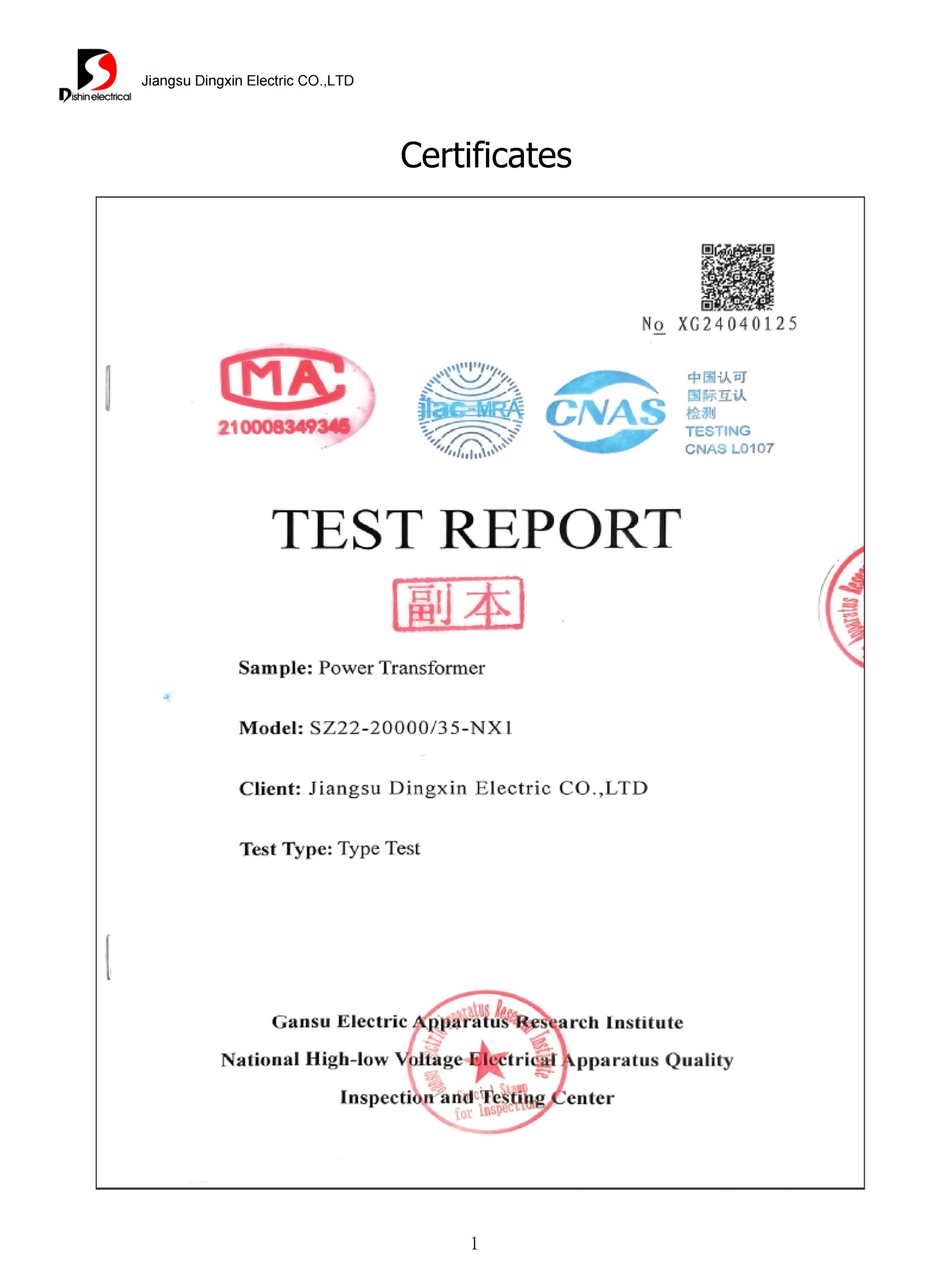
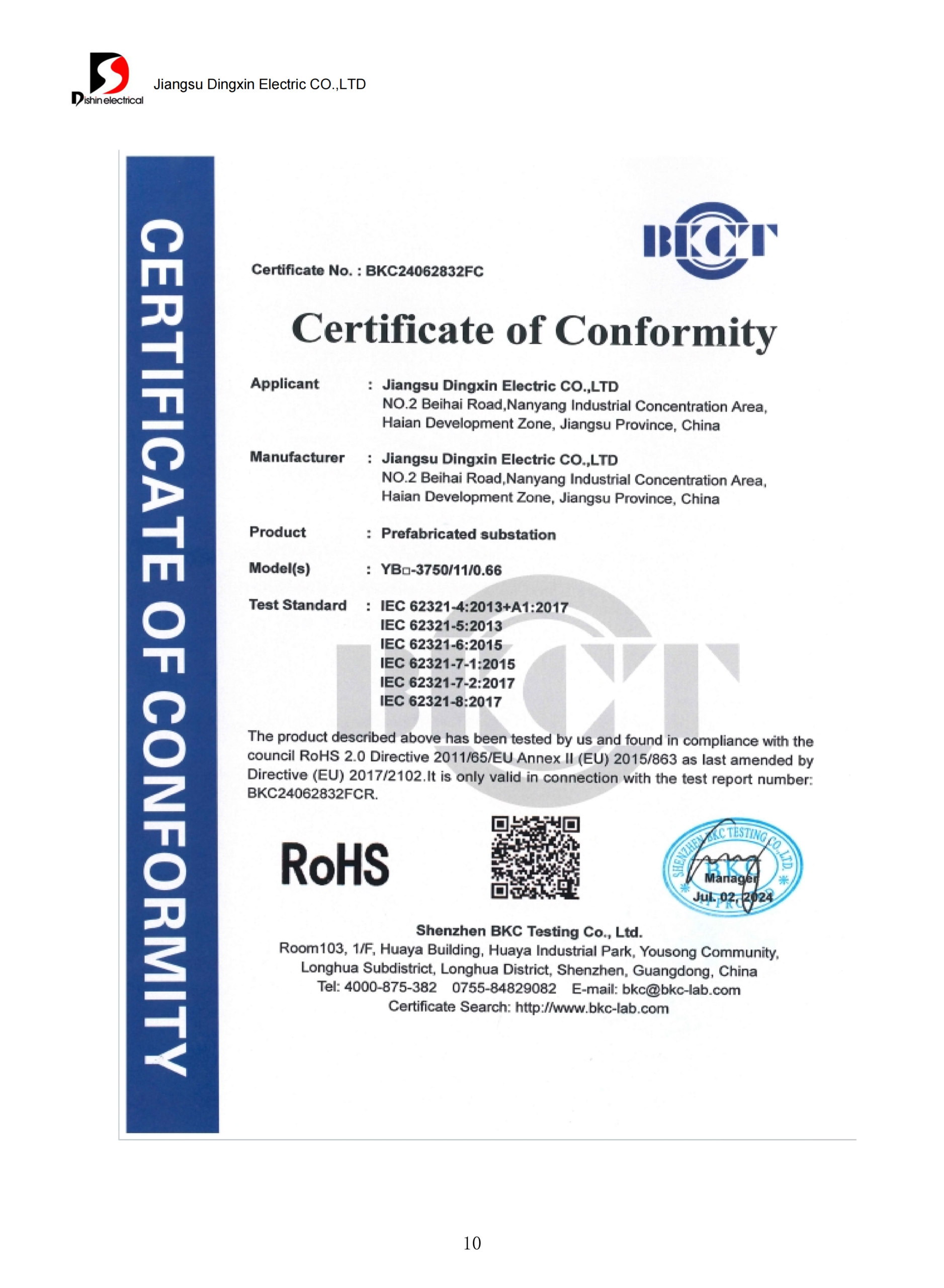
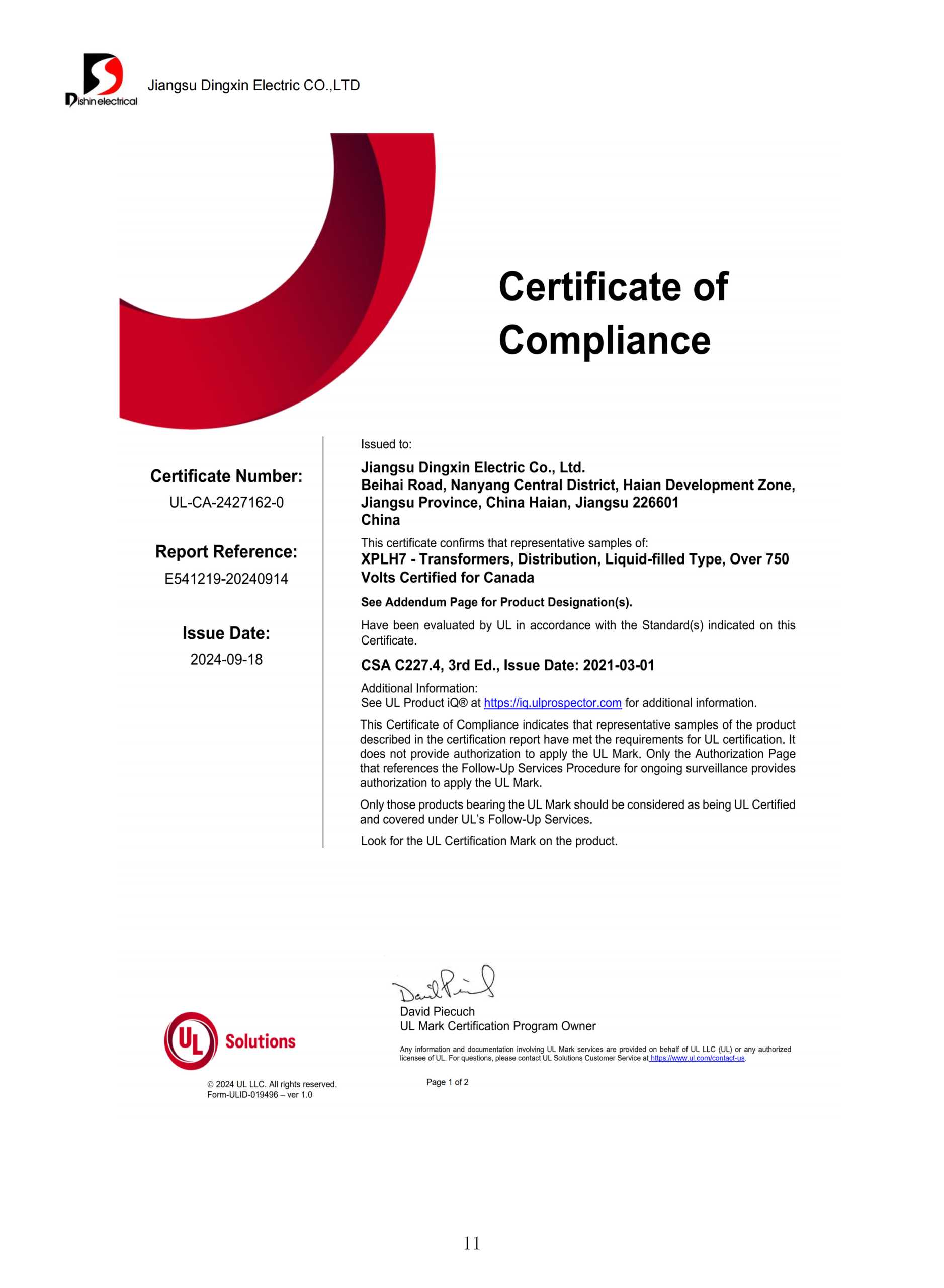
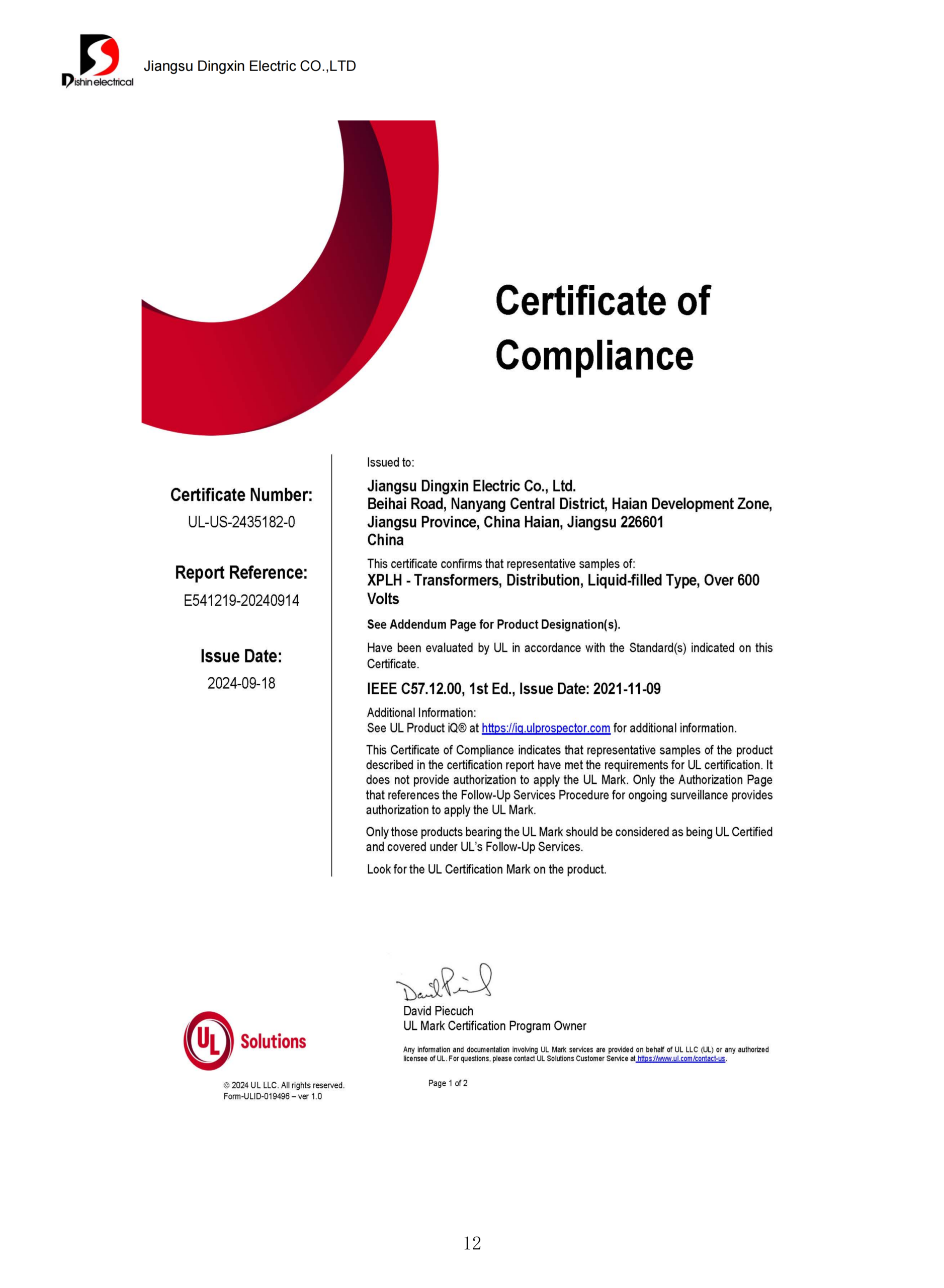
U.S. energy-conservation rules cover defined distribution-transformer categories and exclude listed equipment types. The amended standards have a compliance date of April 23, 2029, but coverage and model-level certification must be established before making a U.S. compliance statement.[3][4]
Workplace Product Acceptance
For U.S. workplaces, a Nationally Recognized Testing Laboratory requirement is tied to the product, authorized mark, test standard and installation context. Specify the exact product-acceptance evidence required by the authority or project separately from an IEC or IEEE design reference.[5]
Test Schedule Fields
Evidence Object
Buyer Decision It Supports
What The RFQ Should State
Rated Data Sheet
Whether the proposed model matches the electrical duty
kVA, voltages, frequency, phase, taps, vector group, impedance, losses and cooling
Outline And Terminal Drawing
Whether the unit fits the room and cable interface
Dimensions, mass, lifting points, clearances, terminals and enclosure
Routine Test Report
Whether delivered results meet the agreed model criteria
Required tests, dielectric withstand values, acceptance values, report language and identification
Type Or Special Test Evidence
Whether project-specific thermal, dielectric, sound or other requirements are addressed
Test name, standard clause, witnessed or certified copy requirement and acceptance rule
Market Evidence
Whether legal or project acceptance requirements are met
Exact model, scheme, standard, mark, listing or registration required
×
Product Gallery and Application Fit
Product evidence is strongest when the image, rating and product path describe the same item. The views below use customer-provided transformer files for this category and keep each visible rating attached to its named product path.
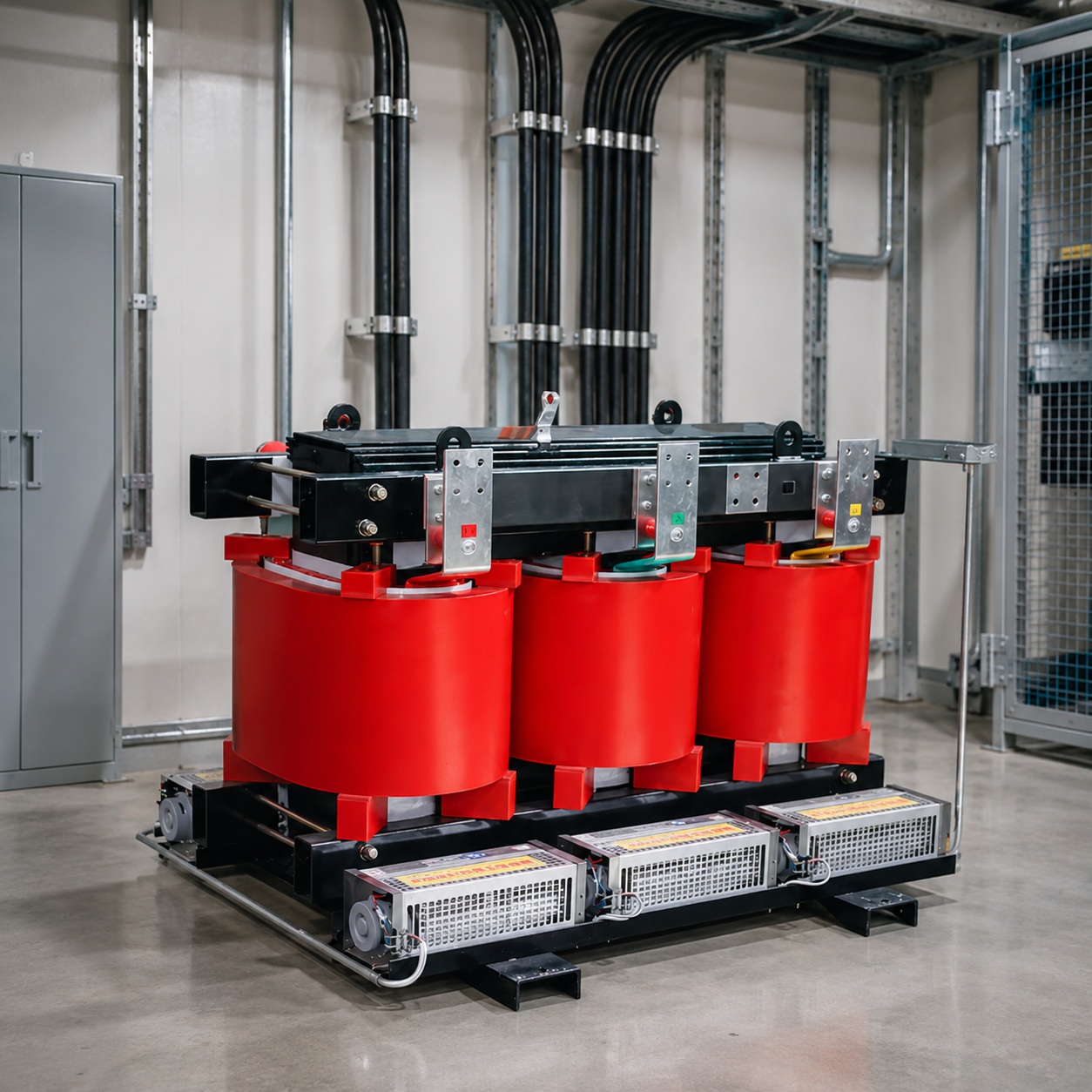
Cast-resin three-phase transformer product view associated with the 1000 kVA / 11 kV product material.
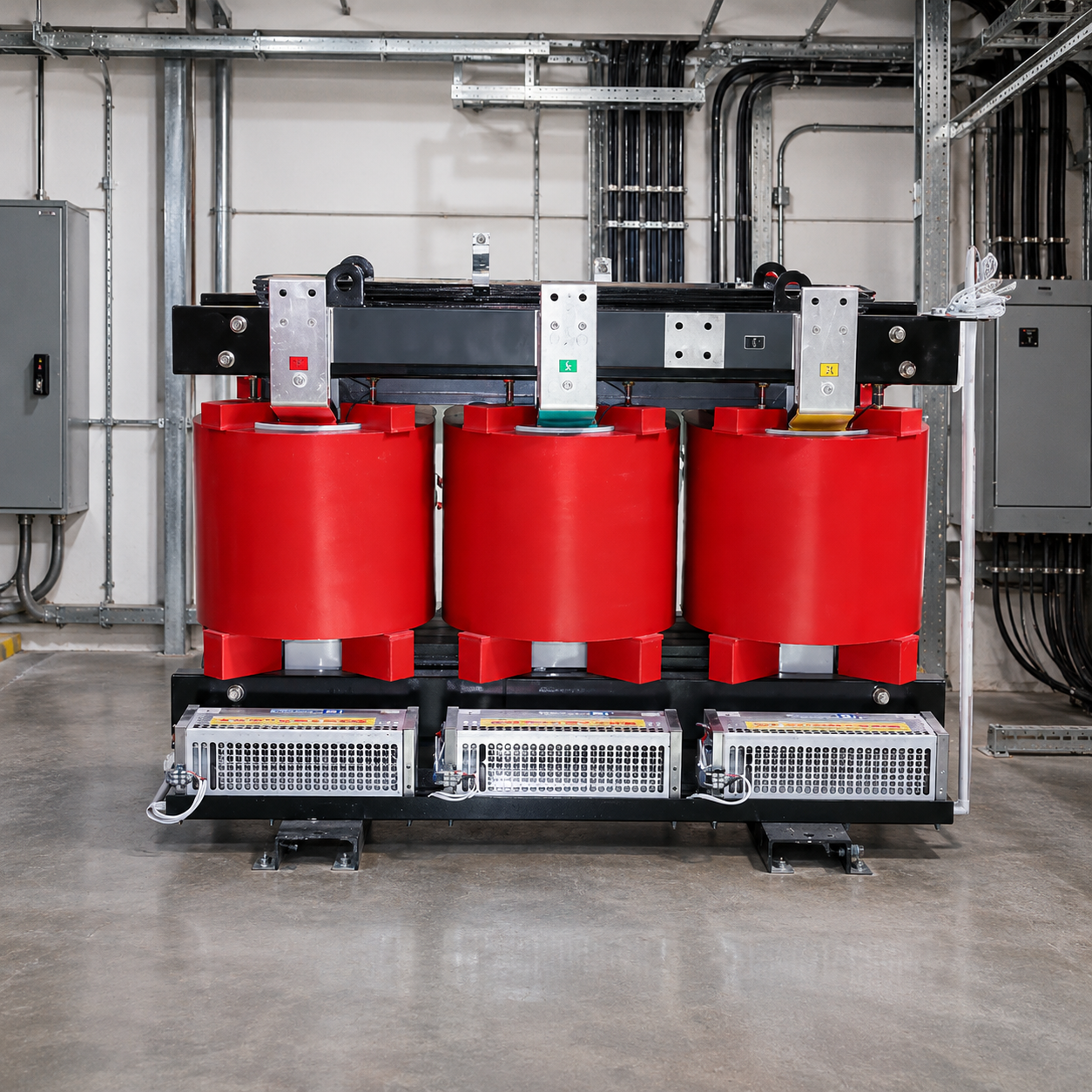
Front view showing three encapsulated phase windings and the lower cooling arrangement.
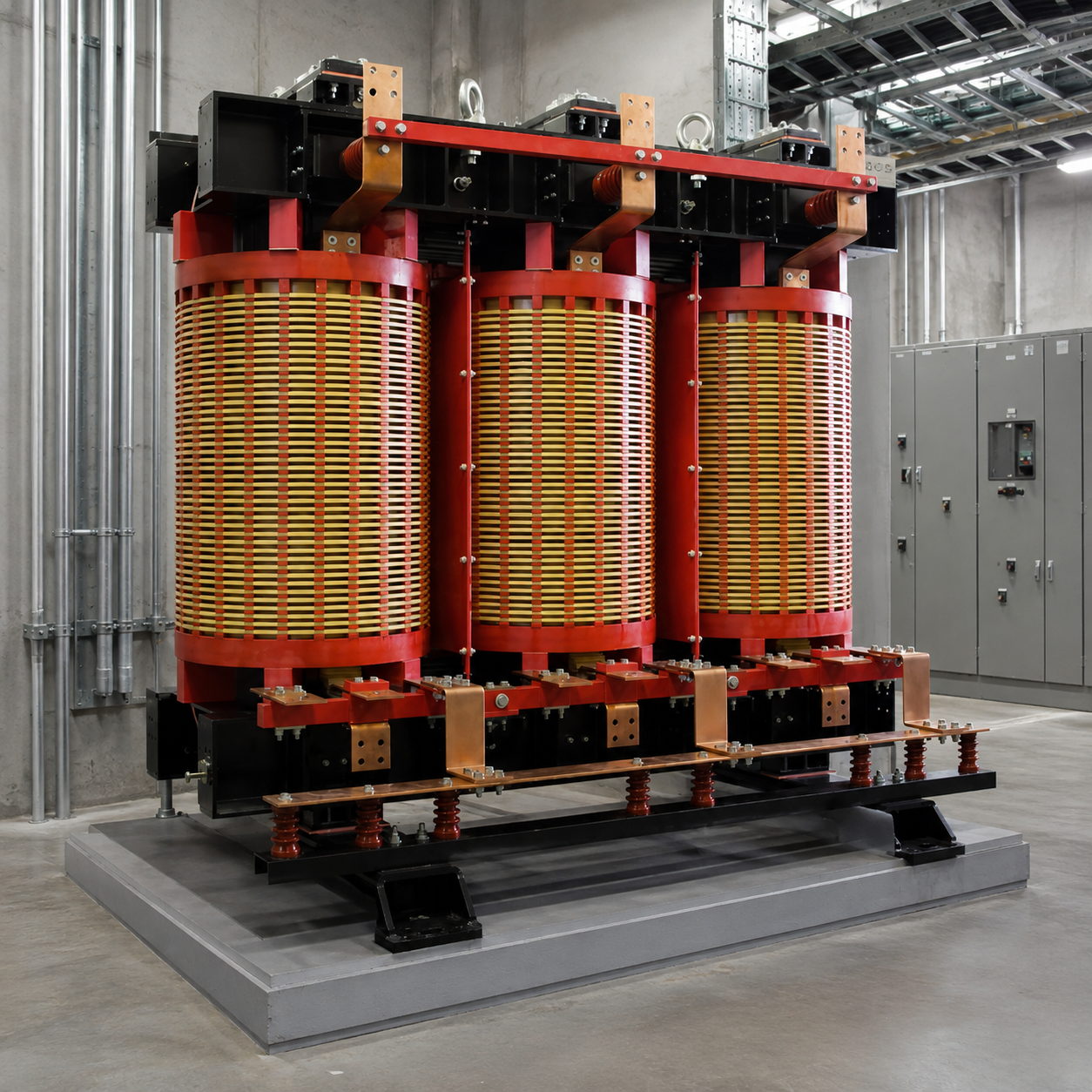
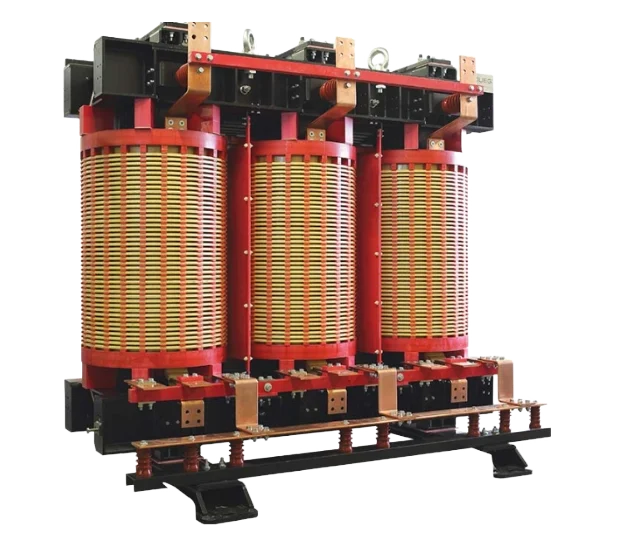
Open-wound transformer product view associated with the 3750 kVA product material.
Application screening by operating condition
How Critical Facilities Change the Specification
Coordinate redundancy philosophy, harmonic loads, mechanical rooms, heat rejection, sound, fire strategy, monitoring and access. The dry-type label addresses the insulation medium, but it does not close the thermal or system-reliability design.
Industrial manufacturing
Provide motor starting, cyclic duty, converter or rectifier harmonics, fault level and contamination data. Heavy-duty service can change impedance, winding mechanical design, cooling and maintenance access.
Hospitals, rail and occupied facilities
Define local acceptance, fire compartment, sound, ventilation, shutdown access and product approval requirements early. The authority having jurisdiction and project specification control the evidence package.
Renewable energy and infrastructure
Coordinate grid voltage, frequency, earthing, harmonic spectrum, ambient extremes, altitude and enclosure. Outdoor placement requires a complete environmental and cooling design, not only an outdoor label.
Selection Boundaries for Dry Type Transformers
Dry type is not an automatic answer for every project. Dry type transformer maintenance requirements and lifecycle objectives depend on the electrical duty, heat-rejection path, environment, available space, fire and spill strategy, access and market rules.
Situation
Why It Needs a Boundary Check
Next Engineering Action
Outdoor or partially exposed installation
Moisture, condensation, solar gain, contamination and enclosure heat rejection can conflict
Define enclosure, ventilation, corrosion protection, ambient and ingress requirements
High-capacity duty in a tight room
A dry unit can require more room volume or airflow than the layout allows
Run thermal and layout checks; compare alternative cooling and transformer technologies
Dusty, corrosive or conductive contamination
Deposits can reduce cooling and insulation margin, especially on ventilated structures
Review protection against dust, cast-resin construction, enclosure, filtration, cleaning access and maintenance requirements
Strict sound limit near occupied rooms
Core design, loading, mounting and room acoustics all affect the received sound
State the guaranteed criterion, measurement condition and installation isolation method
Unknown harmonic or motor-starting load
Nameplate kVA alone may not represent thermal, voltage-drop or mechanical duty
Provide harmonic spectrum, starting data, duty cycle and protection study
U.S. compliance assumed from IEC or IEEE text
Design standards, energy rules and product acceptance are separate evidence layers[3][5]
Classify the equipment, identify the exact model evidence and confirm authority requirements
A Limitation Should Create a Decision Path
If ventilation, enclosure, system duty or evidence cannot be closed, compare an alternative construction or transformer technology before release. That comparison is more valuable than forcing every project into a dry transformer because the category appears safer or simpler on paper.
If the site boundary points to another equipment family, review a pad-mounted transformer configuration path for outdoor distribution layouts or a single-phase liquid-filled configuration when the phase arrangement and drawing-confirmed installation fit call for that route.
Dry-Type Transformer Engineering Tools
Three-Phase Transformer Current Calculator
Enter apparent power and line-to-line voltage to estimate rated three-phase line current. Use the result as an RFQ input, not as a protection, cable, or transformer-sizing decision.
Access Calculator
Dry Type Transformer RFQ Builder
A comparable quotation starts with a comparable scope. Fill the fields you know; the builder leaves missing items marked for engineering review instead of guessing.
Build RFQ
Dry Type Transformer Selection Boundary Check
Select the conditions that apply. The tool produces engineering questions and a product-page route; it does not make a final transformer selection.
Check Boundary
FAQ: Dry Type Transformer Selection and Specifications
How do I choose between cast resin and open-wound construction?
Start with moisture, dust, contamination, room ventilation, fire strategy, access and maintenance conditions. Cast resin adds winding encapsulation; open-wound construction makes clean cooling air and enclosure design especially important, while the final choice still depends on voltage, kVA and the complete site boundary.
Can a dry type transformer be installed outdoors?
Outdoor use is an enclosure and thermal-design question, not a family-name shortcut. State the ambient range, altitude, solar exposure, rain, condensation, contaminants, corrosion, ingress requirement and heat-rejection path so the construction and enclosure can be reviewed together.
What ventilation information is required for a transformer room?
Provide room dimensions, inlet and outlet locations, airflow, maximum room temperature, adjacent heat sources and whether fan-assisted transformer cooling is planned. Room ventilation must remove transformer heat without recirculating hot discharge air or blocking required clearances.
What is the difference between dry type and oil-filled transformer selection?
For buyers comparing a dry type transformer vs oil filled transformer, the starting points are the insulation and cooling medium, spill strategy and installation location. Liquid-filled designs can offer different power-density and heat-transfer characteristics, so capacity, containment, maintenance, environment and local rules should be compared rather than reduced to one universal preference.
Which ratings should be included in a dry transformer RFQ?
Include kVA, primary and secondary voltage, frequency, phase, taps, vector group, impedance, cooling, insulation class, loss or efficiency requirements, ambient, altitude, enclosure and the load profile. For a balanced three-phase estimate, the line current can be checked with I = kVA × 1,000 ÷ (√3 × V).
Does Talite have a 1000 kVA 11 kV cast resin transformer?
Yes. The specified product path is a 1000 kVA, 11 kV three-phase cast-resin model; confirm secondary voltage, vector group, impedance, taps, cooling, enclosure, losses, accessories and tests in the project quotation.
What service conditions are listed for the SC(B) cast-resin material?
Stated normal conditions include altitude up to 1,000 m, maximum ambient +40°C, maximum daily average +30°C, maximum annual average +20°C and minimum ambient -25°C. A site outside those conditions needs project-specific thermal and dielectric review.
What does the <10 pC partial discharge value cover?
This <10 pC statement belongs to the relevant supplied cast-resin series material. It should be repeated in the quotation and test schedule for the exact model, together with the applicable test method and acceptance criterion.
Does IEC 60076-11 mean the transformer is certified for a U.S. project?
No. IEC 60076-11 is a dry-type transformer standard with a stated scope up to and including 72.5 kV, while U.S. energy coverage, model certification and workplace product acceptance are separate questions that must be resolved for the exact equipment and installation.
What should I send to receive a comparable quotation?
Send the single-line diagram, load schedule, electrical ratings, ambient and altitude, installation and enclosure requirements, cooling, accessories, test and document list, quantity and destination. Use the RFQ builder above to leave unknown items visible for engineering review instead of hiding them behind generic assumptions.


![Pad-Mounted Transformer: How It Works [2026 Guide]](https://toplit-transformer.com/wp-content/uploads/2026/08/pad-mounted-transformer-guide-featured-150x150.png)