Get in touch with Toplit Transformer Co., Ltd Company

ISO CERTIFIED
COMPACT SUBSTATION
Compact Substation Engineering Across MV, Transformer and LV Interfaces
A compact substation saves space only when the medium-voltage scheme, transformer duty, low-voltage distribution, enclosure, site and evidence package act as one system. Before Talite turns a reference arrangement into a project offer, its engineers review each interface.
One Controlled Scope
Send these items together: the single-line diagram, voltage and load basis, site conditions, protection intent, required documents and destination-market rules.
- MV Incoming And Switching Scheme
- Transformer Duty And Voltage Ratio
- LV Outgoing And Protection Scope
- Enclosure, Access And Environment
- Tests, Drawings And Approval Route
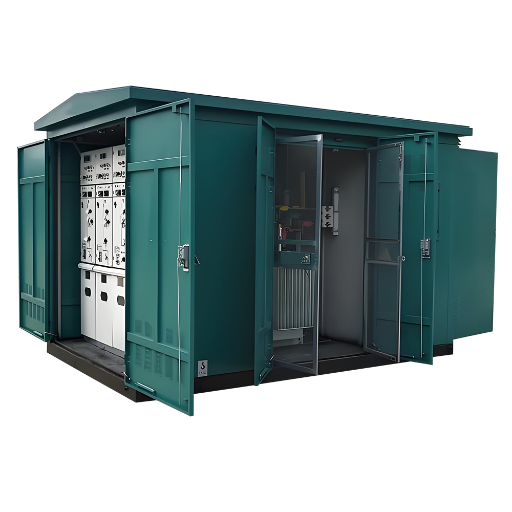
11 kV
European-Style Reference Voltage Class
2000 kVA
European-Style Reference Capacity
3000 kVA
Outdoor Prefabricated Reference Capacity
24.94/12.47 kV
Outdoor Reference Voltage Ratio
Match a Compact Substation to Your Distribution Project
A confined site may favor an integrated distribution arrangement, but size alone does not settle the engineering choice. A modular power distribution system can consolidate interfaces. Problems surface when a quotation uses a familiar product name while leaving the utility category, access model, network connection, short-circuit duty or approval evidence undefined.
Honest classification check: contrary to a catalog-led shortcut, a wrong label creates technical and approval risk because IEC scope through 52 kV does not erase access, utility or equipment-boundary differences. Each project record is reviewed by Talite engineers and factory staff before they recommend the trade-off.
1
Pain
Electrical, civil and procurement teams often receive quotations that treat compact, package, prefabricated and box-type labels as interchangeable.
2
Cause
A commercial label can hide the MV switchgear, distribution transformer, LV switchboard, enclosure and site interfaces inside a single line item.
3
Solution
Classify the product first. Then freeze the electrical and physical interfaces before comparing configuration, price or installation plans.
4
Proof
Map all provided statements to a sourcing document, project drawing, test report, written engineering approval, or an open item list.
Classification Gate
IEC 62271-202:2022 covers AC prefabricated substations above 1 kV through 52 kV.
IEC 62271-212:2022 separately addresses CEADS through 52 kV for cable-connected networks and restricted-access applications.
10 CFR 431.192 supplies one U.S. transformer-category boundary; it does not classify the complete Talite assembly.
Pad-mounted, American-style and conventional substation arrangements can follow different product and utility rules.
The destination market, owner specification and serving utility still control the accepted category.
The honest version: “compact” describes a design objective, not automatic compliance or the best lifecycle choice. A wrong category creates approval risk because a design above 1 kV and through 52 kV can still sit under a different equipment scope, access model or utility rule; Talite engineers stop the selection until that trade-off is visible.
Urban and Commercial Sites
Constrained Footprint
Before fixing the enclosure outline, account for cable bending space, operating access, ventilation, drainage, fire strategy and the route for removing equipment during maintenance.
Industrial Distribution
Load and Protection Duty
Motor starting, short-circuit duty, overload behavior, critical-load segregation, metering and future expansion can change the transformer and switchgear scope.
Renewable and Infrastructure Enquiries
Network Integration
For solar, renewable-energy, railway or distributed-generation projects, send the operating direction, harmonics, grid-code and auxiliary-power requirements for engineering review.
Configure a European-Style Compact Substation Across MV, Transformer and LV Interfaces
In Talite’s supplied reference document, a European-style compact substation places high-voltage electrical equipment, a power transformer and low-voltage electrical equipment inside a standardized enclosure. The engineering work sits at the boundaries between those compartments, not in the category name.
Hidden Bottleneck:
one open interface can move several other decisions. On the 2000 kVA, 11 kV reference path, a revised secondary voltage changes the transformer winding, LV bus and protection study; a cable-entry change can create a layout and approval risk because it moves the compartment, foundation, access and drawing interfaces. A public interlock example illustrates why door, compartment and switching-state interfaces belong in the review without proving that Talite uses that design.
Talite engineering position: the fastest useful enquiry is not the shortest email. It is the one that exposes electrical, physical, evidence and schedule boundaries early enough for both sides to compare the same system.
— Talite Engineering Team
Review Source-Supported Compact Substation Configurations
Talite’s supplied material supports two reference arrangements for this page. They demonstrate configuration paths; they do not establish a universal product range, shared certification, common destination market or automatic equivalence. Honest evidence boundary: a procurement buyer faces mismatch risk when a 2000 kVA, 11 kV reference and a 3000 kVA, 24.94/12.47 kV reference are treated as interchangeable because their documented duties differ. Unlike a generic range table, Talite engineers and the Talite factory keep unsupported fields open.
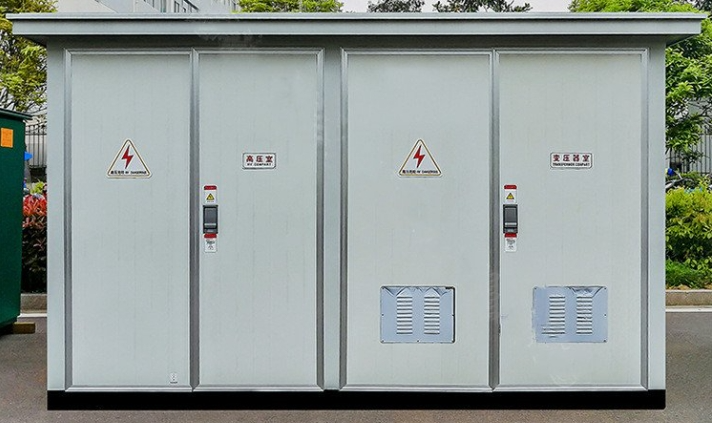
European-style reference
- 2000 kVA · 11 kV class
- High-voltage electrical equipment
- Power transformer
- Low-voltage electrical equipment
- Standardized protective enclosure
- Compact, movable integrated arrangement
- Public distribution, commercial, industrial and residential contexts stated in the source
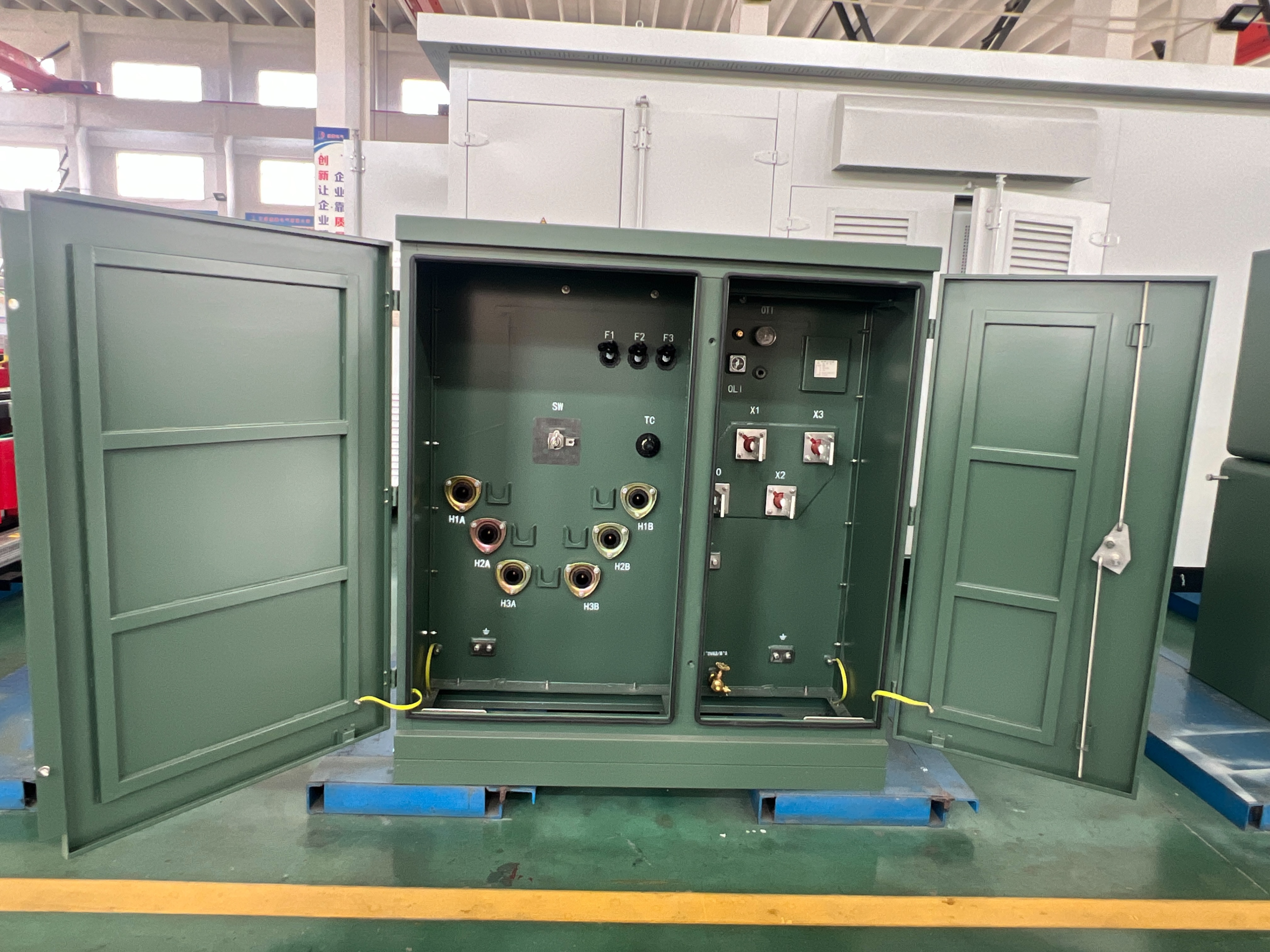
Outdoor prefabricated reference
- 3000 kVA · 24.94/12.47 kV
- Integrated standalone distribution device
- Distribution and control components
- Ring-network or terminal-distribution use stated in the source
- Operation-mode switching
- Weather-resistant enclosure materials
- Urban grid upgrade and industrial-park situations described in the source
U.S. classification warning
Under the current U.S. eCFR definition in 10 CFR Part 431, a distribution transformer has an output line voltage no higher than 600 V, with capacity ranges extending to 5000 kVA for listed liquid-immersed and dry-type units. The documented 3000 kVA, 24.94/12.47 kV reference is within that capacity ceiling but its 12.47 kV output is above the 600 V criterion. For that reason, Talite does not present the reference as proof of fit with that U.S. category; the destination requirements still control classification and approval.
| Field | 2000 kVA / 11 kV reference | 3000 kVA / 24.94-12.47 kV reference | Status |
|---|---|---|---|
| Capacity | 2000 kVA | 3000 kVA | Source-supported |
| Voltage | 11 kV class | 24.94/12.47 kV ratio | Source-supported |
| Core arrangement | HV equipment + transformer + LV equipment + enclosure | Integrated distribution and control device | Source-supported |
| LV voltage and feeder schedule | Not stated | Not stated | Project-dependent |
| Transformer vector group / impedance | Not stated | Not stated | Project-dependent |
| Exact switchgear / protection devices | Not stated | Not stated | Project-dependent |
| IP code / enclosure dimensions | Not stated | High protection described; no code stated | Not evidenced |
| IEC certificate or type-test report | Not supplied | Not supplied | Not evidenced |
| Price / delivery / warranty | Not supplied | Not supplied | Quotation required |
Compare Product Scope and Classification Before Selecting an Arrangement
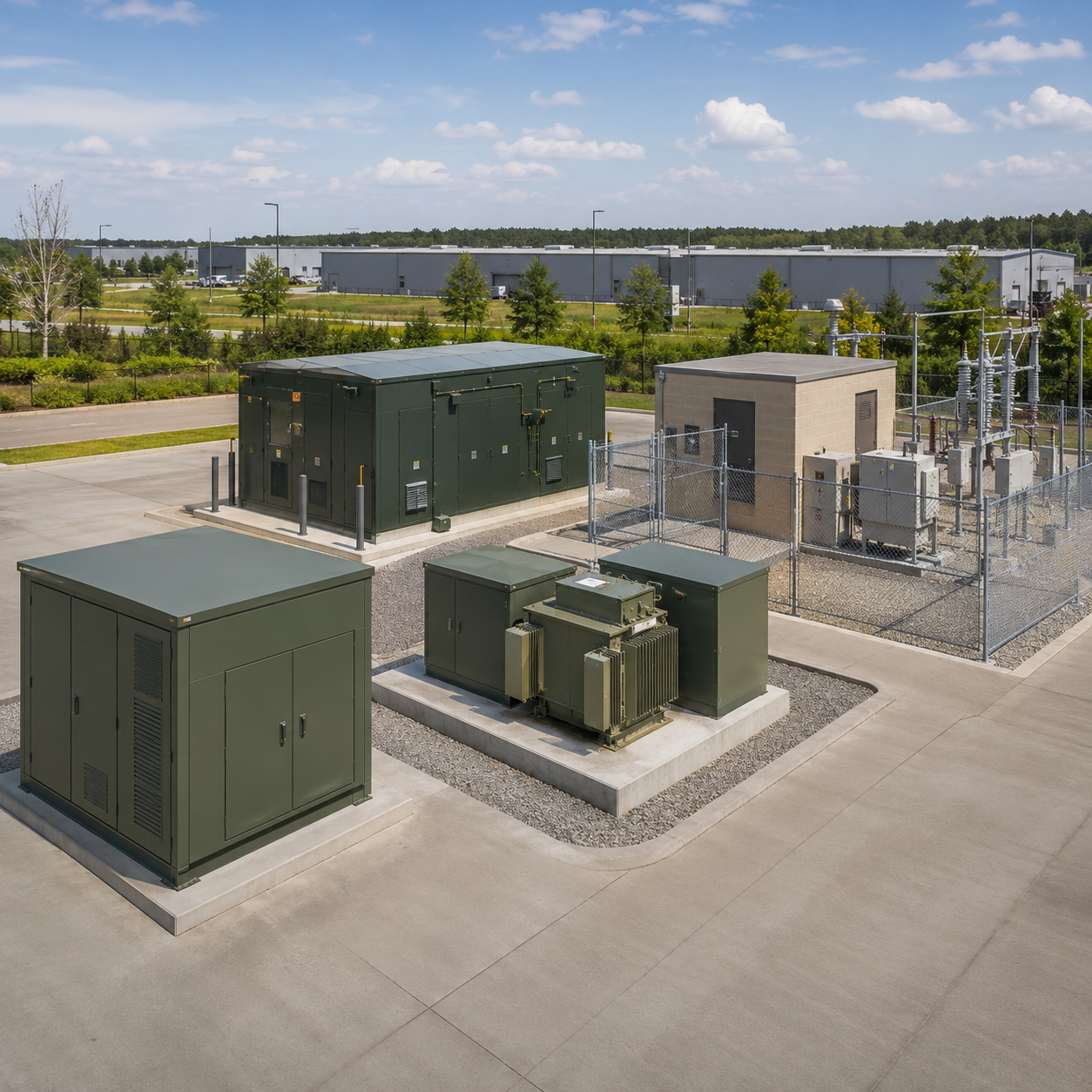
Compact substation, prefabricated substation, package substation and CSS often overlap in commercial language. A buyer still has to identify the actual assembly, applicable standard, access model, equipment boundary and utility rule before treating two quotations as alternatives. As one example, the current U.S. distribution-transformer definition sets a category boundary that cannot be inferred from a commercial label alone.
| Decision factor | Talite integrated compact reference | CEADS route | Pad-mounted / American-style route | Conventional site-built route |
|---|---|---|---|---|
| Primary question | Does the MV-transformer-LV enclosure match the project? | Does the assembly meet the CEADS product boundary? | Does the utility accept the transformer-centered arrangement? | Does a site-built arrangement better fit access and expansion? |
| Normative starting point | Confirm project category; IEC 62271-202 may be relevant | IEC 62271-212 scope check | Destination-market product and utility rules | Project-specific substation and building rules |
| Equipment grouping | Integrated HV, transformer, LV and enclosure | Compact equipment assembly for distribution substation | Often transformer-centered with market-specific compartments | Equipment arranged across site-built rooms or yards |
| Access model | Public or restricted access must be defined | Restricted access in the official scope | Utility and public-interface rules control | Owner/site operating rules control |
| Site work | Foundation, cable and access interfaces remain | Assembly and site interfaces remain | Pad, cable and operating clearance remain | More work is intentionally completed on site |
| Expansion | Check spare compartments and replacement path | Check CEADS configuration limits | Check utility network and transformer path | May allow different staged expansion options |
| Decision factor | Talite integrated compact reference | CEADS route | Pad-mounted / American-style route | Conventional site-built route |
|---|---|---|---|---|
| Maintenance | Compartment access and isolation plan required | Restricted-access service strategy required | Utility practice and component access required | Site layout can separate equipment but increases interfaces |
| Quote risk | Unstated interfaces inside an “integrated” price | Using the CEADS label without evidence | Applying an American-style label outside local rules | Missing civil, cable and integration scope |
| Stop condition | Unknown one-line, voltage, access or evidence scope | Unknown CEADS applicability | Unknown utility acceptance | Unknown site/civil responsibility |
| Decision evidence | Controlled datasheet, drawings and project evidence | CEADS scope and product evidence | Utility specification and model evidence | Approved design package and equipment records |
No universal winner: an integrated unit can simplify interfaces only when those interfaces are actually defined. A common assumption says every assembly through 52 kV benefits from the same compact route, but that is not always true because expansion, access, protection, utility approval and maintenance create a different trade-off; Talite engineers compare the controlled scope rather than the label.
If the project calls for a North American transformer-centered arrangement instead of an integrated MV–transformer–LV assembly, review Talite’s single-phase pad-mounted transformer page as a separate product route. These pages do not imply equivalent classifications or utility acceptance.
Proceed
Inputs are the category, the one-line, the voltage, the access model, the utility acceptance and the evidence route.
Clarify
A plausible product family can still have open equipment, civil, cable or document interfaces.
Stop
An offer relies on a commercial label, generic badge or copied specification without model and market mapping.
Verify Quality, Testing and Project Documentation Before Approval
For more than three decades, Talite has worked in the power-equipment sector while integrating research and development, production and sales. That company history supports supplier review, while a specific compact-substation offer still needs model-level drawings, tests, documents and applicable-standard mapping.
30+ years
Company experience stated by Talite
R&D + production
Integrated company capability stated by Talite
2 reference files
Configuration evidence supplied for this page
Project mapping
Compliance evidence remains configuration-specific
| Ledger status | Meaning | Buyer action | Examples on this page |
|---|---|---|---|
| Source-supported | Explicitly stated in a supplied Talite product file | Carry the value into the project datasheet without changing it | 2000 kVA, 11 kV; 3000 kVA, 24.94/12.47 kV; stated component arrangements |
| Configurable | Engineering may offer options, but no confirmed range is published here | Ask Talite to confirm the exact offered value and option boundary | Protection, metering, transformer construction, MV/LV equipment |
| Project-dependent | Project status depends on the network, site, owner or destination market | Attach the controlling requirement and assign approval ownership | Utility acceptance, access, enclosure environment, tests and logistics |
| Not evidenced | No supporting first-party record was supplied for this page | Do not accept the claim until the relevant record is provided | IEC certificate, type-test report, IP code, efficiency, delivery time, price and warranty |
01
Issue controlled project inputs
02
Receive a deviation and open-item list
03
Approve drawings and document register
04
Execute agreed inspection and testing
05
Release against final records
Interlocking is an interface, not a brochure word
Patent CN202513455U describes linking a transformer-room door electromagnetic lock to a high-voltage ring-main-cabinet secondary circuit. It does not prove Talite uses that design; it shows why buyers should specify doors, compartments, switching states and required mechanical or electrical interlocks.
×
Compact Substation Evaluation & Specification Tools
Compact Substation RFQ Readiness Score
Check only the inputs your team can support today. The score measures enquiry completeness, not product fit, compliance or approval.
Access Tool ➔
Compact Substation Specification Status Ledger
Assign an evidence state to each quoted field. The ledger separates supplied facts, engineering options, project conditions and unsupported claims.
Access Tool ➔
Compact Substation Classification Gate
Answer six boundary questions before selecting a compact, prefabricated, CEADS, pad-mounted or conventional route. The result is a review status, not a compliance decision.
Access Tool ➔
FAQ: Compact Substation Questions for Engineering and Procurement
What should I send before requesting a compact substation quotation?
Send the project country, utility or owner specification, one-line diagram, load basis, MV/LV voltages, frequency, grounding, fault level, network arrangement, protection/metering scope, site conditions, civil/cable interfaces, required documents, tests, logistics term and milestone. Mark unknown fields rather than filling them with assumptions.
Is a European-style compact substation the same as a CEADS?
Not automatically. European-style is a commercial description, while IEC 62271-212 defines a CEADS product scope; the offered assembly has to be mapped to the applicable standard and project requirements.
Are compact substations suitable for outdoor use?
Talite’s 3000 kVA reference document describes an outdoor prefabricated compact substation with weather-resistant enclosure materials. The exact environmental duty, enclosure code, corrosion system, solar load, ventilation and access provisions still require project confirmation.
Can the transformer inside be customized?
Transformer duty depends on load, voltage ratio, frequency, grounding, impedance, thermal conditions, construction preference and owner rules. Any offered options require Talite confirmation because this page does not publish a universal configurable range.
How long does compact substation installation take?
No defensible universal duration applies. Factory scope, approvals, foundation readiness, cable work, transport, lifting, utility inspection, testing and commissioning can change the site sequence, so request a milestone plan tied to confirmed responsibilities.
How is compact substation price determined?
Capacity, voltage scheme, transformer construction, MV/LV equipment, protection, metering, controls, enclosure duty, site interfaces, testing, documents, logistics, spares and commissioning scope affect the quotation. Compare the same inclusions and assumptions across suppliers.
Which tests and certificates should I request?
Start with the applicable standard and project specification, then request the model-level routine, type or special-test evidence required by the owner or utility. A standard number on a website does not prove the offered configuration is certified.
What maintenance information belongs in the RFQ?
Ask for isolation and access provisions, inspection points, interlocks, component manuals, recommended maintenance tasks, spare-parts identification, replacement paths and after-sales responsibilities. Confirm that doors and working space suit the site’s operating model.
Can a compact substation replace a conventional substation?
Sometimes, but the decision depends on voltage, fault duty, access, expansion, maintenance, fire strategy, site work, utility acceptance and equipment scope. Do not use footprint alone as the replacement criterion.
Does the 3000 kVA reference qualify as a U.S. DOE distribution transformer?
This page does not make that claim. The current eCFR text in 10 CFR Part 431 permits capacities up to 5000 kVA for the listed unit types but limits output line voltage to 600 V or less. The supplied reference has a 12.47 kV output, so its capacity alone cannot decide the category.