Get in touch with Toplit Transformer Co., Ltd Company

1000 kVA 11 kV Cast Resin Transformer
Talite turns a 1000 kVA, 11 kV, three-phase cast resin request into a reviewable electrical, mechanical and commercial scope. Submit the single-line diagram, secondary voltage, load profile, installation environment and destination market so the final transformer configuration can be engineered and quoted.
Request an Engineering Quote
1000 kVA request
11 kV primary request
Three-phase dry type
Engineering confirmation
- Rated power
- 1000 kVA request
- Primary voltage
- 11 kV request
- Phase
- Three phase
- Insulation system
- Cast resin dry type request
- Quote response
- Within 48 hours after complete technical details are received
- Minimum order
- One set
1000 kVA 11 kV Project Fit and Configuration
A 1000 kva dry type transformer requires more than capacity and high voltage for its specified design. Load duty, insulation coordination, tap range, frequency, vector group, secondary voltage and site conditions all affect the electrical and mechanical design.
How Talite closes the configuration gap
A documented design freeze is the differentiator, not a prefilled catalog voltage. Unlike a catalog shortcut, Talite engineers the final configuration because load and site inputs change the duty, then returns an approved data sheet and agreed test schedule against the applicable IEC 60076-11 basis.
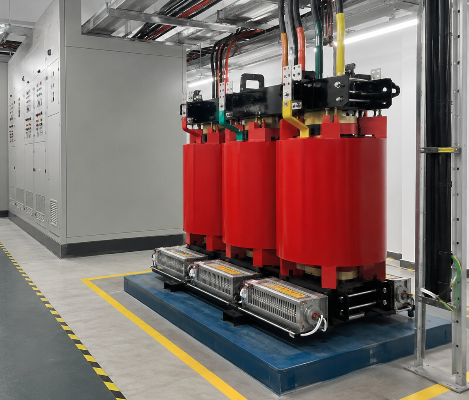
Known from your request
- Rated power: 1000 kVA
- Primary rated voltage: 11 kV
- Three-phase construction
- Cast resin dry-type transformer
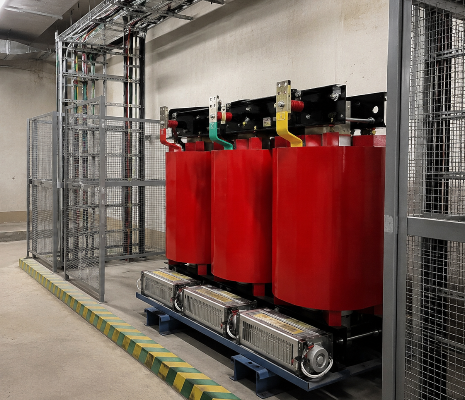
Inputs you provide
- Destination and applicable standard
- Secondary voltage and frequency
- Load profile, harmonics and starting duty
- Indoor or outdoor installation conditions
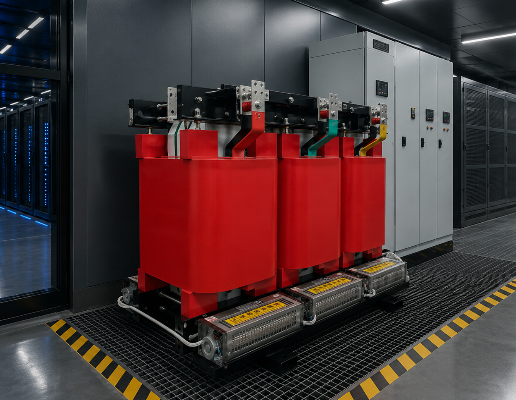
Items Talite confirms
- Final winding and insulation design
- Guaranteed losses and impedance
- Enclosure, cooling and interface arrangement
- Agreed tests, drawings and delivery scope
Search intent translated into engineering inputs
- Power distribution: identify whether the unit serves an industrial distribution transformer application or another transmission and distribution duty.
- 11kV transformer: record rated voltage separately from highest voltage for equipment and impulse withstand.
- 400V secondary: use 400V only when the actual low-voltage system confirms it.
- Protection: provide the fault level and protection study so the selected impedance and devices protect the system.
- Industry and site: state the industrial sector, operational load and environmental constraints.
Decision risks before design freeze
- Electrical trade-off: “1000 kVA, 11 kV” still leaves key system inputs unresolved.
- Commercial trade-off: a lower quote may exclude interfaces, tests, documents or packing.
- Installation trade-off: ventilation and acoustic constraints can make an electrically correct unit a poor room fit.
- Thermal trade-off: harmonic and motor-starting loads can change winding heat and temperature-rise duty.
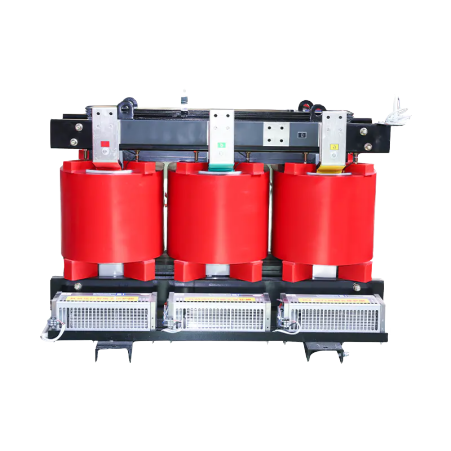
| Freeze stage | Buyer input | Returned evidence |
|---|---|---|
| System | Destination, 11kV system data, 50 or 60 Hz, earthing method | Applicable design basis and deviation list |
| Electrical rating | 1000kVA load duty, secondary voltage, delta/star requirement, vector group, taps | Technical data sheet |
| Insulation | Highest voltage for equipment, impulse duty, dielectric levels and external clearances | Insulation coordination and test schedule |
| Thermal duty | Ambient, altitude, ventilation, harmonics, duty cycle and overload expectation | Cooling and temperature-rise basis |
| Mechanical interface | Room space, cable entry, enclosure, access and transport limits | Outline drawing and interface schedule |
| Monitoring and protection | Temperature monitoring, alarms, trips and accessory requirements | Accessory list and wiring diagram |
| Acceptance | Witness points, routine/type/special tests, document language and format | Inspection and test plan |
Rated voltage is not the whole insulation specification
IEC 60076-11 uses highest voltage for equipment in its scope, while IEC 60076-3 addresses insulation levels, dielectric tests and external clearances. Treat 11 kV as the rated system request; freeze the applicable equipment class and withstand duties separately.
Cast Resin Construction
and Installation Duty
In cast resin transformer the winding insulation is solid, epoxy system rather than a liquid. Coil geometry, dielectric design, vacuum casting process and mechanical strength are all factors, but these are not in themselves proof of the level of performance.
Electrical duty
- Normal and emergency load profile
- Motor starting and inrush requirements
- Harmonic content from drives, rectifiers or other non-linear loads
- Fault level, protection coordination and required impedance
Environmental duty
- Ambient temperature and altitude
- Dust, moisture, corrosion and contamination
- Indoor room ventilation or outdoor enclosure duty
- Environmental, climatic, fire and seismic class where specified
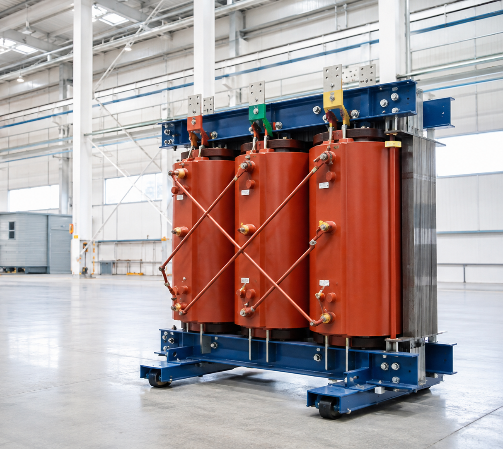
Room integration
- Available footprint and service access
- Air path and heat rejection
- Sound limit and vibration isolation
- High-voltage and low-voltage cable entry
Operational handover
- Energization responsibility
- Alarm and trip interfaces
- Inspection and maintenance plan
- Final drawings, manuals and test records
Installation Duty-to-Evidence Matrix
| Duty input | Why it changes the application | Evidence to agree |
|---|---|---|
| Indoor / outdoor and enclosure | Changes exposure, cooling path and access | Enclosure specification and outline drawing |
| Ambient, altitude & ventilation | Changes thermal margin and cooling design | Design conditions and thermal confirmation |
| Dust, moisture and corrosion | Changes environmental protection needs | Material and protection schedule |
| Harmonics and starting loads | Can increase winding loss, heat and voltage disturbance | Load study and engineering confirmation |
| Space, sound and cable entry | Changes substation integration and operational access | Interface schedule and approved drawing |
Cast resin is not best for every installation environment, or cooling strategy or for every regulatory regime. Consider alternative dry type transformers, or liquid-filled transformers if the site’s thermal operating or service conditions dictate.
Destination-Market and Regulatory Classification
A standard describes what an eligible design must achieve; it does not describe the performance of the transformer offered for the your project. enclosure, secondary voltage, frequency, destination, construction details and exclusions must be know for a commercial term like “compliant” to have value.
Market gate
Configuration test
Buyer action
IEC dry-type scope
IEC 60076-11:2018 covers dry-type power transformers up to 72.5 kV highest voltage for equipment with at least one winding above 1.1 kV.
Specify the IEC edition and any required environmental, climatic, fire or seismic class.
United States energy-conservation definition
Current 10 CFR 431.192 defines the relevant distribution-transformer boundary as input at or below 34.5 kV, output at or below 600 V, 60 Hz and dry-type capacity from 15 to 5000 kVA, subject to listed exclusions.
Confirm 60 Hz, the secondary voltage and every current exclusion against the eCFR before claiming coverage.
European Union ecodesign
For an eligible three-phase dry-type 1000 kVA configuration in Table I.2, Tier 2 lists 9000 W maximum load loss and 1395 W maximum no-load loss.
Use the current consolidated regulation and record the guaranteed values in the approved data sheet.
North American product standard
UL or IEEE requirements depend on the product class and destination specification; NEMA enclosure terminology is not a global substitute for an IEC enclosure request.
Name the required listing, standard and authority having jurisdiction before quotation.
Regulatory threshold is not product proof
EU values above are legal ceiling values for an eligible configuration, not Talite test data. A project becomes verifiable when the quotation states guaranteed values and the agreed test record reports the delivered unit against that basis.
Verifiable Technical Schedule for the 11 kV Transformer
Use this schedule to transform a search phrase into a technical specification. “Specify” means it must be provided; “engineering confirmation” means delivered in the final Quotation or Approved data pack.
| Specification | RFQ basis | Release evidence |
|---|---|---|
| Rated power | 1000 kVA | Approved data sheet |
| Primary rated voltage | 11 kV | Approved data sheet |
| Phase | 3 phase | Nameplate schedule |
| Secondary voltage | Specify; 400 V is not assumed unless confirmed | Approved data sheet and diagram |
| Frequency | Specify 50 Hz or 60 Hz | Approved design basis |
| Highest voltage for equipment | Specify for the 11kV system | Insulation coordination |
| Vector group | Specify delta/star relationship and neutral requirement | Connection diagram |
| Tap range and tap method | Specify system regulation duty | Data sheet and nameplate schedule |
| Short-circuit impedance | Engineering confirmation against system study | Guaranteed value and agreed test record |
| No-load and load loss | Specify regulatory and economic targets | Guaranteed values and agreed test record |
| Efficiency basis | Specify market method, load point and reference temperature | Calculation and test evidence as agreed |
| Temperature rise and insulation system | Specify ambient and duty | Approved thermal basis and test scope |
| Cooling | Natural or forced-air requirement to be confirmed | Cooling schedule and control diagram |
| Enclosure and location | Indoor or outdoor; specify protection and environment | Enclosure specification and drawing |
| Sound level | Specify limit and measurement method | Guaranteed value and report where included |
| Partial discharge | Specify limit, method and acceptance basis | Agreed dielectric test record |
| Impulse withstand | Specify from insulation coordination | Test schedule and applicable record |
| Dimensions and weight | Engineering confirmation after design freeze | Approved outline and final document |
| Accessories and monitoring | Specify sensors, controller, alarms, trips and interfaces | Accessory list and wiring diagram |
| Documents and language | Specify data, drawings, manuals and test records | Document register |
Dry-Type Duty-to-Evidence Matrix
Before order
- System and load data
- Destination standard
- Acceptance and witness scope
- Commercial delivery boundary
Before manufacture
- Approved data sheet
- Approved outline and interfaces
- Deviation closure
- Inspection and test plan
Before handover
- Agreed test records
- Final drawings and manuals
- Packing and document register
- Installation responsibility handover
1000 kVA Price, Total Cost and Delivery Scope
The Quotation price of a 1000 kva dry type transformer is based on the settled electrical, mechanical, evidence, delivery and enclosure scope. Headline price alone isn’t comparative when these areas vary.
1000 kVA Comparable-Quote Boundary Table
| Driver | What must match | Why it changes the commercial result |
|---|---|---|
| Electrical configuration | Voltage, vector group, taps, impedance and insulation duty | Changes design, fault performance and system fit |
| Material and thermal scope | Winding material, insulation, cooling and temperature-rise basis | Changes first cost, loss and thermal margin |
| Mechanical scope | Enclosure, cable entry, dimensions, transport and accessories | Changes installation cost and interface risk |
| Verification | Routine, type or special tests, witness points and documents | Changes acceptance cost and evidence strength |
| Commercial scope | Packing, destination, payment and delivery boundary | Changes the landed comparison |
TCO = Purchase Price + (A × No-Load Loss) + (B × Load Loss)
How the factors change the result
A reflects the evaluation period, discount rate and electricity cost. B also reflects the expected load profile, so two reliable designs with different loss balances can reverse position when the buyer’s operating assumptions change. This comparison method comes from UNEP U4E’s 2022 procurement guide; it is not a current legal product requirement.
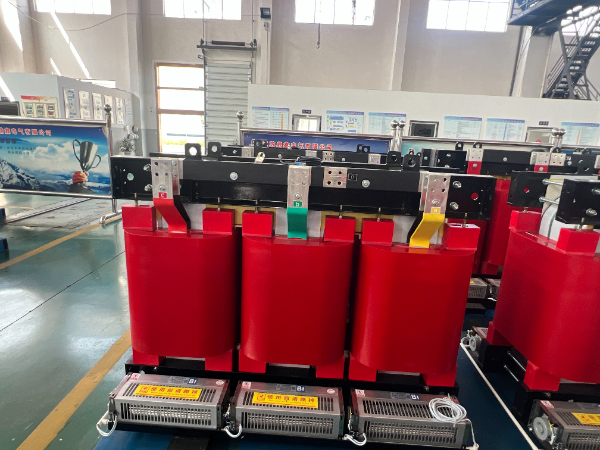
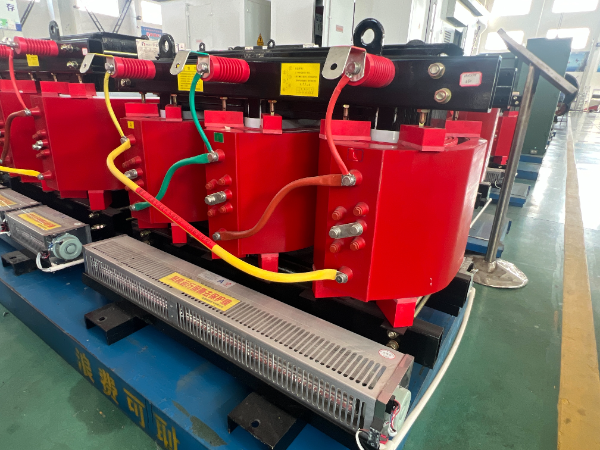
- Our engineering team returns quotations within 48 hours after complete technical details are received.
- Talite’s minimum order quantity starts at one transformer set.
- Our production runs are scheduled for up to 30 days after technical approval and deposit.
- Payment terms are 30% T/T deposit with the order and 70% balance before shipment.
Start the commercial clock with a complete RFQ
Send the single-line diagram, specification, destination, required tests and document list together. Open technical items, current production loading and the agreed delivery boundary determine the final schedule.
Evidence, Testing and Lifecycle Handover
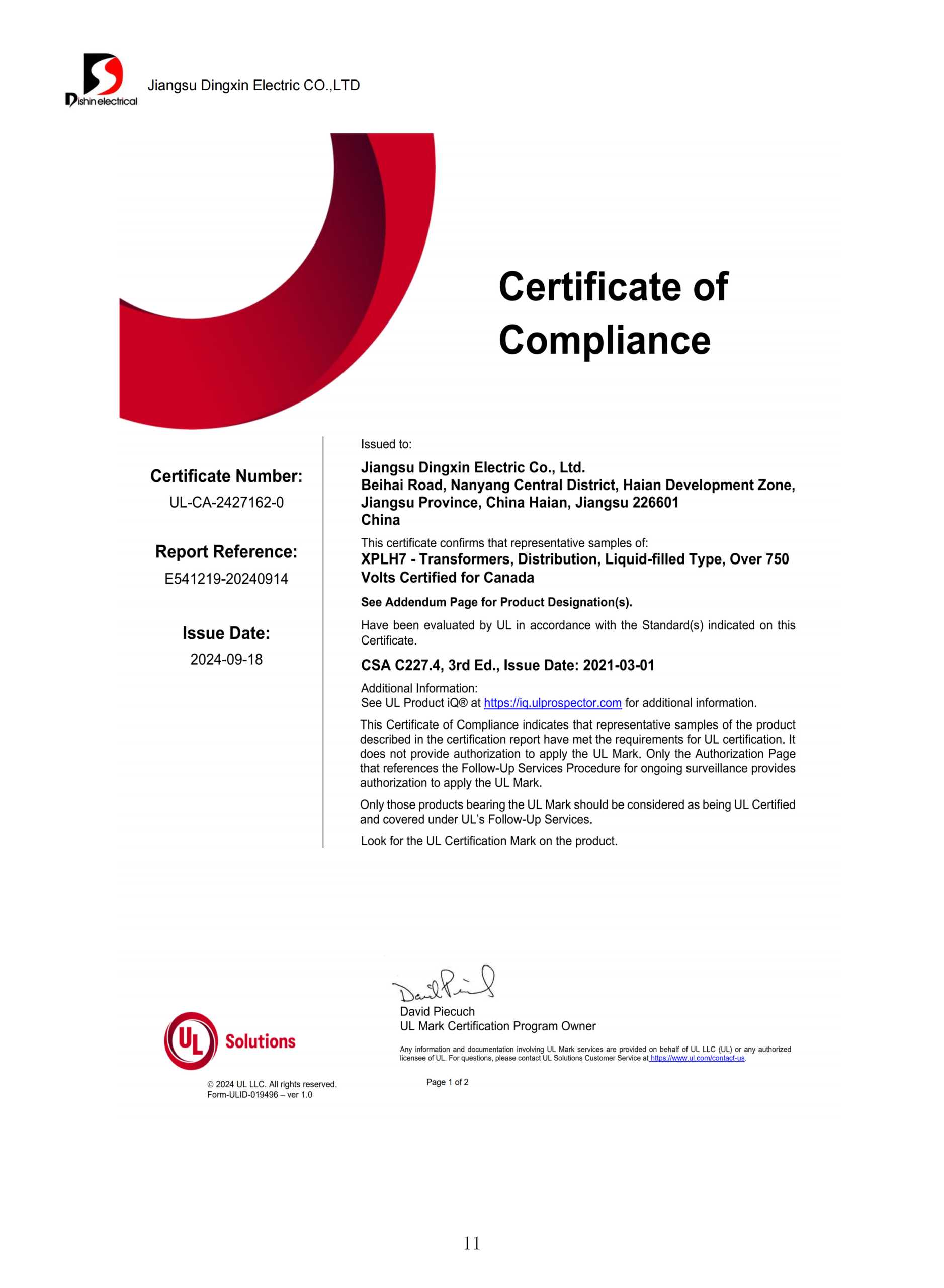
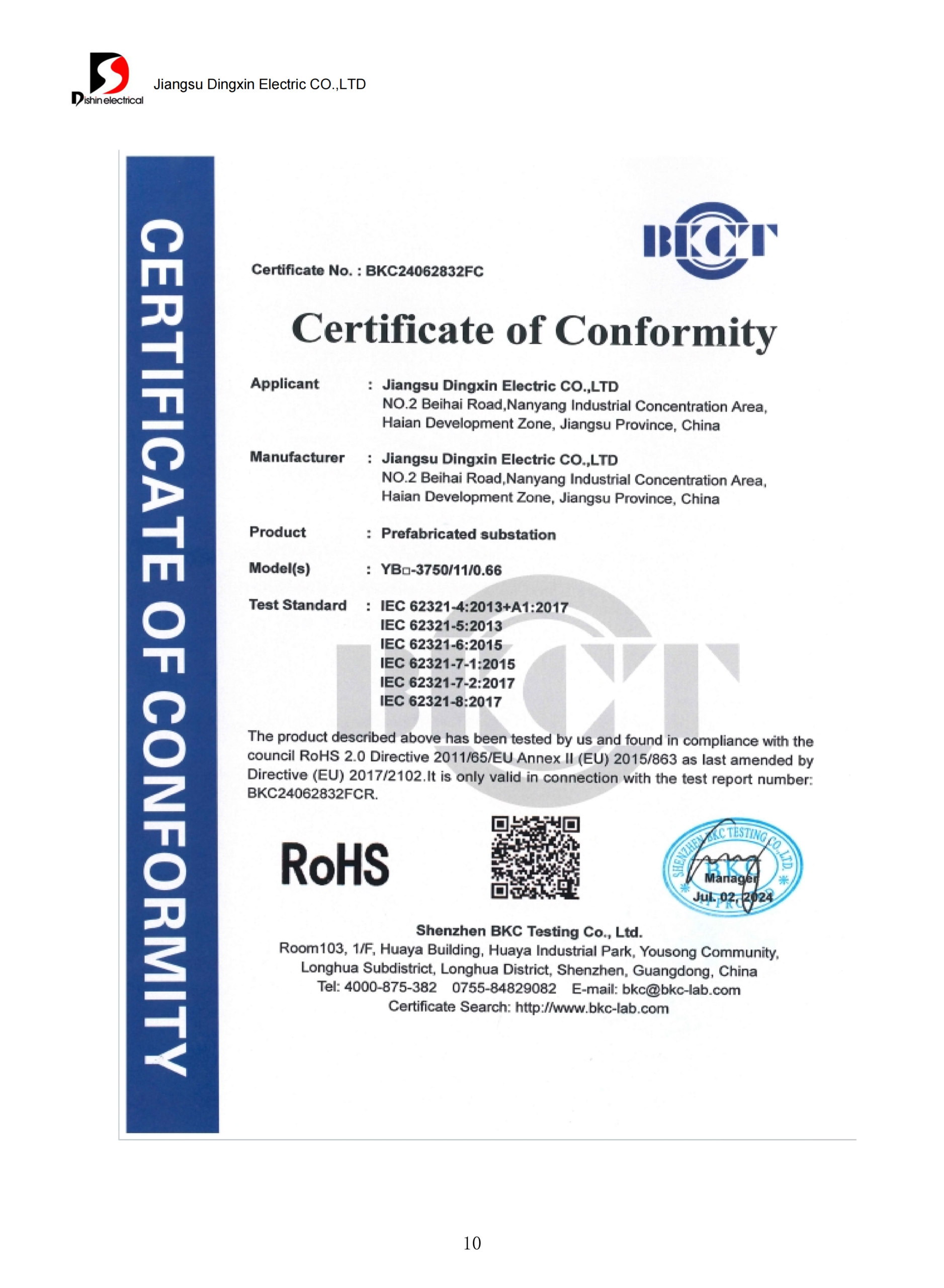
Testing has value when every requirement has agreed values, method, tolerances and proof. The system records the link to evidence from each rating; not a badge row.
Release the transformer against approved values, drawings, interfaces and test scope—not against a product-page headline.
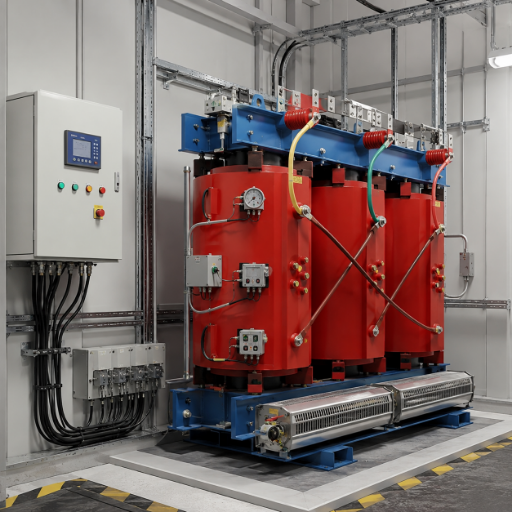
Engineering review rule for this quotation workflow
01
Commercial definition
The quotation records inclusions, deviations, tests, documentation, packing and schedule assumptions.
02
Technical release
The approved data sheet and drawings freeze ratings, interfaces, accessories and acceptance requirements before manufacture.
03
Final evidence
The agreed test records and final documents reconcile the delivered electrical equipment with the released design.
Acceptance Responsibility Table
| Requirement | Before order | Before release | Final evidence |
|---|---|---|---|
| Loss and efficiency | Market method and target | Guaranteed values | Agreed test record |
| Impedance and fault duty | System study input | Approved design value | Agreed test evidence |
| Thermal and insulation duty | Ambient, load and withstand basis | Approved design basis | Test evidence as agreed |
| Sound and partial discharge | Limit and method | Documented scope | Report where included |
| Mechanical interfaces | Space and cable constraints | Approved outline | Final drawing and document register |
Review Your Acceptance Plan
From RFQ to Operational Handover
- Requirement review: You submit specification, SLD, duty cycle, destination and evidence requirements.
- Technical clarification: We list open items, assumed deviations before pricing is evaluated.
- Quotations: Written commercial and technical scope provided within 48 hours when full details received.
- Approved data: Design boundaries; ratings, interfaces, tests and documents are signed-off before manufacture begins.
- Manufacture & accepted testing: Production and acceptance scope matches approved data.
- Packing & handover: Final delivery and packing parameters are finalised.
- Installation & handover: Site installation boundary; energisation, maintenance information and document ownership established.
Talite Transformer Co., Ltd.
Our company has more than three decades in the power equipment sector. Our business is built on integrated research and development, production and sales.
Based in the Hai’an Economic and Technological Development Zone, the company serves international transformer projects. Talite’s legal address is in Nantong, Jiangsu Province.
Formerly Jiangsu Fangteng Industrial Co., Ltd., the company now trades as Talite Transformer Co., Ltd. As a high-tech enterprise, Talite follows a technology-driven development philosophy. Talite’s market scope is serving clients worldwide.
Conditions That Require Another Transformer Approach
For a rigorous selection process have a route to exit. If site conditions exceed your design parameters then alternatives should be evaluated prior to the publication of the specification.
| Situation | Why it works against the request | Next action |
|---|---|---|
Thermal duty cannot be supported by the available room or cooling path |
Heat rejection and operational reliability become the controlling constraint |
Rework ventilation, enclosure or transformer technology with the system engineer |
Outdoor, corrosive or contaminated duty exceeds the proposed protection |
Environmental exposure can defeat an otherwise sound insulation design |
Specify a suitable enclosure or compare another construction |
Market listing or regulatory classification is unresolved |
The transformer cannot be released on a generic international assumption |
Freeze the destination, authority and named standard first |
Noise or footprint limits cannot be met at the intended location |
Room integration risk remains even if the electrical rating is correct |
Change the room, interface, acoustic treatment or equipment arrangement |
Engineering & Procurement Tools
Three-Phase Transformer Current Calculator
Calculate primary and secondary currents for 1000kVA 11kV cast resin transformers to ensure accurate electrical sizing.
Open Tool
Transformer TCO Bid Comparison Calculator
Evaluate the Total Cost of Ownership (TCO) to make data-driven, cost-effective procurement decisions for your transformer bids.
Open Tool
Transformer RFQ Readiness Checker
Verify all technical specifications and commercial requirements are complete before submitting your Request for Quotation (RFQ).
Open Tool
Technical Resources
1000 kVA 11 kV Cast Resin Transformer FAQs
What information is required for a 1000 kVA 11 kV transformer quote?
Provide the destination, single-line diagram, primary and secondary voltage, frequency, vector group, tap range, load profile, ambient and altitude, enclosure, accessories, applicable standard, tests, documents and delivery boundary. Talite returns a quote within 48 hours after those technical details are complete.
Is 11 kV the same as the highest voltage for equipment?
No. The 11 kV value is the rated system request, while insulation coordination uses the applicable highest voltage for equipment, withstand levels, dielectric tests and clearances; IEC 60076-11 and IEC 60076-3 treat these as distinct inputs.
Can the secondary voltage be 400 V?
It can be specified as 400 V when that matches the distribution system, but it is not a universal default. Confirm the secondary voltage, earthing arrangement, neutral duty and vector group before the winding design is released.
How many primary amps does a 1000 kVA three-phase transformer draw at 11 kV?
Ideal rated current is 1000 ÷ (√3 × 11), or approximately 52.5 A on the 11 kV side. Protection, conductor and equipment ratings still follow the engineered system study and applicable margins.
What changes the price of a 1000 kVA cast resin transformer?
Price changes with voltage and insulation duty, winding and thermal design, enclosure, monitoring, losses, impedance, tests, documents, packing and destination scope. Compare offers only after those fields are normalized.
How long does production take?
Production runs are scheduled for up to 30 days after technical approval and deposit. The final quotation identifies any effect from current loading, special materials, witness testing or delivery scope.
Which tests and documents should be agreed before order?
Agree the applicable routine, type and special test scope, witness points, acceptance values, approved data sheet, drawings, manuals and final test records. The named standard is the starting point; the quotation and inspection plan define what is included.
Is a cast resin transformer automatically suitable for indoor installation?
No. Indoor application still requires a defined environment, ventilation basis, room access, acoustic target, cable interface and applicable fire or enclosure requirement.
Can Talite review a single-line diagram before quoting?
Yes. Use the engineering quote request to send the diagram and technical schedule; the review identifies missing configuration fields before the commercial scope is fixed.
![110kV Power Transformer Guide: Specs & Standards [2026]](https://toplit-transformer.com/wp-content/uploads/2026/07/110kv-power-transformer-guide-featured-150x150.png)